
Table of Contents
- Why Natural Cleaning Methods Work for Smokers
- 1. Vinegar and Water Solution for Routine Cleaning
- 2. Baking Soda Paste for Stubborn Residue
- 3. Salt and Oil for Cast Iron Grates
- 4. Steam Cleaning to Remove Grease Buildup
- How to Clean Smoker Grates After Cooking
- Best Tools for Cleaning BBQ Smokers
- Smoker Maintenance Schedule to Prevent Buildup
- Frequently Asked Questions
Last Updated: October 2, 2026
Why Natural Cleaning Methods Work for Smokers
Natural cleaning solutions beat harsh chemicals for one simple reason: they protect your clean BBQ smokers' finish while getting the job done. When you use vinegar, baking soda, salt, and oil on your grates and interior surfaces, you're avoiding corrosive solvents that can strip seasoning or damage the metal over time. Many pitmasters extend their equipment's lifespan by switching to gentler methods that still tackle carbon buildup, grease, and rust.
The real advantage goes deeper than just gentleness. Natural cleaners work WITH your smoker's materials instead of against them. Cast iron grates respond beautifully to salt and oil treatments. Stainless steel surfaces come clean with vinegar without losing their protective coating.
Most guides skip this part: natural methods also mean you're not handling toxic fumes or wearing gloves for hours. You can clean your smoker on a lazy Sunday afternoon without worrying about ventilation or chemical exposure.
1. Vinegar and Water Solution for Routine Cleaning
A 50/50 vinegar and water mix is your go-to for weekly maintenance between cooks. This approach works because acetic acid dissolves grease and carbon deposits without damaging metal or seasoning.
For interior surfaces, spray the vinegar solution on the cooking chamber walls and wipe down with a damp rag. This prevents rust from forming on bare steel and keeps mold from developing in humid conditions.
The beauty of this method is simplicity: you're not mixing anything complicated or waiting for chemical reactions. The solution works immediately.
2. Baking Soda Paste for Stubborn Residue
When vinegar alone isn't enough, baking soda paste tackles stubborn carbon and grease buildup. Mix baking soda with a small amount of water until you get a thick, spreadable consistency.
The paste works by gently abrading carbon deposits while the alkaline nature of baking soda breaks down grease. After the paste sets, scrub with a soft-bristle brush or cloth. For heavy buildup, repeat the process rather than scrubbing harder.
For the cooking chamber interior, apply the paste to stubborn spots on the walls or around the firebox. Baking soda is safe on all smoker materials, including cast iron, stainless steel, and porcelain-coated surfaces.
3. Salt and Oil for Cast Iron Grates
Cast iron grates need special treatment because they develop seasoning over time, and you want to preserve that protective layer. A salt and oil method cleans while actually strengthening your seasoning.
Sprinkle salt directly onto your warm grate and rub it with an oiled cloth or paper towel. The salt acts as a gentle abrasive that removes stuck-on food and carbon without scratching the iron. The oil simultaneously conditions the iron and prevents rust.
After scrubbing with the salt and oil mixture, wipe away excess salt with a clean cloth. Your grate will look darker and more seasoned.
4. Steam Cleaning to Remove Grease Buildup
Steam cleaning is one of the most underrated natural methods for tackling heavy grease accumulation inside your smoker.
This approach is especially effective after cooking fatty meats like brisket or pork butts, where grease splatters coat the interior.
How to steam clean safely: Use a pot with a spout or a kettle that lets you direct steam without splashing boiling water.
Grease disposal: After steam cleaning, you'll have loosened grease that collects in the drip pan or on the bottom of the cooking chamber.
Steam also helps prevent carbon deposits from hardening onto your smoker's interior.
How to Clean Smoker Grates After Cooking
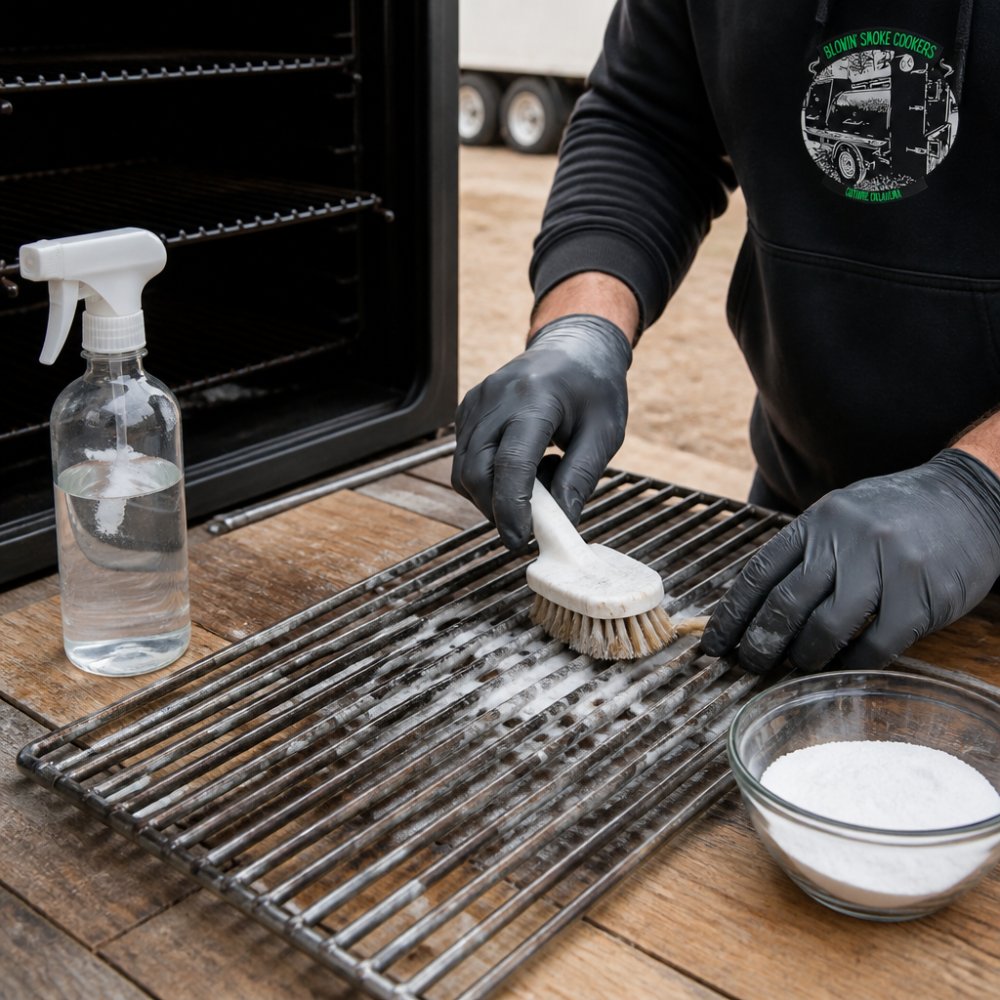
The ideal routine is to clean your grates while they're still slightly warm but safe to touch, typically 30-60 minutes after you finish cooking. Warm grates respond better to cleaning solutions because the residue hasn't hardened completely.
Start by removing loose ash and debris with a stiff brush or scraper. Then apply your chosen natural cleaning method: vinegar spray, baking soda paste, or the salt and oil treatment for cast iron. Scrub gently but thoroughly, paying extra attention to areas where meat made direct contact. Rinse with clean water if you used vinegar or baking soda, then dry completely to prevent rust.
For cast iron grates, skip the water rinse and wipe clean with an oiled cloth instead. This preserves the seasoning you've built up.
Meadow Creek SQ36 Offset Barbecue Smoker →
| Cleaning Method | Best For | Time Required | Frequency |
|---|---|---|---|
| Vinegar spray | Routine maintenance, light residue | 15-20 minutes | Weekly |
| Baking soda paste | Stubborn carbon, heavy buildup | 20-30 minutes | Monthly |
| Salt and oil | Cast iron grates, seasoning preservation | 10-15 minutes | Every cook |
| Steam cleaning | Grease-heavy interior, preventative care | 15-20 minutes | After fatty meats |
Best Tools for Cleaning BBQ Smokers
You don't need expensive specialty tools to keep clean BBQ smokers in top condition.
A soft-bristle brush is essential for grates and interior surfaces. Nylon bristles won't scratch stainless steel or damage seasoning on cast iron. Wire brushes can loose small wires and get into your food. We do not recommend them because there have been cases of people having to have surgery after wires getting in food.
A grill scraper with a long handle lets you reach the back of the cooking chamber and firebox without burning yourself.
Microfiber cloths and old cotton rags work better than paper towels for wiping down surfaces. They're reusable, more absorbent, and won't leave lint behind.
A spray bottle for your vinegar solution costs just a few dollars and saves time compared to dunking cloths.
For the drip pan and ash removal, a small metal dustpan or shovel designed for the job beats trying to use kitchen utensils. The ash pan that comes standard on many smokers, like those from Meadow Creek, slides out easily and makes cleanup simple. If your smoker doesn't have a removable ash pan, consider adding one as an upgrade.

Smoker Maintenance Schedule to Prevent Buildup
A consistent maintenance schedule prevents major cleaning headaches down the road.
After every cook: Remove the ash pan and dispose of ash. Brush loose debris from the grates with a dry brush.
Weekly (if cooking 1-2 times per week): Do a full grate cleaning with your vinegar spray or salt and oil treatment.
Monthly: Deep clean the interior with baking soda paste on stubborn spots.
Seasonally (4 times per year): Do a comprehensive inspection of the entire smoker.
This schedule works for backyard enthusiasts.
The key insight most people miss: prevention is easier than correction.
Keeping your smoker clean with natural methods means your equipment stays in top condition for years of cooking. Vinegar, baking soda, salt, and oil handle every cleaning challenge without harsh chemicals or damage to your grates and interior surfaces. Start with the routine that fits your cooking schedule, stick with it, and you'll notice better temperature control and more reliable performance. Blowin' Smoke Cookers builds smokers like the Meadow Creek SQ36 and SNS 24 Patio Smoker to last a lifetime, proper cleaning and maintenance is how you get there. Get started with a simple vinegar spray this week and upgrade to deeper methods as your needs grow.
Frequently Asked Questions
Is it safe to use vinegar to clean a smoker?
Yes, vinegar is safe and effective for cleaning BBQ smokers. White vinegar cuts through grease and residue without harsh chemicals. Mix equal parts vinegar and water in a spray bottle, apply to interior surfaces and grates, let sit for 15 minutes, then scrub with a bristle brush. Rinse thoroughly with water before your next cook. It's non-toxic and environmentally friendly, making it ideal for smokers where food comes into contact with surfaces.
How do you remove heavy grease from a smoker naturally?
Heavy grease buildup responds well to a baking soda paste or steam cleaning. For baking soda, mix it with water to form a thick paste, apply to greasy areas, and let sit overnight before scrubbing. Steam cleaning uses hot water vapor to loosen grease without chemicals, simply boil water in a pan inside the smoker with the lid closed for 20 minutes. Both methods break down grease naturally, and you can repeat as needed. The removable ash pan on smokers like the Meadow Creek TS70P makes grease disposal easier.
Can I use baking soda to clean smoker grates?
Baking soda works well on smoker grates, especially cast iron or stainless steel. Create a paste with water and apply directly to the grates. Let it sit for 30 minutes to several hours, then scrub with a bristle brush or steel wool. For stubborn carbon deposits, combine baking soda with a small amount of vinegar. Rinse thoroughly and dry the grates completely to prevent rust. This natural method is safe for food-contact surfaces and requires no harsh chemicals.
How often should you deep clean a BBQ smoker?
Deep clean your smoker every 3 to 6 months, depending on how frequently you use it. Heavy users or competition pitmasters should deep clean every 3 months. Between deep cleans, do routine cleaning after every 4 to 5 cooks, remove ash, wipe down grates, and check for grease buildup. This preventative approach keeps your smoker performing at its best and extends its lifespan. Smokers with slide-out ash pans and removable grates, like the SNS 24 Patio Smoker, make routine maintenance quick and easy.
What is the best way to clean a smoker without harsh chemicals?
The best natural approach combines vinegar, baking soda, and salt depending on what you're cleaning. For general interior cleaning, use vinegar and water. For stubborn residue and carbon buildup, apply a baking soda paste. For cast iron grates, use salt and oil to scrub and season simultaneously. Steam cleaning is another chemical-free option that loosens grease effectively. All these methods are safe for food preparation surfaces, environmentally friendly, and cost-effective. They work on all smoker types, from compact models to large capacity units.