
Table of Contents
- Why Rust Prevention Matters for Your Smoker
- How to Season a Smoker for Long-Term Protection
- Best Oil for Smoker Rust Prevention and Maintenance
- Removing Rust from Smoker Grates Before It Spreads
- Daily and Post-Cook Maintenance to Stop Corrosion
- Storage and Climate-Specific Strategies
- Investing in Heavy-Duty Steel Construction
- Frequently Asked Questions
Last Updated: September 3, 2026
Why Rust Prevention Matters for Your Smoker
Rust eats through steel, compromises structural integrity, and can render your smoker unusable within years. A smoker left unprotected can develop significant rust damage in as little as 6-8 weeks of exposure to rain and humidity, especially in humid climates or when sitting unused for months (nist.gov).
At Blowin' Smoke Cookers, we provide heavy-duty smokers designed for durability. Preventing rust requires consistency, the right materials, and an understanding of what actually stops corrosion at the source.
How to Season a Smoker for Long-Term Protection
Seasoning is the foundation of rust prevention. It creates a protective layer that bonds to the steel through polymerization, a chemical process where oil bonds to metal at high heat. This creates a hard, protective surface far more durable than oil alone.
Choosing the Right Oil for Seasoning
The oil must have a high smoke point, the temperature at which it breaks down and begins to smoke. Vegetable and canola oil have smoke points around 400°F and are affordable choices (usda.gov). Linseed oil polymerizes more effectively and creates a harder finish, but costs more and requires careful application to avoid sticky residue.
For most backyard smokers, canola oil strikes the right balance between performance and practicality.
The Seasoning Process: Step by Step
- Clean the interior thoroughly. Remove all ash, debris, and old grease with a stiff brush or scraper.
- Apply oil in thin, even coats. Use a lint-free cloth to wipe a thin layer across all interior surfaces, grates, and the smoking chamber. Thin applications work better than thick ones. You can also spray it right from the can if you bought the aerosol type.
- Let it cure. Keep the smoker at 300-350°F for about an hour. Smoke rising from the oil indicates polymerization is happening.
Close all exhaust and intakes. Get a gallon or two of water in a bucket. Open the door and toss the water in the chamber while being careful of the steam. Close the door and walk away.
- Cool slowly. Turn off heat and let the smoker cool naturally without sudden temperature changes.
- Check after everything is cooled. You will find a nice amber coating on everything giving you a solid base to start cooking.
Best Oil for Smoker Rust Prevention and Maintenance
Canola oil remains the best choice for ongoing maintenance between deep seasoning cycles. It's affordable, effective, and won't leave sticky buildup if applied sparingly. Linseed oil is the premium option if you're willing to invest extra effort, creating a harder finish that lasts longer.
Avoid cooking oils like olive oil or coconut oil due to their lower smoke points and rancidity risk. For exposed metal surfaces like hinges and handles, high-heat paint designed for metal provides superior long-term protection in humid climates.
Removing Rust from Smoker Grates Before It Spreads
Caught early, rust removal is straightforward. Ignored, it can compromise grate integrity.
Chemical vs. Mechanical Rust Removal
Mechanical removal uses wire brushes, steel wool, or sandpaper for quick surface rust removal. Chemical removal uses distilled white vinegar or baking soda to dissolve rust at the molecular level. Soak rusty grates in white vinegar for several hours, then scrub with a nylon brush. This method is gentler on underlying steel and works well for moderate rust.
For light surface rust, mechanical removal is faster. For rust that's begun to pit the surface, chemical treatment followed by light mechanical scrubbing gives better results.
Tools to Use and Avoid
Use these tools safely:
- Nylon brushes: Effective for scrubbing without damaging healthy steel
- Steel wool (fine grade): Works for light rust, but use sparingly
- Vinegar soaks: Pour distilled white vinegar over rusty grates and let sit 4-12 hours
- Baking soda paste: Mix with water, apply to rust, and scrub gently
Avoid these:
- Wire brushes: Too aggressive; they gouge steel and create pitting sites where rust accelerates
- Angle grinders or power tools: Risk damaging the metal structure
- Harsh chemical degreasers: Strip protective seasoning and leave corrosion-promoting residue
After removing rust, immediately re-season the affected area with canola oil and heat.
Daily and Post-Cook Maintenance to Stop Corrosion
Consistency beats intensity. Most rust problems stem from neglect, not dramatic failure.
Cleaning Ash After Every Cook
Ash is acidic and hygroscopic, absorbing moisture from the air (peer-reviewed research). Left on steel surfaces, it accelerates corrosion. Cleaning ash after every cook is the single most effective rust-prevention habit.
- Let the smoker cool slightly (still warm, but safe to touch)
- Use a stiff brush or ash shovel to sweep out the firebox and grates
- Pay special attention to the bottom of the smoking chamber where ash collects
- Dispose of ash in a metal container, never leave it overnight
This takes 5-10 minutes and eliminates the primary corrosion accelerant.
Wiping Down Exposed Metal Surfaces
After ash is cleared, wipe down exposed metal surfaces with a dry cloth while the smoker is still warm. For high-use smokers or those in humid climates, follow with a very light coat of canola oil on a cloth. This post-cook ritual takes 10-15 minutes total and is the difference between a protected smoker and one showing rust within months.
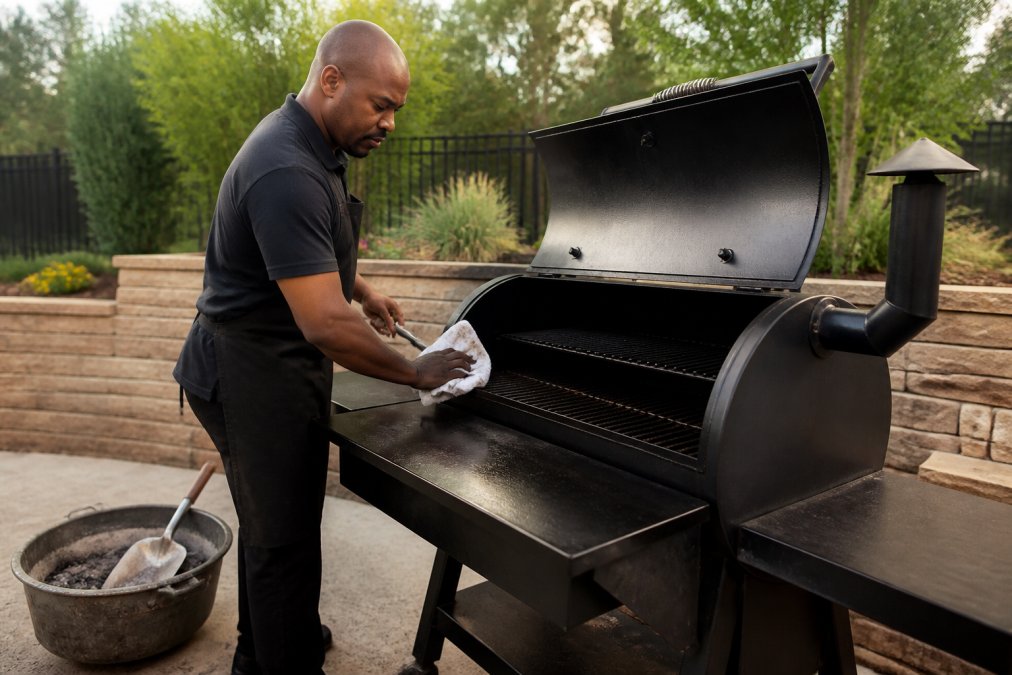
Professional demonstrating how to prevent rust on smokers by wiping down the exterior and grates with a cloth after cooking, showing proper ash removal and metal surface care in a backyard setting
Storage and Climate-Specific Strategies
Where and how you store your smoker matters as much as maintenance. Climate creates different challenges.
Using a Protective Cover Year-Round
A fitted smoker cover provides the first line of defense against rain, snow, and UV exposure. Leave the cover on when the smoker isn't in use. However, a cover alone isn't enough. Covers that seal completely trap condensation inside, accelerating rust. A cover with ventilation holes or one that's removed periodically for air circulation is superior.
Humidity Control and Garage Storage
In humid climates, garage storage is ideal. Position the smoker away from exterior walls where condensation forms. Place a moisture-absorbing container nearby, a bucket of baking soda or commercial desiccant product. If outdoor storage is necessary, position your smoker in the shadiest spot available.
Winterizing for Long-Term Storage
If you plan to store your smoker for more than a few months:
- Deep clean the entire smoker. Remove all ash, grease, and debris.
- Apply a full seasoning coat. Do a complete 3-4 coat seasoning cycle.
- Store in a dry location. Garage storage is ideal. If outdoor storage is necessary, use a high-quality fitted cover and elevate the smoker on blocks for air circulation.
- Check periodically. Inspect every 4-6 weeks for rust or moisture accumulation.
- Before using again. Wipe down all surfaces, check for rust, apply light canola oil, and do a short 300°F burn-off for 20-30 minutes.
Investing in Heavy-Duty Steel Construction
Not all smokers are built equally. Construction quality directly impacts how quickly rust develops and how well maintenance prevents it.
Heavy-duty steel smokers like those from Blowin' Smoke Cookers, such as the SNS 24 Patio Smoker and SNS 36 Patio Smoker, are engineered with thick steel that resists rust better than thin-gauge alternatives. The Meadow Creek SQ36 Offset Barbecue Smoker and Meadow Creek TS70P feature reverse flow design with welded stainless steel grates that never rust. Investing in solid construction upfront reduces maintenance burden over time.


Maintenance Task |
Frequency |
Time Required |
Impact on Rust Prevention |
|---|---|---|---|
Ash removal |
After every cook |
5-10 minutes |
Critical, prevents acid corrosion |
Wipe down exposed metal |
After every cook |
5 minutes |
High, removes moisture |
Light oil coat |
Weekly (high use) or monthly |
3-5 minutes |
Moderate, maintains seasoning |
Deep seasoning cycle |
1-2 times per year |
2-3 hours |
Critical, rebuilds protective layer |
Rust removal (if needed) |
As needed |
15-30 minutes |
High, stops spread |
Cover inspection |
Monthly |
2-3 minutes |
Moderate, ensures protection |
Rust prevention comes down to three principles: keep the steel seasoned, remove moisture and ash promptly, and store intelligently based on your climate. These aren't complicated steps, but they demand consistency. A few minutes of attention after each cook prevents months of frustration from rust damage.
Pair solid equipment from manufacturers like Blowin' Smoke Cookers with these maintenance habits, and you've built a system that protects your investment for years. Start with the post-cook routine: clean ash, wipe surfaces, apply a light coat of oil. Do this every time, and rust becomes a rare problem.
Frequently Asked Questions
Does seasoning a smoker actually prevent rust?
Yes. Seasoning creates a polymerized protective layer on metal surfaces that resists oxidation and moisture. When oil is heated on the smoker's interior and exterior surfaces, it bonds to the steel and forms a barrier against corrosion. Regular seasoning, combined with proper post-cook maintenance, significantly extends your smoker's lifespan and prevents surface rust from developing into structural damage.
What is the best oil for smoker rust prevention?
Vegetable oil, canola oil, and linseed oil are all effective for smoker rust prevention. Choose an oil with a high smoke point (above 400°F) to withstand the heat without breaking down. Linseed oil offers superior durability for long-term protection, while canola oil is more affordable and easier to apply. Apply a thin coat to all exposed metal surfaces after each cook and during off-season storage.
How do I remove rust from smoker grates safely?
For light surface rust, use a nylon brush or soft steel wool with distilled white vinegar and baking soda paste. For heavier rust, soak grates in vinegar for several hours, then scrub gently. Avoid wire brushes, which can damage the metal and create rough surfaces that rust faster. After removal, immediately dry the grates, season with oil, and burn off at high heat to create a protective patina.
Is it safe to use a smoker with surface rust?
Light surface rust is safe to cook on and does not affect food safety, but it indicates your smoker needs maintenance. Heavy rust or flaking rust should be cleaned before use. Address rust promptly by removing it, seasoning the affected areas, and adjusting your maintenance routine to prevent it from spreading to the firebox or other critical components.