
Table of Contents
- Understanding Degreaser Safety on Smokers
- Chemical Residue and Food Contact Surfaces
- How to Clean Smoker Grates After Cooking
- Food-Safe Grill Cleaner Options
- Removing Heavy Carbon and Grease Buildup Safely
- Preventing Rust After Deep Cleaning
- Maintenance Schedule to Minimize Aggressive Cleaning
- Frequently Asked Questions
Last Updated: September 27, 2026
Understanding Degreaser Safety on Smokers
Not all degreasers are safe for food-contact surfaces, and using the wrong degreaser on smokers can leave harmful chemical residue that affects your next cook. Understanding which products work and how to apply them safely is essential.
A smoker with heavy carbon buildup won't perform at its best, but aggressive chemical cleaning can compromise the seasoning layer that protects your grates and firebox.
Chemical Residue and Food Contact Surfaces
Chemical degreasers leave behind residue if not rinsed properly, which can transfer to your food during the next cook. Understanding what stays on your grates and interior surfaces matters more than cleaning power.
Most commercial degreasers contain surfactants that break down grease but can stick to metal surfaces even after rinsing. When heat hits your grates, residue may vaporize or transfer to food. Risk varies depending on degreaser type and smoker interior material.
How Residue Behaves on Different Smoker Materials
Not all smoker interiors are equal.
- Cast iron grates and fireboxes: Porous surface holds residue in microscopic pits. Surfactants bond strongly to cast iron, requiring multiple rinses. Cast iron benefits most from natural cleaning methods or food-grade degreasers specifically formulated for cast iron cookware.
- Painted or powder-coated steel interiors: The coating can be damaged by harsh degreasers, creating bare spots where rust starts. Once the protective coating is compromised, chemical residue seeps into exposed steel. Avoid any degreaser not labeled safe for painted surfaces.
- Bare steel (unpainted): Residue sits on a smooth surface and rinses away more easily than cast iron, but bare steel oxidizes rapidly if not dried and oiled immediately after cleaning. Chemical residue accelerates oxidation if left on the surface.
Identifying Safe Products Through Standards
Look for these markers on the label:
- EPA Safer Choice certified (indicates the product meets EPA standards for reduced chemical hazard)
- Food-grade or food-safe certification (manufacturer tested on food-contact surfaces)
- Biodegradable formula (breaks down in the environment and less likely to persist on surfaces)
- Rinses clean without streaking (visible indicator that residue is actually leaving the surface)
- Non-toxic when used as directed (manufacturer liability statement)
What to Avoid Entirely
Industrial degreasers designed for commercial kitchens are risky for home smokers, they require high-volume rinsing systems home users lack.
How to Clean Smoker Grates After Cooking
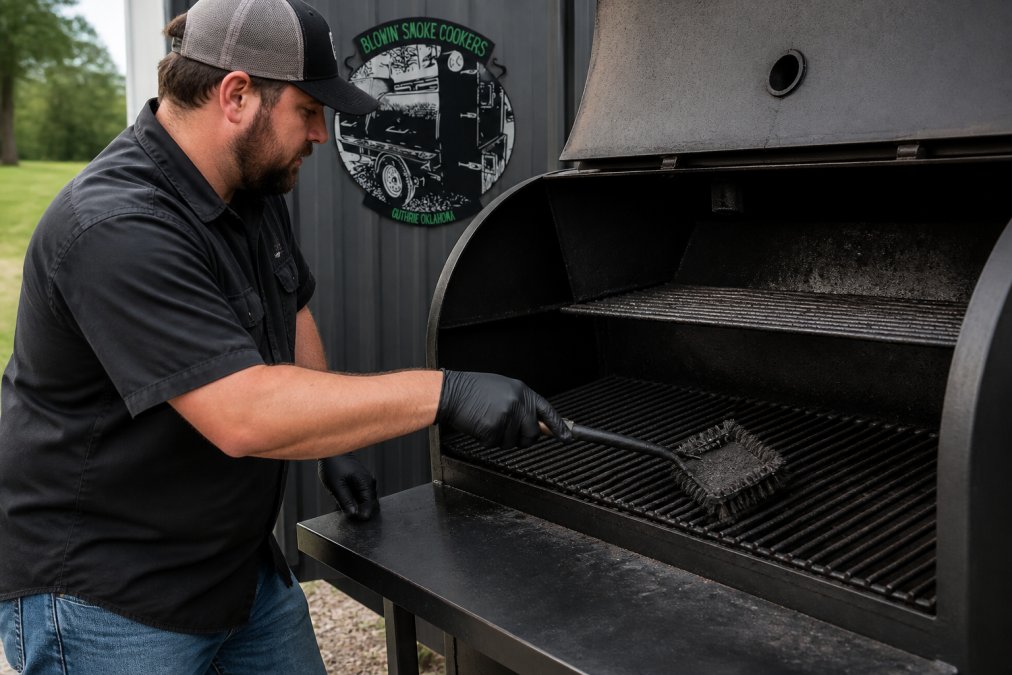
Clean grates while warm (not hot) so grease wipes away easily and carbon doesn't harden.
Food-Safe Grill Cleaner Options
Natural cleaning solutions work well for regular maintenance: baking soda paste, white vinegar, lemon juice and salt, or onion halves. These work best on fresh buildup; for heavy carbon or rancid grease, they may not be strong enough.
Removing Heavy Carbon and Grease Buildup Safely
Heavy carbon and rancid grease require more aggressive treatment. Before reaching for degreaser, understand what you're actually removing.
Understanding the Difference: Seasoning vs. Grease vs. Carbon
- Seasoning: A polymerized oil layer that builds up over hundreds of cooks. It's dark (nearly black), smooth, and has a slightly glossy appearance. Seasoning is hard and bonded to the metal at a molecular level. It improves non-stick performance, prevents rust, and contributes to smoke flavor. You want to preserve this.
- Carbon buildup: Unburned smoke particles and combustion byproducts that accumulate on grates and interior surfaces. It's black or dark gray, powdery or flaky, and brushes away easily. Light to moderate carbon is normal and harmless. Heavy carbon (more than 1/8 inch thick) can insulate grates and affect heat distribution, but it doesn't need to be removed entirely.
- Rancid grease: Old, oxidized fat that has turned sticky, brown, or yellowish. It smells distinctly bad, sour, musty, or burnt. Rancid grease accumulates in the drip tray, on the firebox floor, and sometimes on lower grates. This is what actually needs aggressive cleaning. Unlike seasoning, rancid grease can affect food flavor and attract pests.
How to Identify What You're Looking At
Before cleaning, inspect your smoker:
- Look at the grates: If they're dark and smooth with no visible grease, that's seasoning. Leave it alone. If you see sticky, brown, or yellowish residue, that's rancid grease, clean it.
- Smell the interior: Seasoning has a neutral or pleasant smoke smell. Rancid grease smells sour, musty, or like old burnt fat. Trust your nose.
- Touch test (on a cool smoker): Seasoning feels hard and dry. Rancid grease feels sticky or oily. Carbon feels powdery.
- Check the drip tray: This is where rancid grease concentrates. If the tray has a thick layer of brown or yellowish sludge, that's your target for aggressive cleaning.
Cleaning Strategy by Material and Buildup Type
- Soak grates in a food-grade degreaser for 15-20 minutes (longer for thick buildup, but not more than 30 minutes, which can damage the seasoning layer)
- Use a soft brass brush or plastic scrubber (never steel wool, which scratches and removes seasoning)
- Scrub gently with moderate pressure, let the chemical do the work
- Rinse thoroughly with clean water at least three times
- Dry completely with a cloth or allow to air dry for 30 minutes
- Re-season the grates with a light coat of high-heat oil within 1 hour
- Brush loose carbon away with a grill brush
- Wipe the interior with a damp cloth
- Allow to dry completely
- Do not use degreaser on interior walls unless buildup is severe enough to affect airflow or heat distribution
Handling Severe Rancid Grease Accumulation
- Remove the drip tray and dispose of accumulated grease in a waste container (do not pour down the drain, it can clog pipes)
- Wash the tray with hot water and food-grade degreaser
- For the firebox floor, scrape away the thickest buildup with a putty knife or grill scraper
- Wipe with a damp cloth
- Allow to dry completely
- Do not apply degreaser to the firebox floor unless grease is still sticky after scraping, the bare steel will rust quickly if exposed
Preventing Rust After Deep Cleaning
Deep cleaning removes grease and carbon, but it also removes the protective layers that prevent rust. This is especially important for steel smokers used year-round or in humid climates.
Rust prevention starts immediately after cleaning. Here's the sequence:
Within 30 minutes of final rinse:
- Ensure all surfaces are completely dry
- Apply a thin coat of high-heat oil to grates and interior surfaces
- Wipe away excess oil with a clean cloth
- Allow oil to dry before the next cook
For extended storage:
- Clean the smoker thoroughly
- Dry completely
- Apply oil to all metal surfaces
- Cover the smoker with a breathable cover (not plastic, which traps moisture)
- Store in a dry location if possible
The type of oil matters. Use oils with high smoke points that polymerize when heated:
- Grapeseed oil
- Avocado oil
- Vegetable oil
- Specialized grill oils
Maintenance Schedule to Minimize Aggressive Cleaning
The best way to avoid heavy degreaser use is preventing buildup in the first place. A simple maintenance routine keeps your smoker in peak condition and extends its life.
After every cook:
- Brush grates while warm to remove loose debris
- Wipe interior surfaces with a damp cloth
- Empty and clean the drip tray
- Allow smoker to cool completely before covering
Weekly (if cooking regularly):
- Deep brush of grates and interior surfaces
- Check for grease accumulation in the firebox
- Wipe exterior to prevent dust and debris buildup
- Inspect for any signs of rust or corrosion
Monthly:
- Soak grates in a food-grade degreaser if needed
- Deep clean the drip tray and interior
- Check all seals and hinges for proper function
- Apply protective oil to any bare metal spots
Seasonally:
- Full inspection of the smoker interior
- Check for rust or structural issues
- Re-season all metal surfaces
- Verify that reverse flow baffles are clear of debris
Frequently Asked Questions
What type of degreaser is food-safe for BBQ equipment?
Food-grade degreasers, baking soda paste, and vinegar-based solutions are safe for food contact surfaces on smokers. Avoid petroleum-based solvents and harsh chemical degreasers that leave toxic residue. Always rinse thoroughly with water after cleaning any degreaser from grates, firebox, and interior surfaces. If using a commercial product, verify the label states it is food-safe and appropriate for heat-resistant cookware.
Can chemical residue from degreasers affect the taste of smoked meat?
Yes, chemical residue can transfer to food if not rinsed completely. Harsh degreasers leave solvent residue that may impart off-flavors or create health concerns. This is why food-grade cleaners and natural alternatives like baking soda are preferred for interior smoker maintenance. Proper rinsing and allowing surfaces to dry completely before cooking minimizes this risk significantly.
How often should you deep clean the interior of a smoker?
Most pitmasters benefit from deep cleaning every 3-6 months of regular use, depending on cooking frequency and buildup. Light cleaning after each cook (removing ash and grease) prevents heavy carbon accumulation. Offset smokers and pellet smokers may need different schedules based on fuel type and design. Monitor creosote and rancid grease buildup as your signal for when deeper maintenance is needed.
How do you properly rinse a smoker after using a degreaser?
Rinse all treated surfaces with clean water multiple times until no soap residue remains. For interior surfaces and grates, use a damp cloth or spray bottle to reach all areas. Allow the smoker to air dry completely before seasoning or cooking. For heavy degreaser applications, run the smoker at low temperature for 10-15 minutes with the door open to evaporate any remaining moisture and volatile compounds.