
Table of Contents
- What Makes a Grill Brush Heavy-Duty for Steel Grates
- Wire Bristles vs. Bristle-Free Designs: Which Performs Better
- How to Clean Stainless Steel Grill Grates Without Damage
- Heavy-Duty Grill Brush With Scraper: Why the Two-in-One Design Matters
- Wire-Free Grill Brush for Steel Grates: When to Choose Bristle-Free
- Grill Brush Safety: Preventing Bristle Shedding and Grate Damage
- Durability and Long-Term Performance: What to Expect From Quality Brushes
- Selection Criteria and Common Mistakes to Avoid
- Frequently Asked Questions
Last Updated: October 5, 2026
What Makes a Grill Brush Heavy-Duty for Steel Grates
At Blowin' Smoke Cookers, we've learned that heavy-duty grill brushes steel grates require specific construction to deliver both cleaning power and durability. The difference between a brush that works and one that disappoints comes down to three core factors: materials, handle strength, and design compatibility with steel surfaces.
Steel grates demand more aggressive cleaning than standard cast iron. They're harder, smoother, and prone to stubborn carbonized buildup that requires genuine scrubbing force. A true heavy-duty grill brush combines strong bristle construction with an equally strong handle that won't flex or break under pressure.
Brush Head Materials and Construction Quality
The brush head is where performance lives. Heavy-duty designs use engineered bristle-free alternatives, both engineered to withstand repeated use on unforgiving steel surfaces.
Wire bristles remain the industry standard for aggressive cleaning. Quality wire-bristle brushes use stainless steel or galvanized wire tightly wound and secured to a solid backing plate. This construction prevents bristle shedding and maintains cleaning power through hundreds of uses. We prefer not to use them due to bristles getting in food and in some cases people needing surgery to remove them.
Bristle-free designs use nylon or composite materials molded directly onto the brush head. These eliminate the loose-bristle risk entirely and work particularly well on delicate steel finishes where you want aggressive cleaning without microscopic wire fragments potentially embedding in the grate surface.
Handle Strength and Ergonomic Design
A heavy-duty brush needs a handle that matches the force you'll apply. Cheap handles flex, twist, or crack under sustained pressure. Quality heavy-duty brushes use either solid stainless steel or reinforced composite handles that maintain rigidity through years of use.
Length matters for steel grates. A 18-20 inch handle keeps your hands safely away from hot grates and provides mechanical advantage for scrubbing. Shorter handles require more wrist effort and position your hands closer to heat.
The connection point between handle and head should be seamless. Brushes with riveted or welded connections outperform those with glued or screwed attachments. Glued connections eventually separate with temperature cycling and repeated stress.
Wire Bristles vs. Bristle-Free Designs: Which Performs Better
This choice defines your cleaning approach. Wire bristles deliver maximum scrubbing power for heavy carbon buildup. Bristle-free designs prioritize safety and grate longevity while still handling moderate to heavy residue.
Wire bristles work faster on thick, baked-on grease and carbonized food. They bite into stubborn deposits and break them loose with fewer passes. Be very careful of shedding if you use these.
Bristle-free designs use nylon or composite materials that clean effectively without the shedding risk. They're gentler on delicate steel surfaces and eliminate the concern about wire fragments contaminating your food.
Choose wire bristles if you cook frequently with heavy smoke and grease buildup but be very observant of shedding. Choose bristle-free if you prioritize grate appearance or cook lighter foods that don't leave heavy residue.
How to Clean Stainless Steel Grill Grates Without Damage
Proper technique prevents scratches and extends grate life. Steel grates are harder than cast iron but still vulnerable to aggressive scrubbing with the wrong approach.
Pre-Cleaning Prep and Temperature Timing
Temperature timing is critical. Clean your grates while they're still warm, not scorching hot. Warm grates (around 300-400°F) allow residue to soften without being so hot that you can't safely approach them.
Pre-cleaning prep makes the actual scrubbing easier. Use a grill scraper to remove large chunks of charred food first.
Moisture helps. A light spray of water on warm grates softens residue and reduces dust. Don't oversaturate, as pooling water can cause uneven cooling and potential warping on thin grates.
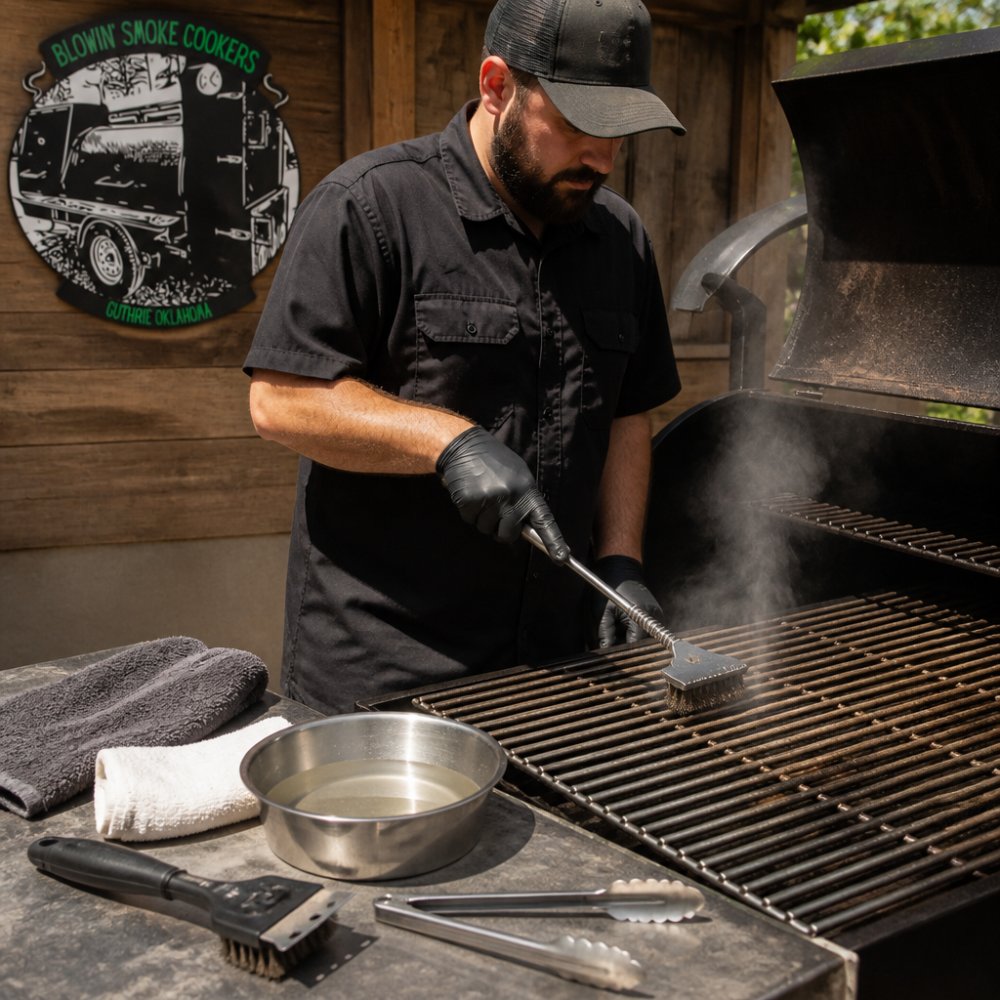
Scrubbing Technique for Stubborn Residue
Direction matters when cleaning steel grates. Scrub along the length of the grates, not across them. This follows the grain of the steel and prevents scratches that run perpendicular to the surface. Use firm, controlled pressure rather than aggressive force.
For stubborn spots, apply sustained pressure with small circular motions, then finish with lengthwise strokes to blend the cleaned area. Never use back-and-forth scrubbing across the grate width, as this creates visible scratch patterns.
Residue type affects technique. Baked-on grease requires more pressure and multiple passes. Carbonized food breaks loose faster and needs less force.
Heavy-Duty Grill Brush With Scraper: Why the Two-in-One Design Matters
Combination brushes with integrated scrapers simplify your cleaning process. The scraper handles large debris and stubborn spots that resist bristles alone, while the brush cleans the remaining residue.
The scraper side typically uses a flat or slightly angled metal blade. This removes thick carbon buildup and stuck-on food without damaging the grate surface.
Quality two-in-one designs balance both functions equally. The brush side maintains full bristle density, and the scraper blade sits at the proper angle to be effective without requiring excessive force.
For steel grates specifically, a combination brush reduces the number of tools you need. You can handle both heavy buildup and fine residue with one tool, making cleanup faster and storage simpler.
Wire-Free Grill Brush for Steel Grates: When to Choose Bristle-Free
Bristle-free designs have gained traction for good reason. They eliminate the loose-bristle concern entirely and work well for most cooking scenarios.
Choose bristle-free when you cook frequently and want to minimize grate maintenance concerns. The nylon or composite bristles don't shed, so you never worry about fragments in your food.
Bristle-free brushes excel at routine post-cook cleaning. They handle moderate grease and light carbon buildup effectively.
The durability comparison favors bristle-free in some ways. Without loose bristles to shed or wires to fatigue, these brushes often last longer. The composite materials resist temperature cycling better than wire bristles, which can develop fatigue cracks over years of use.
Grill Brush Safety: Preventing Bristle Shedding and Grate Damage
Safety concerns around grill brushes are real but manageable with proper selection and handling.
Wire Bristle Risks and Safe Handling Practices
Wire bristles can shed, and loose fragments pose a food safety risk (the CDC). Quality brushes minimize this through tight winding and secure backing plates, but no wire brush is completely shed-proof.
Safe handling means applying firm, controlled pressure rather than aggressive force. Violent scrubbing accelerates bristle fatigue and shedding. Use deliberate strokes with steady pressure, then move to the next section of the grate.
Temperature matters. Clean grates while warm, not scorching hot. Extreme heat can damage the bristle backing plate and accelerate bristle loosening. Similarly, don't use a hot wire brush on cold grates, as rapid temperature changes stress the metal connections.
Inspection and Maintenance Between Uses
Regular maintenance extends brush life and reduces safety risks. After each use, rinse your brush with warm water to remove debris and residue.
Store your brush in a dry location. Moisture promotes rust on wire bristles and can degrade the backing plate. Hang the brush or store it bristle-side-up so air circulates around the head.
Periodically check the handle-to-head connection. If you notice any movement or flex at this joint, the brush is near end-of-life. Continued use risks the head separating entirely during cleaning.
Replace your brush when bristles become noticeably sparse or the backing plate shows damage. A worn brush works poorly and poses higher safety risks.
Durability and Long-Term Performance: What to Expect From Quality Brushes
A true heavy-duty brush should deliver years of reliable performance. Understanding durability factors helps you choose a brush that maintains effectiveness through extended use.
Quality materials drive longevity. Stainless steel bristles resist corrosion better than galvanized wire, which can develop rust spots over time.
Temperature cycling stresses brushes. Every heating and cooling cycle creates tiny expansions and contractions that eventually loosen connections.
Bristle density decreases over time. Even quality brushes gradually lose bristles through normal use. This is normal wear, not a defect.
Expected lifespan for quality heavy-duty brushes ranges from 2-4 years with regular home use. Professional or competition use accelerates wear, reducing lifespan to 1-2 years.
Selection Criteria and Common Mistakes to Avoid
Choosing the right brush prevents frustration and ensures you get genuine heavy-duty performance.
Compatibility Across Gas, Charcoal, and Smoker Grates
Universal compatibility is a myth. Different grate types benefit from different brush designs. Gas grill grates are typically thinner and more delicate than charcoal or smoker grates.
Steel grates specifically require heavy-duty grill brushes steel grates designed for their hardness. Standard brushes work, but heavy-duty designs engineered for steel deliver better performance and longer life.
Smoker grates often have custom dimensions or curved surfaces. Standard brushes may not fit properly. Measure your grate spacing and shape before purchasing, or choose adjustable designs that accommodate different grate configurations.
A single brush can work across multiple grate types if you're careful with technique. Wire brushes are more forgiving across different materials.
Replacement Head Options and Lifecycle Costs
Replacement head availability affects long-term value. Some brushes feature removable heads that snap onto existing handles.
Replacement heads typically cost 40-60% of a complete brush. If your brush supports replaceable heads, the total lifecycle cost is lower than buying new brushes repeatedly.
Some brushes are designed as single units without replacement options. These work fine initially but become waste once bristles wear. For frequent users, replaceable-head designs offer better long-term value.
Consider your usage pattern. Light seasonal use favors simple, inexpensive brushes. Heavy regular use justifies investing in a quality brush with replacement head options.
| Selection Factor | Wire Bristle | Bristle-Free | Best For |
|---|---|---|---|
| Cleaning power on heavy buildup | Excellent | Good | Frequent smoker users |
| Grate surface protection | Moderate | Excellent | Polished steel finishes |
| Bristle shedding risk | Moderate | None | Food safety priority |
| Cost | Lower | Higher | Budget-conscious buyers |
| Durability | 2-3 years | 3-4 years | Long-term ownership |
| Replacement availability | Common | Variable | Frequent users |
Heavy-duty grill brushes for steel grates demand careful selection because poor choices leave residue behind or damage your equipment.
Frequently Asked Questions
What is the best brush to use on stainless steel grill grates?
The best heavy-duty grill brush for steel grates combines a woven wire or stainless steel brush head with a long, sturdy handle for control and reach. Look for brushes with a scraper attachment to handle stubborn, carbonized food. Ensure the bristles are tightly wound to resist shedding, and verify the brush head is removable for easy cleaning and replacement. Test compatibility with your specific grate material before committing to regular use.
Are wire grill brushes safe to use on steel grates?
Wire grill brushes are safe on steel grates when used correctly, but require caution. Inspect the brush before each use for loose or damaged bristles that could lodge in food. Use firm, controlled scrubbing motions rather than aggressive jabbing. Avoid brushing cold grates, as temperature changes can cause bristles to shed more easily. If bristles begin to shed frequently, replace the brush head immediately to prevent contamination and maintain grill brush safety.
How often should you replace a grill brush?
Replace your grill brush head or entire brush when bristles begin shedding noticeably, the head loses its shape, or the scraper edge becomes dull or damaged. Heavy-duty brushes used weekly typically last 1-2 seasons before replacement is needed. Brushes with removable heads extend the lifespan of the handle and reduce overall replacement costs. Store brushes in a dry location and inspect before each cooking season to catch wear early.
Can you use a grill brush on hot grates?
You can brush hot grates, but timing matters. Brush grates immediately after cooking ends while they're still hot enough to burn off residue (around 400-500°F), but cool enough to handle safely. Hot brushing is faster and more effective for stubborn, baked-on grease. Allow grates to cool slightly if steam is excessive. Never brush cold grates, as the temperature shock can weaken bristles and increase shedding risk on heavy-duty brushes.