
Last Updated: October 24, 2026
Quick Summary
The best wood for offset smoker cooking is oak, which burns clean and steady with medium smoke flavor that works across all meats. Hickory delivers stronger flavor for longer cooks like brisket and pork, while fruitwoods like apple and cherry add subtle sweetness for poultry without overpowering lean meats.
- Oak is the baseline wood for offset smoking, forgiving for beginners and reliable for competition cooks
- Hickory burns hotter and stronger, ideal for pork and brisket but requires careful airflow management
- Wood splits should be 3-4 inches in diameter and seasoned 6-12 months to prevent creosote and temperature swings
- Apple and cherry fruitwoods work best for poultry and shorter cooks where you need lighter smoke profiles
- Mesquite should only be used sparingly blended at 10-15 percent with milder hardwoods in offset smokers
Table of Contents
- Best Wood for Offset Smoker Cooking: Top Choices
- Oak vs Hickory for Smoking: Which Performs Better
- Wood Flavor Profiles for Different Meats
- Offset Smoker Wood Split Size and Seasoning
- How to Maintain a Clean Fire in an Offset Smoker
- Common Wood Selection Mistakes to Avoid
- Choosing Your Offset Smoker Setup
- Frequently Asked Questions
Choosing the right wood for your offset smoker isn't just about grabbing whatever's on sale at the hardware store. The wood you burn directly determines how your brisket tastes, how evenly your ribs cook, and whether you're fighting temperature swings all day.
The best wood for offset smoker cooking depends on what you're smoking, how long the cook takes, and the flavor profile you're chasing. Hardwoods like oak and hickory deliver consistent heat and deep smoke flavor. Fruitwoods like apple and cherry add subtle sweetness without overpowering lean meats.
Below, we'll walk you through the hardwoods that perform best in offset smokers, show you how different woods pair with specific meats, and explain the preparation steps that separate amateur mistakes from professional results.
Best Wood for Offset Smoker Cooking: Top Choices
Hardwoods are the foundation of quality offset smoking. These dense woods burn hot and steady, which is exactly what reverse flow smokers need to maintain the low-and-slow temperatures competition demands.
Oak is the workhorse of offset smoking. It burns clean, produces a medium smoke flavor, and holds temperature remarkably well across long cooks. Oak doesn't overpower delicate meats, and it's forgiving enough for beginners while still satisfying pitmasters running the circuit.
Hickory delivers a stronger, more assertive smoke flavor. It's heavier than oak and burns hotter, which makes it ideal for longer cooks where you need consistent heat output.
Mesquite burns intensely hot and fast, making it tricky in offset smokers where you need slow, steady heat. Use mesquite sparingly, blended with milder hardwoods, rather than as your primary fuel.
Hardwoods That Deliver Consistent Heat and Flavor
The best hardwoods for offset smoking share three traits: density that supports long burns, minimal resin or pitch that causes creosote, and flavor profiles that enhance rather than mask the meat.
Oak and hickory dominate for good reason. Oak produces a neutral, slightly sweet smoke that works across all meat types. Hickory adds complexity without becoming harsh.
Pecan sits between oak and hickory in intensity. It burns cleaner than hickory but with more character than oak. If you're tired of oak but hickory feels too strong, pecan is your middle ground.
Maple is underrated for offset smoking. It produces a subtle, slightly sweet smoke that pairs beautifully with poultry and pork.
Fruitwoods for Subtle Smoke Profiles
Fruitwoods like apple, cherry, and pecan add complexity without dominating the palate. These woods burn cooler and produce lighter smoke, making them ideal for shorter cooks and leaner meats that can't handle heavy smoke.
Apple wood creates a mild, slightly sweet smoke that enhances chicken and fish without overwhelming them.
Cherry wood adds a subtle fruity note and a slight pink tint to the meat's smoke ring. It pairs exceptionally well with pork and poultry.
Pecan sits at the intersection of hardwood and fruitwood characteristics. It burns hotter than apple or cherry but cooler than hickory, with a flavor profile that's more complex than oak but less aggressive than hickory.
Different hardwoods and fruitwoods deliver distinct heat output and flavor profiles for offset smoking.
| Wood Type | Best For | Key Characteristic |
|---|---|---|
| Oak | All meats, baseline choice | Medium smoke flavor, burns clean and steady |
| Hickory | Pork, brisket, longer cooks | Stronger flavor, hotter burn, more assertive |
| Pecan | Middle ground option | Between oak and hickory in intensity and heat |
| Apple | Poultry, fish, shorter cooks | Mild, slightly sweet smoke, burns cooler |
| Cherry | Pork, poultry | Subtle fruity note, cool and slow burn |
| Mesquite | Blended only, 10-15% max | Burns intensely hot and fast, use sparingly |
Oak vs Hickory for Smoking: Which Performs Better
Both woods excel in offset smokers, but they serve different purposes. Oak is your everyday wood, reliable, forgiving, and versatile across all meats and cook lengths.
For backyard cooks hosting large gatherings, oak is the safer choice. It won't overpower your guests' palates, and it performs well whether you're smoking for 4 hours or 12.
The practical difference in an offset smoker: oak requires less active management. You can load it, set your dampers, and check in every 45 minutes. Hickory demands more attention because it burns hotter and can create temperature swings if you're not adjusting airflow constantly.
Many experienced pitmasters use a blend: 70% oak with 30% hickory. This approach gives you the stability of oak with the flavor depth of hickory.
Wood Flavor Profiles for Different Meats
Matching wood to meat is where smoking transitions from following a recipe to understanding your craft. Different meats absorb smoke differently based on fat content, protein density, and cook time.
Best Wood for Smoking Brisket
Brisket is a 12-16 hour commitment, which means you need wood that burns steadily without creating temperature swings. Oak is the gold standard for brisket.
Hickory works for brisket too, especially if you're running a competition cook where judges expect pronounced smoke flavor.
Many competition pitmasters start with oak for the first 8 hours, then transition to hickory for the final push. This approach gives you the stability of oak early when you're fighting temperature swings, then adds flavor depth in the final hours when the meat's already holding temperature.
For brisket, avoid mesquite entirely unless you're blending it as a small percentage (10-15%) with oak. Mesquite's intensity will overshadow the brisket's natural flavors and create a harsh smoke profile that judges (and your guests) will notice immediately.
Learn more about managing fire during long cooks with mastering 225 F on an offset smoker fire management made simple. This guide walks you through temperature control techniques that work specifically with wood selection.
Meadow Creek SQ36 Offset Barbecue Smoker →
Pairing Wood with Pork, Ribs, and Poultry
Pork is forgiving. It absorbs smoke readily and pairs well with both oak and hickory. Ribs benefit from hickory's stronger flavor profile, the fat content in ribs can handle the intensity without becoming harsh.
Poultry demands restraint. Chicken and turkey have leaner meat that absorbs smoke quickly, which means too much wood too early creates bitter, acrid flavors. Start with apple or cherry for poultry. If you want more assertiveness, use 80% oak with 20% hickory rather than pure hickory.
For a mixed cook, say you're smoking ribs, chicken, and brisket on the same day, oak is your safest baseline. It won't overpower the poultry, it gives the ribs enough flavor depth, and it provides the stability your brisket needs.
Offset Smoker Wood Split Size and Seasoning
Wood preparation matters as much as wood selection. Unseasoned or improperly split wood creates temperature instability and excessive creosote buildup that fouls your smoker and ruins your meat.
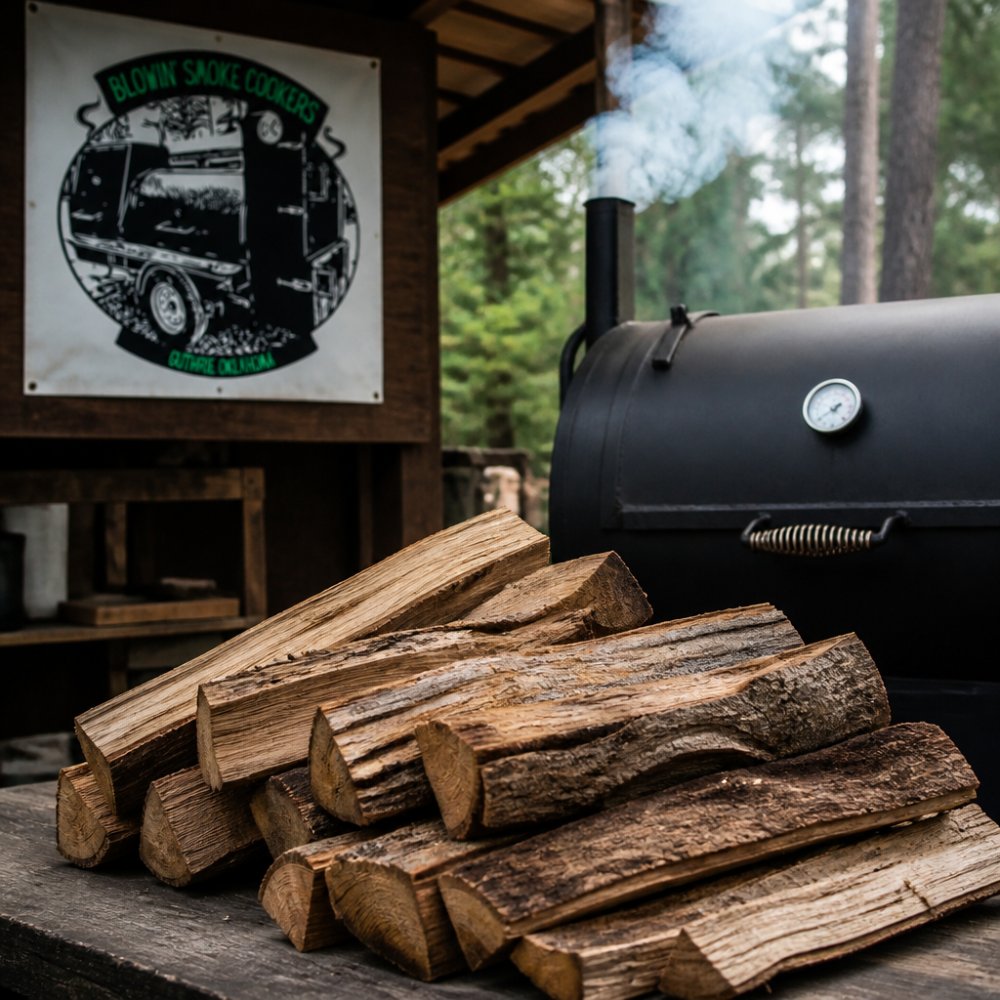
Split size for offset smokers should range from 3-4 inches in diameter. Splits thinner than 2 inches burn too fast and create temperature spikes. Splits thicker than 5 inches smolder and produce creosote instead of clean smoke. The 3-4 inch sweet spot gives you 45-90 minutes of steady burn per split, which is the window you need for managing temperature in an offset firebox.
Seasoning is non-negotiable. Wood should be seasoned for 6-12 months before burning.
Test moisture content with a simple method: grab two pieces of the same species. Bang them together. If they produce a dull thud, they're properly seasoned.
Store seasoned wood under cover but with airflow. A simple roof over your woodpile prevents rain saturation while allowing air circulation.
Understand how to maintain steady temperatures through proper wood preparation with how to maintain steady smoker temperatures. This article breaks down the relationship between wood moisture, split size, and temperature control.
How to Maintain a Clean Fire in an Offset Smoker
A clean fire produces clean smoke. Creosote, that black, tarry buildup, comes from incomplete combustion, which happens when wood is wet, too large, or burning in oxygen-starved conditions.
Load your firebox with 2-3 splits at a time rather than overstuffing it. An overstuffed firebox creates smoldering conditions where wood burns incompletely. This produces creosote instead of smoke and kills your temperature stability.
Manage your air intake carefully. Offset smokers need steady oxygen flow to the firebox. Too little air and you get smoldering, incomplete combustion. Too much air and your temperature spikes.
Remove ash regularly. A slide-out ash pan (standard on professional offset smokers) makes this simple.
Monitor your smoke color. Clean smoke is thin, blue, and barely visible. Thick white or gray smoke means incomplete combustion, usually from wet wood or an overstuffed firebox.
Get specific fire management techniques for long cooks with how to manage fire for 12 hour brisket cook.
Common Wood Selection Mistakes to Avoid
Mixing treated or painted wood into your burn pile. Treated wood releases toxic chemicals when burned (the EPA). Painted wood produces acrid, chemical-tainted smoke. Use only untreated, unpainted hardwood.
Burning softwoods like pine or fir. These woods contain high resin content that creates excessive creosote and produces harsh, acrid smoke. Stick to hardwoods.
Loading wet wood. Moisture in the wood turns to steam, which cools your firebox and creates bitter smoke. Season your wood properly.
Using the same wood for every cook. Different meats benefit from different woods. Oak is your baseline, but hickory, pecan, and fruitwoods each have specific applications. Experiment once you've mastered the fundamentals with oak.
Buying pre-packaged smoking wood from big-box retailers. These packages often contain a mix of woods with inconsistent moisture content and split size.
Choosing Your Offset Smoker Setup
The smoker itself affects how wood performs. Reverse flow technology, where smoke travels under the cooking chamber before rising through the meat, creates more even heat distribution and requires less active temperature management.
The Meadow Creek TS70P and TS120P models from Blowin' Smoke Cookers feature reverse flow design with heavy steel construction that holds temperature remarkably well.
Browse available offset smokers to see how reverse flow design impacts your wood selection and temperature control strategy.
The wood you choose for your offset smoker is the foundation of every cook you run. Start with oak, master your smoker's airflow and temperature dynamics, then experiment with hickory and specialty woods once you understand your baseline.
Frequently Asked Questions
What is the best wood for an offset smoker?
Oak and hickory are the most reliable choices for offset smoker cooking. Oak burns steadily and produces a balanced smoke flavor, while hickory delivers a stronger, more assertive taste. Both hardwoods create consistent heat and long burn times, which are essential for the indirect-heat cooking method offset smokers use. For milder results, fruitwoods like apple or cherry work well, especially when blended with oak or hickory.
How big should wood splits be for an offset smoker?
Wood splits for offset smokers should be of a size that fits easily through the firebox door and burns at a controlled rate, allowing you to maintain steady temperatures without constant adjustments. Consistent split size helps you achieve the even heat offset smoker cooking demands.
Is oak or hickory better for offset smoking?
Both oak and hickory excel in offset smokers, but they serve different purposes. Oak produces a milder, more balanced smoke that works well for long cooks like brisket and pork shoulder, and it's forgiving for beginners. Hickory burns hotter and faster with a stronger flavor, making it ideal for shorter cooks and for pitmasters who want a pronounced smoke ring. Many experienced cooks blend the two to get oak's stability with hickory's flavor depth.
Should wood for an offset smoker be seasoned?
Yes, wood must be seasoned (dried) before use in an offset smoker. Green wood contains moisture that produces white smoke and creosote, which ruins meat flavor and leaves a bitter coating. Properly seasoned hardwood has a moisture content below 20% and burns cleanly with blue smoke. Stack wood in a covered area for 6 to 12 months, or purchase pre-seasoned hardwood splits to ensure consistent, quality results.
