
Table of Contents
- The Verdict: When a Heavy-Duty Reverse Flow Smoker Pays Off
- How Reverse Flow Smokers Work
- Reverse Flow vs. Standard Offset Smoker
- Reverse Flow Smoker Pros and Cons
- What Heavy-Duty Construction Actually Costs You
- Models That Fit Different Backyard Scenarios
- Offset Smoker Maintenance and Longevity
- Conclusion: Matching the Smoker to Your Cooking Style
- Frequently Asked Questions
Last Updated: October 12, 2026
The Verdict: When a Heavy-Duty Reverse Flow Smoker Pays Off
A heavy-duty reverse flow smoker is worth the investment for backyard enthusiasts who cook long, slow sessions often enough that steady temperatures and even heat matter more than a low sticker price.
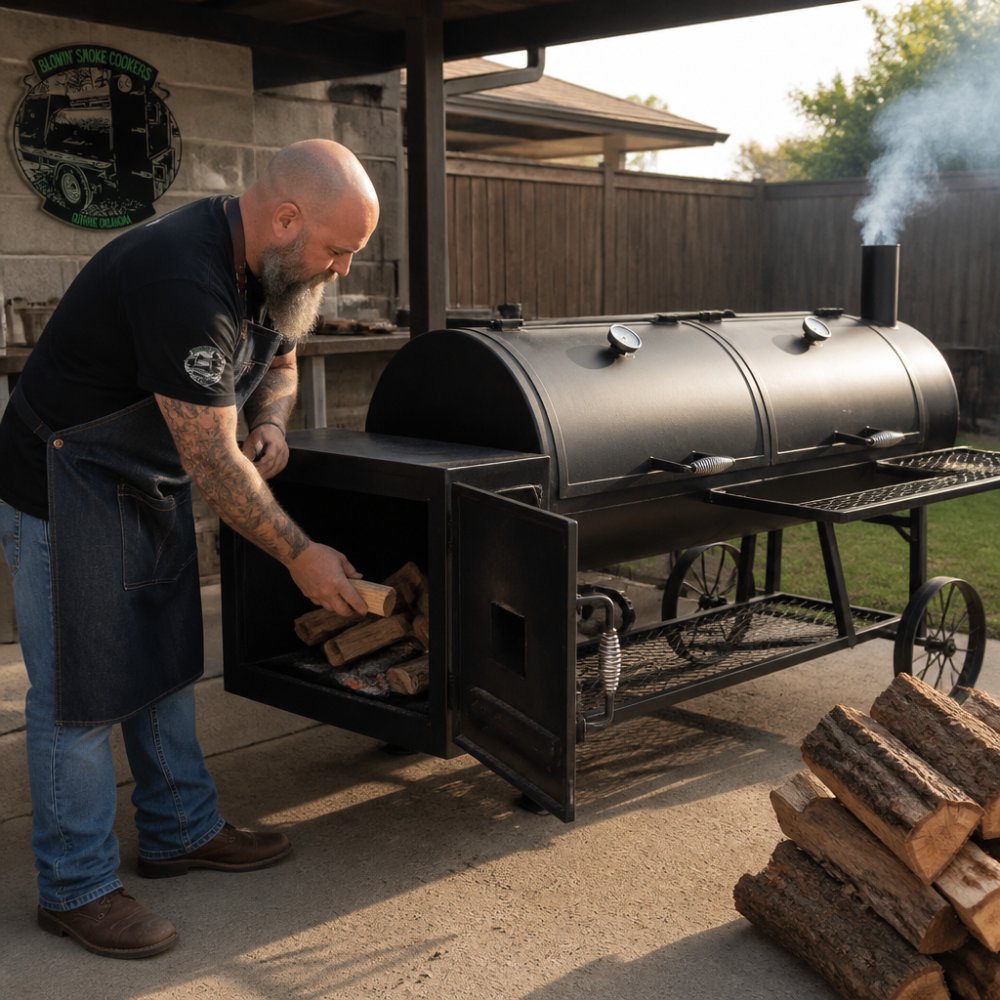
If you host a few big cooks a year and mostly grill burgers, a lighter offset will do the job. If you're running packer briskets, pork butts, and full rib racks for a crowd, the reverse flow smoker stops being a luxury and starts being the tool that makes those cooks repeatable.
Below, we'll show you exactly how the smoke path works, what heavy-duty construction actually costs you over time, and how to match a pit to your cooking style.
How Reverse Flow Smokers Work
A reverse flow smoker routes heat and smoke from the firebox across the bottom of the cooking chamber, then back over the food toward a chimney at the firebox end. That longer path is the whole point: the smoke spends more time in the chamber, and the baffle plate between fire and food evens out the heat before it ever reaches the cooking grate.
The Smoke Path: Firebox, Baffle Plate, and Cooking Chamber
The firebox sits at one end and burns wood or charcoal. Hot gases rise into the cooking chamber, hit the baffle plate, and travel the length of the chamber underneath it.
That single design decision changes everything downstream. The baffle plate absorbs and radiates heat, so the cooking grate sees indirect heat rather than a direct blast from the fire. Smoke circulates through the full chamber instead of rushing straight to the exhaust.
In practice, this means fewer hot spots directly over the fire and a more even cook from end to end. It also means the pit reacts more slowly to fire adjustments, which rewards patience and consistent fire management.
Reverse Flow vs. Standard Offset Smoker
A standard-flow offset smoker sends heat and smoke straight from the firebox across the grate to a chimney at the opposite end. A reverse flow smoker sends it the long way around. That extra travel is why reverse flow pits hold steadier temperatures and why standard offsets are cheaper and simpler to run.
The trade-off is not subtle. Standard offsets give you faster response when you add a split, more direct radiant heat near the firebox, and a lower purchase price. Reverse flow gives you a wider even-cooking zone, better heat retention from the heavier baffle and steel, and a smoke path that distributes flavor more evenly.
Temperature Consistency and Hot Spots
Temperature consistency is where reverse flow earns its reputation. Because the baffle plate shields the food from direct flame and the smoke travels the full chamber before exiting, the temperature spread across the cooking grate narrows considerably compared to a standard offset.
Hot spots do not disappear. They move. On a reverse flow pit, the area nearest the chimney and the corners of the chamber can still run warmer, and the firebox end stays hottest regardless of design. Learning your pit's personality matters more than the spec sheet.
Temperature recovery after you open the cooking chamber is the other practical difference. Heavy steel and an insulated firebox hold heat, so the pit climbs back to target faster after you spritz, wrap, or rotate racks. On a thin budget smoker, that recovery window can stretch long enough to stall your cook.
| Factor | Reverse Flow Smoker | Standard Offset Smoker |
|---|---|---|
| Smoke path | Long, two-directional | Direct, one-directional |
| Temperature consistency | Tighter across the grate | Wider spread |
| Hot spots | Shifted to chimney end | Concentrated near firebox |
| Heat retention | Higher with heavy steel | Lower with thin walls |
| Fuel consumption | Lower per cook once dialed in | Higher, more frequent splits |
| Temperature recovery | Faster after opening | Slower |
| Operator skill needed | Moderate, rewards patience | Moderate, rewards attention |
| Purchase price | Higher | Lower |
Reverse Flow Smoker Pros and Cons
The pros and cons of a reverse flow smoker come down to control versus cost. You get steadier temperatures, better smoke distribution, and a wider even-cooking zone. You pay for it in purchase price, weight, and a longer warm-up.
What works in its favor:
- Even heat across the cooking grate, which matters on long cooks with multiple racks
- Radiant heat from the baffle plate keeps temperatures stable without direct flame
- Better heat retention means less fuel burned per cook once the pit is dialed in
- Smoke circulation through the full chamber produces consistent smoke flavor
- Temperature recovery after opening the chamber is noticeably faster
Where it falls short:
- Higher purchase price than a comparable standard offset
- Heavier build means it is not easy to move without help or casters
- Slower to respond to fire adjustments, which frustrates impatient cooks
- Longer warm-up before the chamber reaches target temperature
- Grease management needs attention, since the baffle plate collects drippings
The honest answer for most backyard cooks: the pros win if you cook low and slow regularly. The cons win if you fire the pit twice a season.
What Heavy-Duty Construction Actually Costs You
Heavy-duty construction costs more up front and less over time, and that math is the part most buyers skip. Thicker steel holds heat, resists warping, and stands up to year-round use. Thin steel is cheaper today and a replacement in a few years.
Steel thickness is the clearest signal of build quality. A quarter-inch diamond tread steel cabinet, like the one on our SNS 72, resists rust and structural flex. That durability is what lets a smoker survive decades of backyard cooking instead of a handful of seasons.

Total Cost of Ownership for a Backyard Cook
Total cost of ownership for a backyard cook breaks into four buckets: purchase price, fuel consumption, maintenance, and replacement. A cheap smoker looks like the bargain until you add up the years.
Fuel is the quiet line item. A pit that leaks heat burns more wood per cook, and over a season of long cooks that adds up.
Cabinet Smoker SNS 72 Smoker Cabinet →
Maintenance is the second bucket. Reverse flow pits need the baffle plate scraped and the grease path cleared, and steel needs touch-ups to keep rust from taking hold.
Replacement is the bucket that flips the decision. If a budget pit lasts a few seasons and a heavy-duty pit lasts many, the annual cost of ownership can land closer than the sticker prices suggest.
Models That Fit Different Backyard Scenarios
Matching the smoker to the backyard matters more than chasing the biggest spec sheet. A patio cook for a family of six and a pitmaster feeding a competition team need very different equipment, and both are valid reasons to buy.
Here is how our lineup maps to real scenarios:
| Model | Price | Capacity | Best For |
|---|---|---|---|
| SNS 24 Patio Smoker | $1,399.00 | 4-6 butts, 2 briskets | Small patios, couples, beginners |
| Meadow Creek SQ36 Offset | $2,725.00 | 5-6 butts, 2 briskets | Backyard enthusiasts upgrading from chain-store pits |
| SNS Barrel 40 Patio Smoker | $3,199.00 | Large family gatherings | Hosts who cook for a crowd regularly |
| SNS 72 Cabinet Smoker | $5,699.00 | 60-75 butts, 30-40 briskets | Serious cooks and small catering operations |
| Ultimate Smokehouse 60 | $18,500.00 | 60 butts, 30 briskets | Caterers and competition teams |
The SNS 24 Patio Smoker is our pick for anyone testing whether reverse flow suits them. It uses wood, charcoal, or both, and its compact footprint fits an outdoor kitchen.

At the top end, the SNS 72 Cabinet Smoker brings a 1/4-inch diamond tread steel cabinet, three slide-out racks at 69"x28", and an insulated firebox. The Ultimate Smokehouse 60 adds a warming box, a four-bay sink package, and a 36" griddle for catering work.
Offset Smoker Maintenance and Longevity
Offset smoker maintenance is mostly about keeping steel dry, grease moving, and rust off the firebox. Do those three things and a heavy-duty pit can outlast the cook who bought it.
Start with the cooking chamber. After each cook, brush the grates and wipe down the interior once it cools.
The firebox takes the hardest wear. Ash holds moisture against steel, so empty it after every few cooks and check the bottom for rust.
For the exterior, touch up chips and scratches before they spread. Rust starts small and moves fast on neglected steel.
Finally, check the moving parts. Hinges, dampers, and caster wheels all wear, and a sticky damper makes temperature control harder than it needs to be. A few minutes of lubrication each season keeps airflow predictable.
Conclusion: Matching the Smoker to Your Cooking Style
The question is not whether heavy-duty reverse flow is good equipment. It is. The question is whether your cooking style justifies it.
If you cook low and slow most weekends, host gatherings, or run a small catering operation, the answer is yes. Steady temperatures, even heat, and a pit that lasts decades change what you can produce. If you fire a smoker a handful of times a year, a lighter offset will serve you well and save money.
Match the pit to the job. That is the whole decision.
Most backyard cooks eventually hit the same wall: the pit cannot hold temperature, the food comes out uneven, and the cook stops being fun. As an authorized distributor of Sling n Steel Custom Smokers and Meadow Creek BBQ Products, we stock equipment built to hold steady temperatures cook after cook.

Frequently Asked Questions
How does a reverse flow smoker work?
Smoke and heat from the firebox travel under a baffle plate along the bottom of the cooking chamber, then rise and flow back across the cooking grate toward the chimney on the firebox side. That longer path evens out temperature and gives the smoke more contact time with the meat. The baffle plate also blocks direct radiant heat, which is why reverse flow cookers hold steady temperatures better than many standard offsets.
What is the difference between a reverse flow and a standard offset smoker?
A standard offset smoker sends heat and smoke straight from the firebox across the chamber to a chimney on the far end. A reverse flow smoker routes that air under a baffle plate first, then back across the grate. The result is more even heat distribution, fewer hot spots near the firebox, and steadier temperatures, at the cost of a longer warm-up and more careful fire management.
Are reverse flow smokers good for beginners?
They can be, because the baffle plate makes temperature control more forgiving once the cooker is up to heat. The trade-off is a longer learning curve on fire management: you still need to run a clean-burning fire and watch temperature swings. Beginners who cook a few times a month often do fine, while occasional cooks may find a smaller patio smoker easier to manage.
How much fuel does a reverse flow smoker use?
Fuel consumption depends on chamber size, steel thickness, and weather. Thicker steel and an insulated firebox hold heat longer, so you burn less wood per hour and recover temperature faster after opening the door. A large cabinet smoker cooking 60 Boston butts will use far more fuel than a 24-inch patio model, so match the cooker to your typical batch size.
Is a reverse flow smoker practical for occasional backyard cooking?
It is practical if you accept the warm-up time and fuel cost of a long cook. For a few racks of ribs or a single brisket a handful of times a year, a smaller heavy-built patio smoker gives you the same steady temperatures without the footprint of a cabinet unit. If you only grill burgers and steaks, a dedicated smoker is more machine than you need.