
Table of Contents
- What Mobile Catering Services Offer
- Choosing the Right Mobile Catering Menu for Your Event
- Essential BBQ Catering Equipment and Trailer Options
- Pricing and Cost Breakdown for Mobile Catering
- Mobile Food Business Permits and Food Safety Requirements
- Event Catering Checklist: Planning and Booking Steps
- How Mobile Caterers Keep Food Safe During Service
- Frequently Asked Questions
Last Updated: October 12, 2026
What Mobile Catering Services Offer
Mobile catering services bring professional-grade cooking directly to your event. Whether you're hosting a corporate gathering, private celebration, or large community event, mobile catering delivers freshly prepared food without requiring a traditional kitchen on-site. Mobile catering services have become essential for event planners who want quality, flexibility, and impressive presentation all in one package.
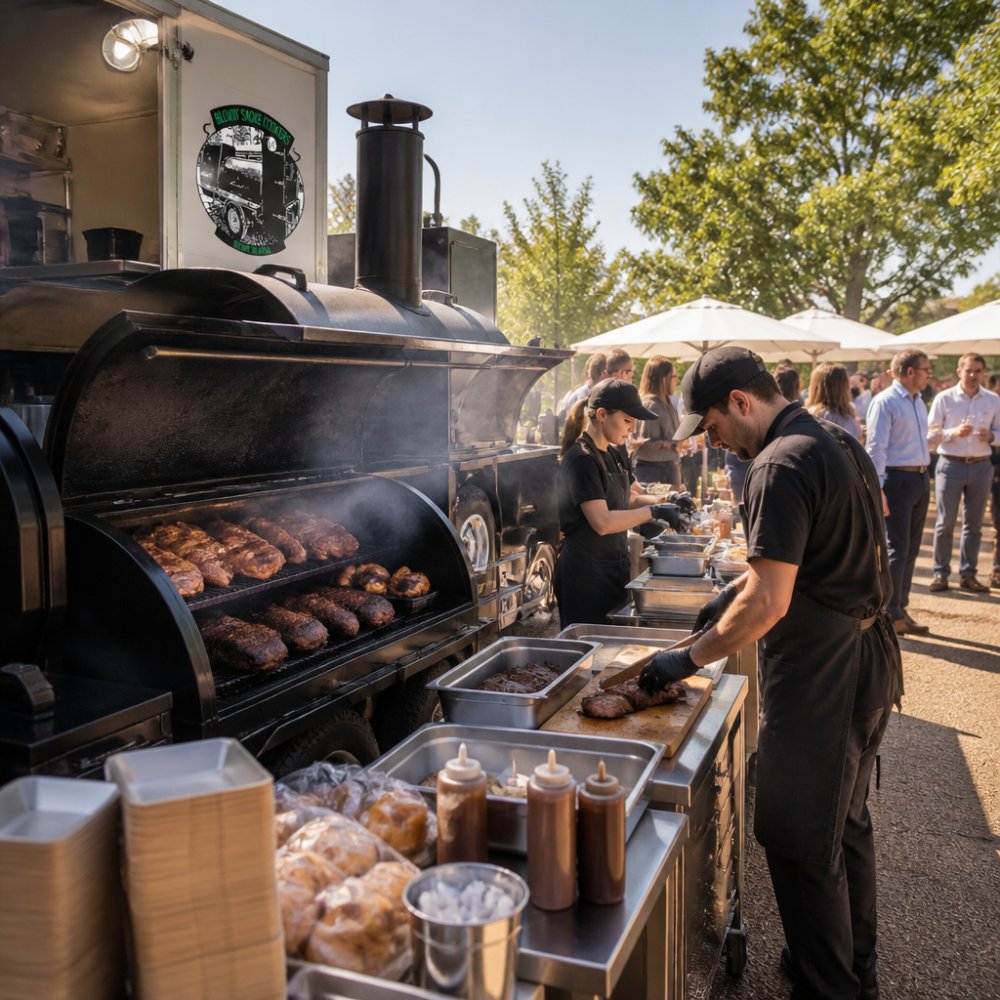
The core appeal is straightforward: a self-contained cooking operation arrives at your venue, sets up, prepares food throughout the event, and handles cleanup. This eliminates the logistical headaches of catering from a distant kitchen. Your guests experience the theater of live cooking, the aroma of wood smoke or charcoal, and food prepared minutes before serving.
Mobile catering services typically include the cooking equipment itself, staffing (in most cases), serving setup, and sometimes full table service. The menu flexibility is one of the biggest advantages. A mobile caterer can adapt offerings based on guest count, dietary needs, and event type. What you get depends on the service format you choose.
Choosing the Right Mobile Catering Menu for Your Event
The menu is where mobile catering services truly shine. Your choices depend on guest count, event duration, dietary preferences, and the impression you want to make.
BBQ-focused menus work for nearly any gathering. Pulled pork, brisket, ribs, and chicken are crowd-pleasers that hold well during service. Many mobile caterers offer sides like coleslaw, beans, cornbread, and mac and cheese that complement smoked proteins. This format works especially well for corporate events, fundraisers, and casual celebrations.
Mixed grill menus combine smoking with live grilling. Hamburgers, hot dogs, steaks, and grilled vegetables appeal to guests with varied preferences. This approach requires equipment that handles both low-and-slow smoking and high-heat grilling simultaneously.
Specialty options like whole-pig roasts, seafood, or rotisserie chicken allow mobile catering services to differentiate themselves. These require specific equipment and expertise but create memorable experiences.
When selecting your menu, consider prep time. Brisket requires 10-14 hours of smoking. Ribs need 5-6 hours. Chicken cooks faster, around 2-3 hours. A professional mobile caterer plans these timelines carefully to ensure everything finishes when guests arrive.
Dietary accommodations matter too. Many mobile catering services now offer vegetarian proteins, gluten-free sides, and allergy-friendly preparations. Discuss these needs upfront so your caterer can plan accordingly.
Essential BBQ Catering Equipment and Trailer Options
The equipment defines what a mobile catering service can deliver. Understanding trailer types and capacity helps you choose the right fit for your event.
Capacity and Guest Count Considerations
Guest count is the primary driver of equipment selection. A small gathering of 30 people requires different capacity than a 200-person event.
Entry-level trailers handle 15-30 guests comfortably. These units typically feature a 60-inch smoker with two cooking racks and a charcoal grill. The SNS Tailgater 60, for example, accommodates 30 Boston butts, 30 whole chickens, or 15 briskets.
Mid-size trailers serve 50-100 guests. They offer larger cooking surfaces, additional racks, and sometimes dual cooking stations. These units can smoke 60 Boston butts or prepare mixed menus with both smoked and grilled items simultaneously.
Large-capacity trailers handle 150+ guests. The SNS Deluxe 72 reaches 75 Boston butts, 75 whole chickens, and 30-35 briskets.
Overestimating capacity is better than undershooting. If your event has 80 guests, book equipment rated for 100+.
Smoker vs. Grill vs. Combo Trailers
Offset smokers use a separate firebox to deliver indirect heat and smoke. The SNS Barrel 60 is a reverse-flow design that distributes heat evenly across the cooking chamber. These are ideal for caterers focused on authentic BBQ.

Cabinet smokers maximize interior space with vertical racks. The SNS Cabinet 60 offers three slide-out racks in a 60-by-30-inch chamber. Cabinet designs cook more food in less trailer footprint.
Grill-only trailers handle high-volume grilling for events where speed matters. These work well for corporate picnics where you're serving burgers, hot dogs, and grilled chicken to crowds quickly.
Combo units pair a smoker with a grill. The SNS Cabinet 60 with XL Grill combines a 60-inch smoker cabinet with a 30-by-48-inch grill. This flexibility lets caterers offer both smoked proteins and fresh-grilled items on the same menu. Combo trailers cost more.
| Equipment Type | Best For | Capacity Range | Primary Advantage |
|---|---|---|---|
| Offset Smoker | BBQ-focused events | 15-30 guests | Authentic smoke flavor, even heat |
| Cabinet Smoker | High-volume smoking | 30-75 guests | Space-efficient, vertical cooking |
| Grill Trailer | Fast service events | 20-50 guests | Quick turnaround, live cooking show |
| Combo Unit | Mixed menus | 30-100 guests | Flexibility, simultaneous cooking |
| Hospitality Trailer | Corporate/large events | 100+ guests | All-in-one setup, professional appearance |
Pricing and Cost Breakdown for Mobile Catering
Mobile catering pricing varies based on equipment size, menu complexity, staffing, and event duration. Understanding the structure helps you budget accurately.
Equipment-based pricing reflects the trailer's capacity and capabilities. Entry-level smoker trailers start around $5,400 for the SNS Tailgater 60. Mid-range units with sink packages and roof systems run $9,400-$13,500. High-end hospitality trailers with refrigeration and propane systems reach $16,500. These are the equipment investments professional caterers make, your per-guest cost spreads across many events.
Per-person pricing for mobile catering services typically ranges from $15-$35 per guest, depending on menu and service level. BBQ-focused menus on the lower end, premium proteins and full-service setups on the higher end. These cost structures often shift when the event scope expands to corporate environments, making the process of choosing office catering a distinct logistical challenge that requires careful budget alignment.
Service fees cover staffing, setup, breakdown, and fuel. Some caterers charge flat fees ($300-$800 depending on distance and event size). Others build service into per-person pricing.
Hidden costs to discuss upfront:
- Travel distance (some charge mileage)
- Setup time (arrive early for large events)
- Parking and venue access fees
- Propane or charcoal (sometimes charged separately)
- Rentals for tables, serving ware, or linens (if not included)
When comparing quotes, ask what's included. One caterer's $20-per-person quote might exclude service staff, while another's $28 quote includes two staff members for 4 hours.
Mobile Food Business Permits and Food Safety Requirements
Operating mobile catering services legally requires permits, licenses, and compliance with food safety regulations. These requirements vary by location, but federal and state guidelines apply everywhere.
Food service permits are mandatory. Your local health department issues permits based on inspections of your equipment, food handling practices, and sanitation protocols.
Commercial kitchen certification may be required depending on your state.
BBQ Pit SNS Cabinet 60 Catering Trailer With Sink Package And Standard Grill →
Food handler certification is standard. Anyone preparing or serving food must complete a food safety course and pass an exam. This typically costs $10-$50 and takes 2-4 hours to complete.
Vehicle and trailer registration is required for any mobile unit that travels public roads. You'll need commercial insurance covering liability, equipment, and product liability.
Menu approval happens during the permit process. Health inspectors review what you plan to serve and how you'll prepare it. Some items require additional documentation (like HACCP plans for certain proteins).
Temperature control documentation is critical. Mobile catering services must maintain food at safe temperatures throughout service. Thermometers, warming boxes, and cooling systems are non-negotiable. Health inspectors verify these during setup.
The Blowin' Smoke Cookers trailers we offer come equipped with sink packages with hot water, insulated fireboxes, and storage systems designed for commercial operation.
Event Catering Checklist: Planning and Booking Steps
Planning a mobile catering event follows a logical sequence. This checklist keeps you organized from initial inquiry through post-event follow-up.
8-12 weeks before your event:
- Define guest count and dietary restrictions
- Research mobile catering services in your area
- Request quotes from 2-3 providers
- Review menus and ask about customization
6-8 weeks before:
- Confirm your caterer and sign a contract
- Lock in your menu selections
- Discuss setup location, parking, and venue access
- Confirm date and time in writing
4 weeks before:
- Finalize headcount with your caterer
- Discuss any last-minute menu adjustments
- Confirm weather contingency plans
- Verify insurance and permits are in place
2 weeks before:
- Confirm final guest count
- Provide venue contact information to your caterer
- Discuss arrival time and parking details
- Clarify payment terms and tip expectations
1 week before:
- Confirm the event details one final time
- Discuss weather forecasts if applicable
- Verify all dietary accommodations are noted
- Confirm contact numbers for day-of coordination
Day of event:
- Arrive early to oversee setup
- Confirm food safety protocols are in place
- Verify serving temperature and quality
- Communicate any adjustments to your caterer
After the event:
- Provide feedback to your caterer
- Process final payment promptly
- Share photos or testimonials if appropriate
This structure prevents misunderstandings and ensures your caterer has everything needed to deliver a successful event.
How Mobile Caterers Keep Food Safe During Service
Food safety during service separates professional mobile catering services from amateur operations. Understanding these practices gives you confidence in your choice.
Temperature maintenance is the foundation. Hot foods must stay above 140°F; cold foods below 40°F.
Cross-contamination prevention requires separate prep areas and utensils for raw and cooked foods.
Time-temperature documentation is required by health departments. Caterers maintain logs showing when food was cooked, what temperature it reached, and how long it sat before service.
Allergen awareness means trained staff who understand cross-contact risks. Your caterer should ask detailed questions about allergies and maintain separate serving utensils for allergen-free items.
Equipment sanitation happens before and after every event. Cooking surfaces, cutting boards, and utensils are cleaned and sanitized. Mobile units have three-compartment sinks for washing, rinsing, and sanitizing.
Proper food storage during transport prevents contamination. Raw meats stay separate from ready-to-eat items. Coolers maintain proper temperatures during the drive to your venue.
Professional mobile catering services treat food safety as non-negotiable. Ask your caterer about their specific protocols. Legitimate operators welcome these questions and can explain their processes in detail.
Planning mobile catering services requires matching your event needs to the right equipment and operator. The equipment you choose determines capacity and menu flexibility.
At Blowin' Smoke Cookers, we provide the professional-grade trailers that serious mobile caterers depend on. Our SNS line includes reverse-flow smokers with heavy-duty steel construction, insulated fireboxes, and integrated sink packages designed for commercial food service.

Frequently Asked Questions
What is a mobile catering service?
A mobile catering service brings food preparation and cooking directly to your event location using specialized trailers or food trucks. The caterer arrives with all necessary equipment, prepares meals on-site, and serves guests. This format works for corporate events, private gatherings, weddings, and community festivals. Mobile catering combines the convenience of professional service with the flexibility to host events at various venues without requiring an established kitchen on-site.
How much does mobile catering cost per person?
Mobile catering pricing varies based on menu selections, guest count, event duration, and travel distance. Most mobile caterers charge per-person rates that typically range from $15 to $50+ depending on the menu complexity and protein choices. Additional costs may include setup fees, travel charges, and gratuity. Request detailed quotes from multiple providers that itemize food costs, equipment fees, and service charges so you can compare total expenses accurately.
What permits do mobile caterers need?
Mobile food businesses must obtain a food service license from the health department, a business license from local authorities, and often a mobile food facility permit. Many jurisdictions require proof of commissary access for equipment cleaning and food storage. Some venues require additional permits or liability insurance documentation. Requirements vary by state and county, so contact your local health department and city planning office to confirm specific regulations for your area.
How do you estimate food portions for a mobile catering event?
Standard portion estimates are 1.5 pounds of meat per person for BBQ-focused events, though appetizer-style service may use less. For side dishes, plan 4-6 ounces per guest. Consider the event type: cocktail receptions need fewer portions than full meals. Ask your mobile caterer for portion guidance based on your guest count and menu selections. They can also adjust quantities based on event duration, time of day, and whether alcohol will be served.