
Table of Contents
- What Is a Reverse Flow Smoker and How Does It Work?
- Reverse Flow vs Traditional Offset Smokers: Key Differences
- The Main Benefits of Reverse Flow BBQ Smokers
- How to Manage Fire in a Reverse Flow Smoker
- Fuel Efficiency and Thermal Mass in Reverse Flow Cookers
- Best Offset Smoker for Backyard Parties: What to Look For
- Common Mistakes and Advanced Troubleshooting
- Conclusion
- Frequently Asked Questions
Last Updated: September 22, 2026
What Is a Reverse Flow Smoker and How Does It Work?
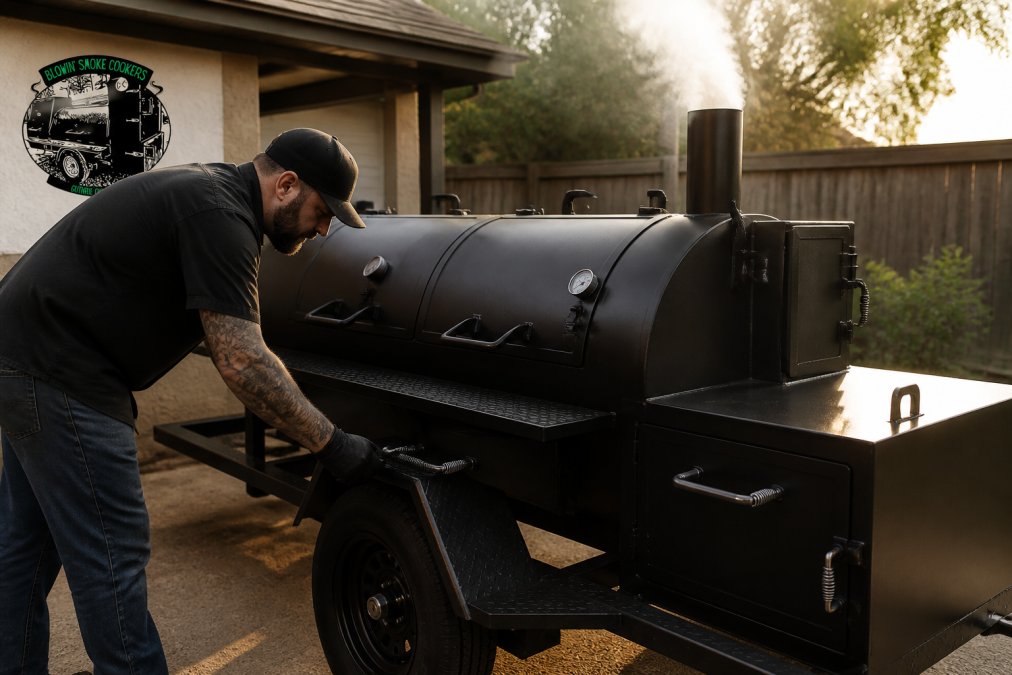
A reverse flow smoker is an offset cooker that routes heat and smoke under a solid plate, then back across the cooking chamber before venting, evening out temperatures end to end. At Blowin' Smoke Cookers, we distribute these cookers because the benefits of reverse flow bbq smokers show up in the food: steadier temps, less fuel babysitting, and cleaner smoke.
The Role of the Baffle Plate in Reverse Flow Design
The baffle plate is a sheet of steel, sitting between the fire and the cooking grates. It blocks direct radiant heat, forces smoke to travel the full length of the chamber, and acts as thermal mass that radiates heat back into the cook chamber.
Reverse Flow vs Traditional Offset Smokers: Key Differences
The core difference is smoke path. A traditional offset sends heat and smoke straight from the firebox, across the food, and out a chimney on the far end. A reverse flow design sends it under the food first, then back across it, reshaping airflow, temperature gradient, and fire attention.
Feature |
Traditional Offset |
Reverse Flow |
|---|---|---|
Smoke path |
Firebox to chimney, one pass |
Under baffle, then back across food |
Temperature gradient |
Hotter near firebox |
More even end to end |
Chimney placement |
Far end from fire |
Same side as firebox |
Heat reaching food |
Direct radiant plus convection |
Mostly indirect, convection-driven |
Fire management |
Frequent adjustments |
Longer stable stretches |
The Main Benefits of Reverse Flow BBQ Smokers
The headline benefit is consistency. A reverse flow cooker holds steady temperature across the whole cooking surface, so every rack position cooks at roughly the same rate, predictability worth more than raw speed when feeding a crowd or turning in competition boxes.
Even Heat Distribution and Temperature Stability
Because the baffle plate absorbs and re-radiates heat, the chamber behaves like a thermal battery, resisting dips and spikes from adding a split or opening the door. The result is even cooking across the full surface, with far less of the firebox hot spot that plagues one-pass designs.
Moisture Retention and Better Smoke Flavor
Indirect heat means less radiant blast drying the meat's surface, helping moisture retention. The longer smoke path also lets smoke cool and settle before reaching the food, producing a cleaner smoke flavor profile with less risk of the acrid bite from creosote on poorly ventilated cooks.
How to Manage Fire in a Reverse Flow Smoker
Managing fire in a reverse flow smoker is mostly about building a small, clean-burning coal bed and feeding it in modest increments. The baffle and thermal mass do the stabilizing work, so avoid smothering the fire or dumping in too much fuel.
- Keep the firebox door closed except when adding fuel
- Run the exhaust damper wide open and control temperature with the intake
- Add preheated splits so the fire doesn't stall
- Watch the chimney, not just the thermometer
Fuel Efficiency and Thermal Mass in Reverse Flow Cookers
Fuel efficiency in a reverse flow cooker comes from thermal mass. A thick baffle plate, heavy-gauge steel walls, and an insulated firebox store heat and release it slowly, so the fire works less to hold temperature, fewer splits per hour and longer stretches between refueling.
How Fuel Type Changes Reverse Flow Performance
Lump charcoal. Burns hot and fast with minimal ash, producing a clean coal bed, but burns down faster than briquettes, so you'll refuel more often on a long brisket cook. Low ash output is a real advantage, ash doesn't pile up under the baffle and choke airflow. Best for shorter cooks or as a starter bed topped with splits.
Matching Fuel to Cook Length
A practical rule: build your initial coal bed with lump or briquettes, then transition to splits for the main cook, the fast, clean start of charcoal with the flavor and sustained heat of wood. Under four hours, straight charcoal is fine. Over four hours, packer brisket, pork butt, beef ribs, go wood-forward with a charcoal base.
Best Offset Smoker for Backyard Parties: What to Look For
The best offset smoker for backyard parties balances cooking surface, heat retention, and fire attention. For a crowd, you want enough grate space to cook everything at once and a cooker that holds temperature while you host instead of hovering over the firebox.
Here's what to prioritize:
- Cooking surface: enough racks to feed your typical guest count without stacking
- Steel thickness: quarter-inch or heavier for heat retention and durability
- Baffle design: a full-length plate that evens out the temperature gradient
- Firebox insulation: longer stable burns and less fuel per cook
- Mobility: locking casters or a trailer if you move the cooker often
Common Mistakes and Advanced Troubleshooting
Most reverse flow problems trace back to airflow, fuel, or temperature reading errors, not the cooker itself. Work through this diagnostic sequence in order, the symptoms of one problem often masquerade as another.
Cabinet Smoker SNS 72 Smoker Cabinet →
Step 1: Verify Your Temperature Reading
Before chasing a temperature problem, confirm the temperature is real. Factory dial thermometers on offset smokers are notoriously inaccurate, they read at the lid, not grate level, and drift over time. A common pattern is a pitmaster fighting a 25-degree swing that only exists on the dial.
- Use a digital probe or an infrared thermometer to check grate-level temperature at both ends of the chamber
- Compare your dial reading against a known reference (ice water for 32°F, boiling water for 212°F at sea level)
- If the dial is off by more than 10 to 15 degrees, replace it or ignore it and rely on a digital probe
Step 2: Diagnose Uneven Temperatures
If the firebox end runs hot and the far end cool, the problem is almost always the baffle plate gap at the far end, which controls how much heat dumps into the chamber before the smoke reverses.
- Gap too wide: heat dumps early, the firebox end overheats, and the far end runs cool. The smoke doesn't complete its full lap.
- Gap too narrow: back pressure builds, the firebox end overheats because heat can't escape fast enough, and the fire may struggle to draw.
- Correct gap: this varies by cooker size. Check your manufacturer's spec or test with a temperature probe at both ends.
Step 3: Fix Bitter or Acrid Smoke Flavor
Bitter, acrid flavor is almost always a dirty fire or restricted chimney. The reverse flow smoke path is long, but it can't clean up smoke that's already dirty.
- Restricted chimney: open the exhaust damper fully. Never control temperature with the exhaust, it traps smoke and coats food in creosote.
- Starved fire: if the intake is choked or the coal bed is buried in ash, the fire smolders instead of burning clean. Clear the ash and open the intake.
- Green or wet wood: no amount of airflow fixes green wood. Switch to dry, seasoned splits.
- Overloaded firebox: too much fuel at once smothers the fire. Add fuel in small increments and let it ignite before adding more.
Step 4: Address Temperature Swings and Slow Recovery
Temperature swings and slow recovery after opening the door are both thermal mass problems.
- Thin, uninsulated fireboxes lose heat rapidly and force the fire to work harder. Insulated fireboxes smooth this out.
- Opening the door too often dumps heat every time. Plan your cook so you're not checking the food every 20 minutes.
- Heavy baffle plates and thick steel recover faster because they hold heat. Lightweight cookers lose temperature every time the door opens.
Step 5: Troubleshoot a Stalled Fire
A stalled fire, one that drops temperature and won't recover, is usually an airflow problem, not a fuel problem. Work through this sequence:
- Check the intake for ash blockage. Rake the coal bed and clear the intake grate.
- Check the chimney for obstruction. A bird nest, a wasp nest, or a buildup of creosote can restrict draw.
- Check the firebox door seal. A warped or leaky door lets air in the wrong place and disrupts the draw.
- Check the fuel. If you're using large, damp, or green splits, the fire can't ignite them properly. Switch to smaller, dry splits.
- Check the baffle plate. If the plate has shifted or warped, it can block the smoke path and stall the draw.
Step 6: Manage Grease and Ash Buildup
Reverse flow cookers have a long, flat baffle plate that catches grease and drippings. If it doesn't drain properly, grease pools, burns, and produces off-flavors. Check for a drain valve or sloped plate routing grease to a collection point, and clean the plate every few cooks, built-up grease is a fire hazard and a flavor problem.
- Check for air leaks around the firebox door and seams
- Verify your thermometer against a known reading before trusting it
- Keep the firebox grate clear so ash doesn't choke the intake
- Run dry wood only; wet or green wood fights you the whole cook
- Clean the baffle plate regularly to prevent grease fires and off-flavors
Conclusion
Holding a tight temperature range across a long cook is the hardest part of barbecue, and where most cookers fall short. Blowin' Smoke Cookers builds heavy-duty steel reverse flow smokers, grills, and catering trailers with the thermal mass and baffle design that make consistency achievable, whether you're feeding a backyard crowd or running a catering job.
Frequently Asked Questions
Are reverse flow smokers better than traditional offset smokers?
Reverse flow smokers offer more even heat distribution and better temperature stability because the baffle plate forces smoke to travel under and around the cooking chamber before exiting. This design reduces hot spots and helps retain moisture, making it easier to cook low and slow. Traditional offsets can produce excellent BBQ but require more fire management to maintain consistent temperatures across the cooking surface.
Do reverse flow smokers require more fuel?
They can use slightly more fuel to reach initial cooking temperature because the heavy steel construction and baffle plate add thermal mass. Once at temperature, however, the insulated design and stable airflow often mean less fuel is needed to maintain steady heat over long cooks. Using dry hardwood and managing the firebox vents properly will keep fuel consumption reasonable.
How do I maintain consistent temperatures in a reverse flow smoker?
Start with a small, hot fire using dry wood or charcoal, then adjust the firebox vents in small increments. The baffle plate and thermal mass help hold heat, so avoid frequent large adjustments. Monitor the temperature at grate level with a reliable thermometer, and add fuel in small amounts to prevent spikes. Learning how to manage fire in a reverse flow smoker is mostly about patience and small corrections.
Are reverse flow smokers good for beginners?
Yes, many beginners find reverse flow smokers easier to learn on because the design evens out temperature swings and reduces the need for constant fire tending. The baffle plate acts as a heat shield, so you can focus on learning fire management without fighting hot spots. Starting with a well-built reverse flow smoker can shorten the learning curve for backyard cooks.
What should I look for in a reverse flow smoker for backyard parties?
For backyard parties, look for a smoker with a large cooking surface, heavy-gauge steel construction, and an insulated firebox to hold heat during long cooks. A well-designed baffle plate and proper chimney placement are also important for even heat. Consider models with multiple slide-out racks and enough capacity to cook for a crowd, like a cabinet smoker that can handle 60-75 Boston butts.
How does reverse flow technology improve heat distribution?
In a reverse flow smoker, the baffle plate runs along the bottom of the cooking chamber, directing heat and smoke to the far end before they rise and travel back across the food toward the chimney. This longer path allows heat to spread more evenly, reducing temperature differences from one side of the grate to the other. The result is more consistent cooking and fewer hot spots.