
Table of Contents
- What You'll Need Before You Start
- Smoker Vent Adjustment Guide: Intake vs. Exhaust Control
- Offset Smoker Fire Management: Building a Stable Coal Bed
- Step-by-Step: How to Maintain Steady Smoker Temperatures During a Cook
- Calibrating Your Thermometer and Using Digital Controllers
- Maintaining Smoker Temperature in Cold Weather
- Common Mistakes That Kill Steady Smoker Temperatures
- Frequently Asked Questions
Last Updated: September 1, 2026
Keeping a smoker locked at 225°F for twelve hours straight is the difference between competition-worthy brisket and a dried-out disappointment. At Blowin' Smoke Cookers, we work with pitmasters at every level, and the single most common struggle is maintaining steady smoker temperatures through an entire cook. The good news: it's a learnable skill, and most fixes are simpler than expected. Below, we break down every variable that affects pit temperature, from vent geometry to fuel bed construction to cold-weather compensation.
What You'll Need Before You Start
Gather these items before your cook begins:
- A reliable dual-probe thermometer (one probe for pit temp, one for meat)
- Quality fuel: hardwood lump charcoal or competition-grade briquettes
- Seasoned hardwood chunks or splits appropriate to your smoker type
- A full water pan if your smoker design accommodates one
- A chimney starter for clean ignition without accelerants
- Fireproof gloves and a long-handled ash tool
The thermometer is non-negotiable. Built-in dial gauges on most smokers read 25°F to 50°F off from actual pit temperature. Calibrating before every cook is a habit every serious pitmaster develops fast.
Fuel quality matters more than most beginners realize. Wet or green wood produces excessive steam and creosote, destabilizing combustion and creating bitter-tasting smoke. Stick to wood seasoned for at least six months, stored off the ground under cover.
What You Need |
Why It Matters |
When to Use It |
|---|---|---|
Dual-probe thermometer |
Accurate pit and meat temp readings |
Every cook |
Lump charcoal or briquettes |
Consistent, controllable heat source |
Ignition and fuel top-ups |
Seasoned hardwood chunks |
Clean smoke and stable combustion |
Added to coal bed throughout cook |
Water pan |
Thermal mass, moisture, heat buffer |
Long cooks over 3 hours |
Chimney starter |
Clean ignition, no chemical taste |
Starting every fire |
Fireproof gloves |
Safe vent and fuel adjustments |
Any time you open the firebox |
Smoker Vent Adjustment Guide: Intake vs. Exhaust Control
Vent management is the primary control system for steady smoker temperatures. Get this wrong and no amount of fuel management will save you.
How Intake Vents Control Oxygen and Heat
The intake vent is your throttle. More airflow means more oxygen reaching the coal bed, increasing combustion rate and raising pit temperature. Restricting the intake starves the fire of oxygen and brings temps down.
Treat the intake vent as a continuous dial, not an on/off switch. For most long cooks targeting 225°F to 250°F, the intake sits between one-quarter and one-half open, depending on ambient temperature, fuel load, and smoker design. Start at half-open during warm-up, then dial back once you approach target temperature.
Using the Exhaust Vent to Fine-Tune Draft
The exhaust vent should almost always remain fully open. Restricting the exhaust creates back-pressure that chokes draft control and causes dirty, smothered combustion, resulting in acrid smoke, temperature instability, and bitter meat.
The exhaust vent's real job is creating the draft that pulls fresh air through the intake. According to the USDA's guidance on wood combustion and smoke, clean combustion requires adequate oxygen flow through the entire burn chamber. Use the exhaust only for minor fine-tuning after dialing in the intake.
Offset Smoker Fire Management: Building a Stable Coal Bed
Most temperature problems in offset smoker fire management trace back to one root cause: no established coal bed before the cook begins.
A coal bed is a layer of glowing, fully-ignited charcoal that acts as a stable heat foundation. Wood splits or chunks added on top of a strong coal bed ignite quickly and burn cleanly. Without that foundation, you're constantly fighting temperature spikes and drops.
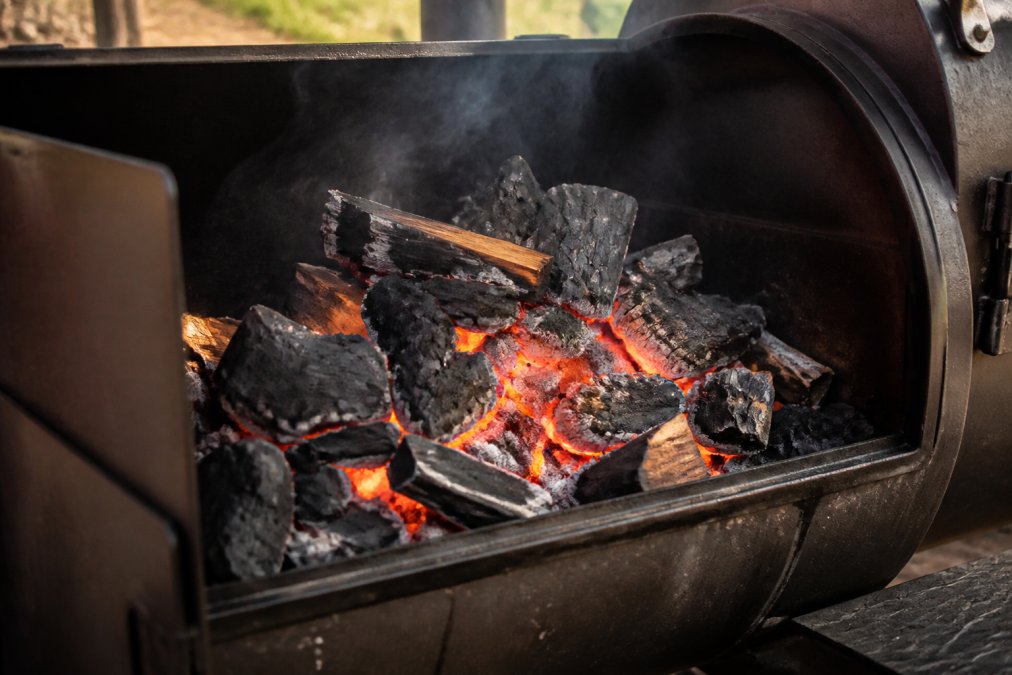
Build your coal bed before adding any meat. Light a full chimney of charcoal, let it ash over completely (typically 15-20 minutes), and dump it into the firebox. Let it stabilize for another 10-15 minutes before placing your first wood split. Only add meat once the pit has held target temperature for at least 20 consecutive minutes.
Fuel Bed Geometry and Why It Matters
How you arrange fuel in the firebox directly affects airflow, combustion efficiency, and heat distribution into the cooking chamber. The goal is a dense, compact coal bed concentrated toward the intake side of the firebox, maximizing oxygen exposure and creating a consistent heat gradient flowing toward the cooking chamber.
For offset smokers, keep splits stacked in a loose log-cabin pattern rather than piled randomly. This allows air to circulate between pieces, promoting complete combustion.
Lump Charcoal vs. Briquettes for Consistent Heat
Lump charcoal burns hotter and cleaner, produces less ash, and responds faster to vent adjustments. It's preferred for competition pitmasters who need precise temperature control.
Briquettes burn more slowly and consistently, making them better suited for long, low-temperature cooks where you want a predictable burn rate. They produce more ash, which can restrict airflow if not managed, but their uniformity makes temperature management more forgiving for less experienced cooks.
Many experienced pitmasters use a combination: briquettes as the base coal bed for steady heat, with lump charcoal or hardwood splits added for flavor and temperature boosts. According to the Hearth, Patio & Barbecue Association's fuel guidance, fuel type significantly affects combustion rate and smoke profile.
Step-by-Step: How to Maintain Steady Smoker Temperatures During a Cook
Here is the systematic sequence that works:
- Light your chimney starter and allow charcoal to fully ash over before loading the firebox.
- Establish your coal bed and let the smoker stabilize at target temperature for 20 minutes before adding meat.
- Set intake vent to half-open and exhaust vent fully open as your starting position.
- Add your first wood split or chunk once the coal bed is established.
- Monitor pit temperature every 15 minutes for the first hour, adjusting intake vent in small increments.
- Add fuel proactively, not reactively, add a split before temperature drops, not after.
- Log your vent positions and temperature readings so you can replicate successful cooks.
Using a Water Pan for Thermal Mass
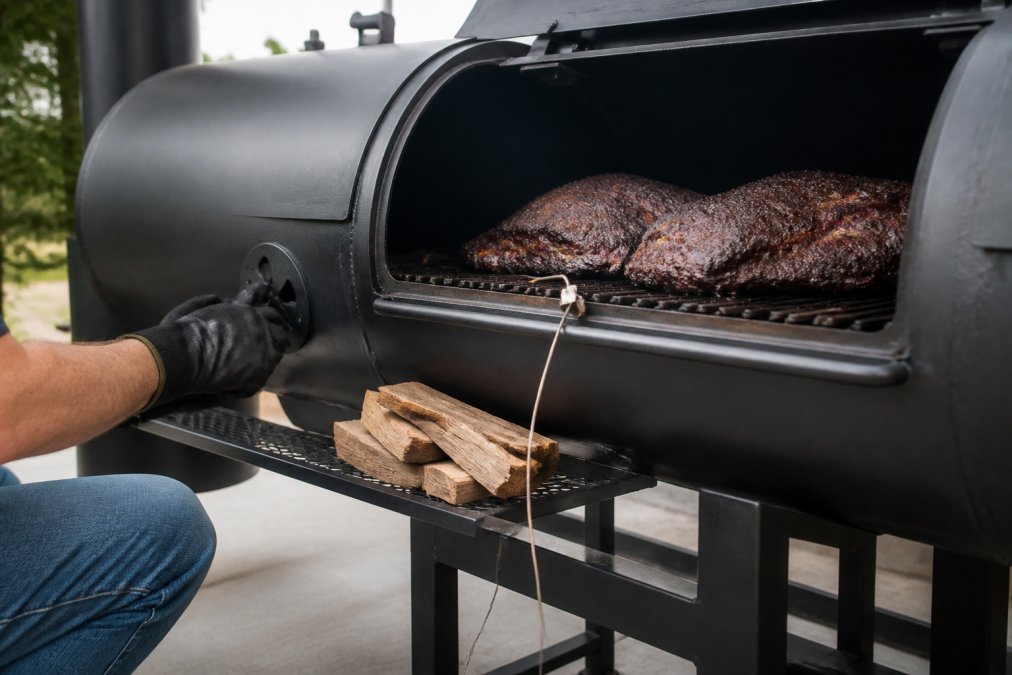
A water pan is one of the most underused tools for temperature stability. Thermal mass is the capacity of a material to absorb and release heat slowly, buffering against rapid temperature swings. Water has high thermal mass, absorbing excess heat when the fire runs hot and releasing it when the fire dips, acting as a natural temperature regulator.
Place the water pan between the firebox and cooking grates on offset smokers, or directly below the grates on vertical cabinet smokers. Keep it at least half-full throughout the cook.

Monitoring Pit Temperature and Probe Placement
Place your pit probe at grate level, at least 2 inches away from any meat. The most common mistake is placing the probe directly above the meat, where evaporative cooling artificially depresses the reading by 30°F to 40°F.
For offset smokers with long cooking chambers, monitor temperature at both the firebox end and the exhaust end. Heat distribution in offset smokers is rarely uniform, and understanding your hot and cool zones lets you position different cuts strategically.
Avoiding Temperature Spikes and Drops
Temperature spikes usually happen from too much fuel added at once or the intake vent opened too wide too quickly. Temperature drops mean the coal bed has thinned out and wasn't replenished in time.
The fix for both is the same: anticipate rather than react. Add small amounts of fuel frequently rather than large amounts infrequently. Adjust vents in small increments and wait five minutes before adjusting again.
Calibrating Your Thermometer and Using Digital Controllers
An uncalibrated thermometer is worse than no thermometer, it gives you false confidence.
To calibrate an analog thermometer:
- Bring a pot of water to a full boil (212°F at sea level; adjust for elevation).
- Submerge the probe stem at least 2 inches into the boiling water without touching the pot sides.
- The reading should be 212°F. If it reads differently, note the variance and apply it as a correction factor to all subsequent readings.
- For dial-type thermometers with an adjustment nut, use pliers to rotate the calibration nut until the needle reads correctly.
Repeat this process before every cook. Thermometers drift over time, especially after exposure to high heat.
Digital controllers attach to the intake vent and use a fan to regulate airflow automatically, maintaining target temperature within a tight range. The SNS Pellet Vault from Blowin' Smoke Cookers uses commercial-grade pellet feed technology, set your target temperature and the system manages fuel delivery and airflow automatically, making it an excellent choice for catering operations.

According to the National Fire Protection Association's guidelines on outdoor cooking equipment, proper temperature monitoring and controlled combustion are also key safety considerations.
Maintaining Smoker Temperature in Cold Weather
Cold weather is where steady smoker temperatures get genuinely hard. Ambient temperature directly affects heat loss through smoker walls, fuel consumption rate, and the time required to reach thermal equilibrium.
Expect to use more fuel in cold weather. The smoker walls conduct heat away faster when outside temperature drops, so your fire has to work harder to maintain the same pit temperature. Here's how to compensate:
- Pre-heat longer: Allow 30-45 minutes of stabilization time instead of 20 minutes before adding meat.
- Open the intake wider: Increase airflow to compensate for higher heat demand.
- Use a welding blanket or insulating wrap: Wrap the cooking chamber (not the firebox) with a high-temperature insulating blanket to reduce heat loss.
- Position the smoker strategically: Block wind exposure with a fence, vehicle, or temporary windbreak. Wind dramatically accelerates heat loss.
- Add fuel more frequently: Cold weather shortens the interval between necessary fuel additions.
Heavy-duty steel construction makes a real difference. The SNS 72 Smoker Cabinet from Blowin' Smoke Cookers features quarter-inch diamond tread steel walls and an insulated firebox, holding heat far more effectively than thin-gauge units when temperatures drop.
Common Mistakes That Kill Steady Smoker Temperatures
Most temperature problems are self-inflicted. Here are the ones we see most often:
Opening the lid too frequently. Every time you lift the cooking chamber lid, you lose heat and disrupt thermal equilibrium. Limit lid openings to scheduled checks only.
Closing the exhaust vent to control temperature. This is the wrong control. It creates dirty combustion and unstable temperatures.
Adding too much wood at once. Large fuel additions cause immediate temperature spikes followed by drops. Add smaller amounts more frequently.
Ignoring ambient conditions. A cook that worked perfectly in July will behave differently in November. Adjust your vent positions and fuel strategy to account for weather.
Trusting the built-in thermometer. The dial gauge in the lid reads temperature at lid level, not grate level, often a 20°F to 40°F difference from where your meat actually sits.
Neglecting ash management. Ash accumulation in the firebox blocks airflow through the intake vent and smothers the coal bed. Clear ash buildup every few hours on long cooks.
The SNS 40 Vertical Smoker Cabinet and the SNS Beast Cabinet Smoker from Blowin' Smoke Cookers are engineered with reverse flow technology that addresses uneven heat distribution. Reverse flow design routes heat and smoke under a steel baffle plate before it enters the cooking chamber, dramatically evening out temperature gradients and reducing hot spots that plague standard offset designs.

For more on the science of combustion and wood smoke flavor development, the American Meat Science Association's resources on smoke and meat quality provide solid foundational reading.
Maintaining steady smoker temperatures is a discipline, not a trick. The fundamentals, clean fuel, proper vent management, an established coal bed, and accurate temperature monitoring, apply whether you're running a backyard cook for friends or feeding 500 people at a catering event. Blowin' Smoke Cookers builds equipment specifically for pitmasters who take this seriously: heavy-duty steel construction, reverse flow technology, and commercial-grade capacity across the full Sling n Steel lineup. Browse the full smoker catalog and add the right unit to your setup.
Frequently Asked Questions
How do I keep my smoker at 225°F consistently?
Start with a fully established coal bed before adding meat. Set your intake vent to roughly 25-50% open and keep the exhaust vent fully open to maintain draft control. Add small splits of hardwood every 45-60 minutes rather than large amounts at once. A water pan helps buffer heat swings by adding thermal mass to the cooking chamber. Once you reach steady state, make only small, gradual vent adjustments to hold steady smoker temperatures near your target.
Why is my smoker not maintaining temperature?
The most common causes are insufficient airflow, a weak coal bed, or wet/green wood. Check that your intake vent is open enough to feed oxygen to the fire and that ash buildup isn't blocking the firebox floor. Fuel quality matters too: low-density briquettes or damp wood produce inconsistent heat. On offset smokers, a poorly sealed firebox door also bleeds heat. Probe placement errors can make the pit temperature read incorrectly, so verify your thermometer is calibrated and positioned correctly.
Does closing the vents on a smoker make it hotter or cooler?
Closing the intake vent reduces oxygen to the fire, which lowers combustion and drops pit temperature over time. Closing the exhaust vent traps heat temporarily but starves the fire of draft, eventually causing it to smolder and cool. For steady smoker temperatures, keep the exhaust vent fully open and regulate heat exclusively through the intake vent. This gives you predictable draft control without risking a stalled or oxygen-starved fire.
How do I maintain smoker temperature in cold weather?
Cold ambient temperatures pull heat from the cooking chamber and firebox faster than normal. Open your intake vent wider than you would in warm conditions to compensate for increased fuel consumption. A welding blanket or insulated jacket around the cooking chamber reduces heat loss significantly. Pre-warm the firebox before loading meat, and expect to add fuel 20-30% more frequently. Heavy-gauge steel smokers retain heat far better than thin-walled units, making construction quality critical for cold-weather cooks.
This article was written using GrandRanker