
Table of Contents
- What Makes a High Quality BBQ Smoker Stand Out
- Heavy-Duty Steel BBQ Smoker Construction
- Reverse Flow Smoker Design and Performance
- BBQ Smoker Temperature Control and Stability
- Offset Smoker Features That Indicate Quality
- Grate Materials, Capacity, and Cooking Performance
- Durability, Maintenance, and Long-Term Ownership
- Inspection Checklist Before You Buy
- Frequently Asked Questions
Last Updated: October 19, 2026
What Makes a High Quality BBQ Smoker Stand Out
When you're shopping for high quality BBQ smokers, the difference between a backyard impulse buy and a piece of equipment that will last decades comes down to a few critical details.
High quality BBQ smokers share a handful of non-negotiable traits: they're built from thick, durable steel; they maintain steady temperatures even in shifting weather; they distribute smoke and heat evenly across the cooking chamber; and they're engineered so you can actually repair or maintain them years down the road.
The real question isn't whether quality matters, it does. The question is what to look for when you're standing in front of a smoker trying to decide if it's worth your money.
Heavy-Duty Steel BBQ Smoker Construction
The moment you touch a high-quality smoker, you feel the difference. It's heavy. It doesn't flex or rattle. That's because real BBQ smokers are built from steel thick enough to hold heat, withstand years of temperature cycling, and resist rust and corrosion.
Budget smokers use thin sheet metal, often 18-20 gauge, that dents if you lean on it and rusts within a few seasons. Professional-grade smokers use 3/16-inch plate steel on the main chamber and ¼-inch on the firebox. That thickness matters because it directly affects heat retention, temperature stability, and longevity.
Steel Thickness and Gauge Standards
Steel thickness is measured in gauge (thinner) or fraction of an inch (thicker). Here's what you're looking for in a high quality BBQ smoker:
- Main cooking chamber: 3/16-inch plate steel minimum. This is the industry standard for smokers that will see regular use and last 20+ years. Anything thinner sacrifices heat retention and durability.
- Firebox: ¼-inch plate steel. The firebox takes the most abuse from direct flame and temperature extremes, so it needs to be heavier than the main chamber.
When you're evaluating a smoker, ask the manufacturer for the exact thickness. If they won't tell you, that's a red flag. Meadow Creek's offset smokers, like the TS70P, use 3/16-inch plate on the tank and ¼-inch on the firebox, the standard that tells you it's built for serious use.

Welding Quality and Structural Integrity
Thick steel only matters if it's joined properly. Poor welds are where smokers fail.
High-quality smokers use continuous full-penetration welds on all seams. That means the weld goes completely through both pieces of steel, creating a bond that's as strong as the steel itself. You should see smooth, consistent bead work with no gaps, pits, or cold spots.
Look for smokers where welds are visible and inspectable. If the manufacturer hides them behind paint or doesn't want you looking closely, they're hiding poor work. A well-built smoker shows its welds with pride because they're solid.
Reverse Flow Smoker Design and Performance
A reverse flow smoker is engineered to solve one of the biggest problems in traditional offset smoking: uneven heat.
Reverse flow design adds an internal baffle, a steel plate that forces smoke and heat to travel the length of the chamber before exiting. This path evening out temperature and distributes smoke more uniformly across all your food.
According to BBQ smoking research on heat distribution, reverse flow technology reduces temperature variance by up to 30 percent compared to traditional offset designs.
When evaluating a high quality BBQ smoker, ask if it has reverse flow. Models like the Meadow Creek TS70P and TS120P both feature reverse flow draft, which is why they're trusted by competition pitmasters who can't afford temperature swings.

BBQ Smoker Temperature Control and Stability
Temperature control separates smokers that work from smokers that frustrate you. A quality smoker holds temperature within a 15-20 degree range. A poor one swings 50+ degrees, forcing you to constantly adjust vents and fuel.
Heat Distribution and Airflow Management
Airflow is everything. The dampers on your smoker, the intake vents on the firebox and the exhaust damper on the chamber, control how much air feeds the fire. More air, hotter fire. Less air, cooler fire.
Look for dampers that open and close smoothly without binding. They should have positive stops so they don't fall off.
Airflow management also depends on the internal baffle design. A well-designed reverse flow baffle creates turbulence that mixes hot air and smoke, then channels it evenly across the cooking surface before it exits.
Thermometer Placement and Accuracy
A quality smoker either comes with a reliable dial thermometer or a digital probe.
The thermometer placement matters too. It should be positioned at grate level, roughly in the middle of the cooking chamber. If it's mounted too high or off to the side, it won't read the temperature where your food actually is.
Many serious pitmasters add a second thermometer, often a wireless probe system, to verify actual cooking temperature. This gives you real-time feedback and confidence that your smoker is doing what you set it to do.
Offset Smoker Features That Indicate Quality
An offset smoker is recognizable by its design: a main cooking chamber with a firebox attached to the side.
Quality offset smokers have several specific features.
Meadow Creek SQ36 Offset Barbecue Smoker →
The Meadow Creek SQ36, built for backyard enthusiasts, features a removable ash pan and easy firebox access, which means less fiddling and more consistent cooking.
Look for offset smokers with hinged lids that open smoothly and stay open. Cheap smokers have lids that are hard to lift or don't stay put, which makes it frustrating to check your food.
Grate Materials, Capacity, and Cooking Performance
The cooking grate is where your food sits, so it matters. Cast iron grates hold heat well but require maintenance and can rust if not seasoned properly.
Cooking capacity should match your actual needs. A backyard enthusiast might be happy with a smoker that holds 4-6 pork butts.
The grate design matters too. A grate with ½-inch spacing lets small pieces of food fall through (which is actually good, it keeps your chamber cleaner).
Many quality smokers offer optional additional grates, which doubles your cooking capacity without buying a second smoker.
Durability, Maintenance, and Long-Term Ownership
A smoker is only as good as its ability to keep working.
Quality smokers are built with standard materials and accessible design. Stainless steel components don't rust. Bolted joints can be disassembled and replaced.
The manufacturer's reputation for supporting their products matters too. Do they stock replacement parts? Can you call and get advice if something goes wrong?
Rust and corrosion are the biggest threats to long-term smoker life. High-quality smokers use powder-coat or high-temperature paint that resists rust.
Regular maintenance extends smoker life significantly. Clean out ash after each cook. Inspect welds and paint annually.
Inspection Checklist Before You Buy
Before you commit to a high quality BBQ smoker, do a physical inspection. Here's exactly what to check:
- Steel thickness: Ask the manufacturer for exact thickness. Main chamber should be 3/16-inch minimum; firebox should be ¼-inch.
- Weld quality: Look at all visible welds. They should be smooth, consistent, and show no gaps or cold spots. Run your finger along the welds (carefully, they can be sharp). A good weld feels smooth.
- Damper operation: Open and close intake and exhaust dampers multiple times. They should move smoothly without binding or sticking.
- Thermometer: Check if it's included and test its accuracy if possible. Ask if it's replaceable.
- Firebox size: Make sure it's large enough for your fuel load without crowding.
- Ash pan: Confirm it slides out easily and doesn't require disassembling the smoker.
- Paint and finish: Look for consistent coverage with no thin spots. Check for any rust or corrosion already present.
- Hinges and hardware: All bolts, hinges, and handles should be solid stainless steel or powder-coated steel, not bare metal that will rust.
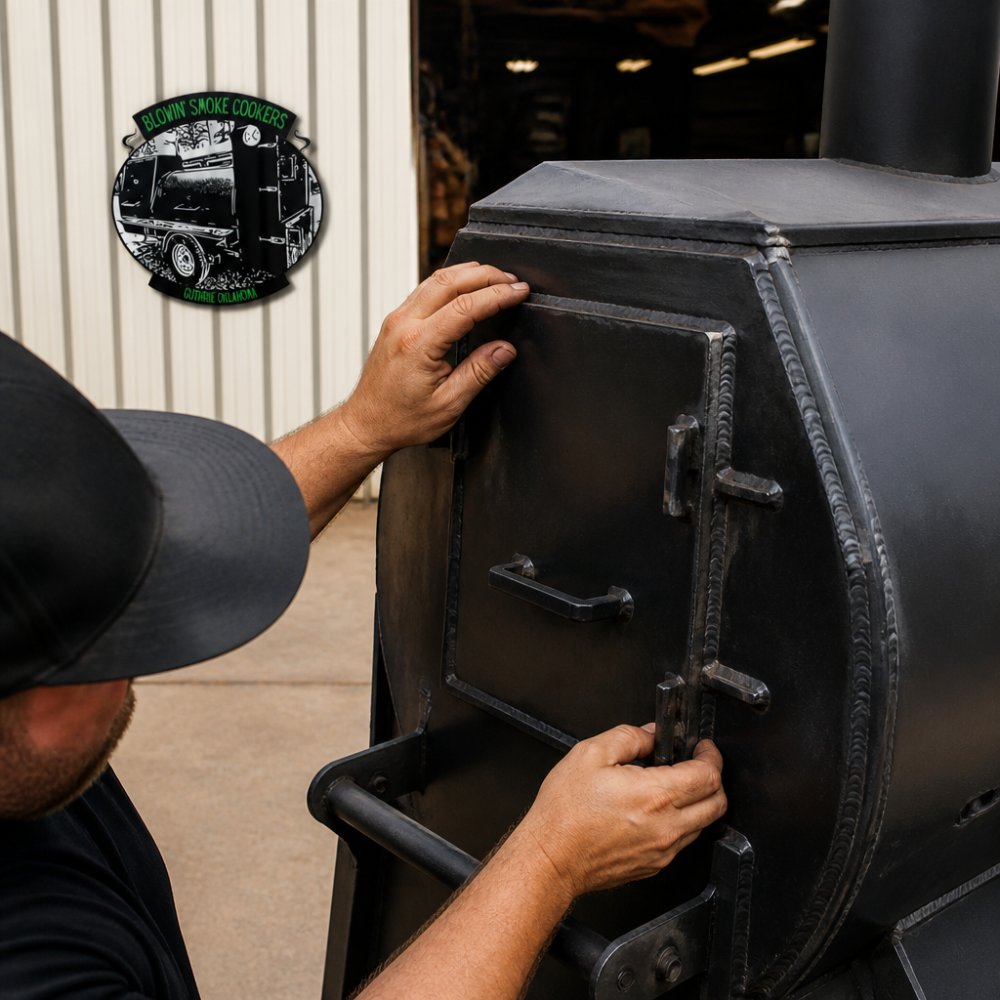
Take photos of anything that concerns you. If the seller won't let you inspect closely or gets defensive about questions, walk away. A manufacturer confident in their work welcomes scrutiny.
Choosing the right smoker means understanding what separates equipment built to last from smokers that disappoint. The Meadow Creek TS70P and TS120P are built with the exact standards we've outlined here, 3/16-inch plate steel, reverse flow technology, and stainless steel grates, so you get consistent, professional-grade results whether you're hosting a backyard gathering or competing on the circuit.

Frequently Asked Questions
What steel thickness should a high quality BBQ smoker have?
Quality BBQ smokers typically feature 3/16" steel plate on the main cooking chamber and 1/4" plate on the firebox. This thickness ensures proper heat retention, structural durability, and resistance to warping over time. Thinner steel (under 1/8") tends to develop hot spots and cracks with repeated heating cycles. Check the manufacturer's specifications before purchasing—this detail separates professional-grade smokers from budget models.
How does reverse flow smoker technology improve cooking results?
Reverse flow smoker design directs heat and smoke under a baffle plate before it reaches the cooking chamber, distributing temperature more evenly across all grates. This eliminates hot spots that plague traditional offset smokers, making it easier to maintain steady cooking temperatures. The result is more consistent smoke flavor and tender meat with fewer cold zones on the grill. This feature is a hallmark of high quality BBQ smokers designed for both backyard use and competition.
How can you tell if a BBQ smoker controls temperature consistently?
Look for smokers with adjustable dampers on both the firebox and cooking chamber—these allow precise airflow control to hold target temperatures within 5-10 degrees. A built-in thermometer placed in the center of the cooking chamber (not the firebox) gives accurate readings. Test this by observing if the smoker maintains temperature during a test burn. Quality offset smoker features include sealed doors, tight-fitting grates, and insulated chambers that minimize temperature swings even in windy conditions.
What should you inspect on a used BBQ smoker before buying?
Examine the interior and exterior for rust, especially around seams and welds. Check door hinges and latches for corrosion or loose fittings. Inspect the grates for pitting or damage. Look for cracks in welds or the steel body, which indicate structural failure. Test all dampers and vents to ensure they move freely. Ask about maintenance history and how often it was used. A well-maintained heavy-duty steel BBQ smoker should show minimal rust and solid mechanical function, even after years of use.
Is a high quality BBQ smoker worth the investment for occasional backyard cooking?
If you host large gatherings or plan to smoke meat regularly, a quality smoker provides consistent results and durability. Heavy-duty steel construction means your smoker will perform reliably for years with basic maintenance. Consider your cooking frequency and whether you value temperature stability and smoke flavor control. For serious backyard enthusiasts, the precision and longevity of a quality smoker are significant benefits.
What's the difference between charcoal, pellet, gas, and offset smoker types?
Charcoal and wood smokers (including offset models) offer authentic smoke flavor and are favored by competition pitmasters. Electric and pellet smokers provide set-and-forget convenience with less hands-on management. Gas smokers heat quickly but produce less smoke flavor. Offset smokers with reverse flow technology deliver superior temperature control and smoke distribution. Your choice depends on your cooking style: if you prioritize smoke flavor and temperature precision, offset smoker features and charcoal designs are superior. For convenience, pellet or electric options work well.
How do you maintain a heavy-duty steel BBQ smoker to prevent rust?
After each cook, allow the smoker to cool and brush out ash to prevent moisture buildup. Cover the smoker when not in use to shield it from rain and humidity. Inspect welds and seams monthly for surface rust and apply high-temperature paint or rust preventative spray as needed. Empty the ash pan regularly—accumulated ash holds moisture and accelerates corrosion. Stainless steel grates resist rust better than standard steel. A well-maintained heavy-duty steel BBQ smoker can last decades, but regular inspection and protective coatings are essential.
What cooking capacity should you choose for a high quality BBQ smoker?
Capacity depends on your typical guest count and cooking goals. Backyard enthusiasts hosting 20-30 people typically need 5-6 pork butts' worth of space. Competition pitmasters and caterers require larger capacity—cabinet smokers like the SNS 40 hold up to 40 pork butts across multiple racks. Consider both main chamber size and optional warming boxes for flexibility. Larger capacity smokers (11+ square feet of cooking area) offer versatility for different meats and event sizes, making them valuable for serious cooks.