
Table of Contents
- What to Look for When Buying Custom Catering Trailers
- Commercial Smoker Buying Guide: Fuel Types and Performance
- BBQ Trailer Layout Ideas for Operational Efficiency
- Catering Trailer Equipment Checklist: Essential Components
- Mobile Catering Business Setup: Matching Trailer to Event Volume
- Top Custom Catering Trailers for Professional Operations
- Operating Costs and Total Cost of Ownership
- Frequently Asked Questions
Last Updated: October 17, 2026
What to Look for When Buying Custom Catering Trailers
Picking the right custom catering trailer is one of the biggest decisions you'll make for your BBQ business. The wrong choice leaves you scrambling during events, burning through fuel, or maxing out capacity when demand spikes.
The best custom catering trailers balance cooking capacity, reliability under pressure, and a layout that works for your crew. A massive cooking chamber means nothing if your team can't move around it efficiently.
Cooking Capacity and Batch Size
Cooking capacity determines how many guests you can feed in a single cook cycle, directly impacting hourly throughput and event profitability.
Most professional catering operations need to handle 30 to 90 main protein servings per cook. A 60-inch smoker cabinet typically handles 60 Boston butts, 60 whole chickens, or 20-30 briskets. Going smaller means multiple cook cycles; going larger wastes capacity and money.
Match capacity to your actual event calendar, not fantasy bookings. If most gigs run 40-60 people, a mid-capacity system beats oversizing to 90+ servings.
Build Quality and Durability
Heavy-duty steel construction separates equipment that lasts five years from equipment that lasts fifteen.
The best commercial catering trailers use 1/4-inch diamond-tread steel for main cooking chambers and insulated fireboxes, which handles the thermal stress of constant heating and cooling without warping. Thinner steel (1/8-inch or less) saves money upfront but gets replaced sooner.
Reverse-flow smoker design also matters for durability: heat and smoke flow under the cooking racks before exiting, giving more even heat distribution, less strain on chamber walls, and better cooking consistency.
Temperature Control and Consistency
Competition-grade results require holding temperatures within a tight range, without wild swings that undercook or dry out meat.
Look for insulated fireboxes with adjustable air vents to fine-tune heat flow. Double-walled insulation keeps outside temperature changes from throwing off your cook, and some premium trailers include thermometer ports that read actual chamber temperature.
Feature |
Impact |
Why It Matters |
|---|---|---|
Insulated firebox |
Holds steady heat |
Prevents temperature swings during events |
Adjustable vents |
Precise heat control |
Lets you dial in exact temperature for different meats |
Multiple thermometer ports |
Accurate readings |
Catches cold spots before they ruin a batch |
Commercial Smoker Buying Guide: Fuel Types and Performance
Fuel choice affects operating costs, cook time, and smoke flavor, with real tradeoffs when you're running multiple events per week.
Charcoal and Wood-Fired Systems
Charcoal and wood give the deepest smoke flavor and the most control over heat intensity. Traditional offset smokers and barrel-style trailers run on these fuels and are the standard for competition BBQ and high-end catering.
The downside: charcoal and wood require active management. A 12-hour brisket cook means every 60-90 minutes tending the firebox, adjusting vents, and adding fuel, which is labor time you're paying for.
Fuel costs run higher than propane, especially if you're sourcing quality hardwood.
Propane and Hybrid Options
Propane systems offer consistency and hands-off operation. Set your temperature, walk away, and come back to steady heat, saving labor and stress for caterers juggling multiple events.
Propane doesn't deliver the same smoke depth as wood or charcoal, but hybrid systems let you add wood chips or charcoal inserts for smoke flavor while keeping propane as the base heat.
Propane costs less per cook than charcoal. The tradeoff is flavor intensity, which matters less for high-volume events where consistency and speed matter more than competition-level smoke rings.
BBQ Trailer Layout Ideas for Operational Efficiency
Trailer layout determines how fast your team works and whether they can execute your menu under pressure.
The best layouts follow a logical flow: prep, cooking, warming/holding, and service zones.
Sink placement matters more than most people realize. A 3-bay sink with hot water and drainage lets you handle sanitation without leaving the trailer, as health codes require.
Position storage baskets, racks, and prep tables so commonly used items (tongs, thermometers, serving utensils) are within arm's reach of the cooking area.
Catering Trailer Equipment Checklist: Essential Components
Beyond the smoker itself, your trailer needs specific equipment to function as a commercial catering operation. Missing pieces force workarounds that slow you down.
Cooking Surfaces and Racks
Your main smoker chamber should include multiple slide-out racks sized for the proteins you cook most. A 60-inch cabinet typically comes with three racks measuring 57" x 28", enough for 60 Boston butts.
A separate charcoal grill (30" to 48" wide) adds versatility: grilled items cook faster, so you can handle rush orders without delaying the main smoke. A rib box keeps spare ribs separate from larger proteins, preventing cross-contamination.
Sink and Water Systems
A 3-bay sink with hand-wash station, instant hot water, and a 5-gallon holding tank is the minimum, covering handwashing, utensil cleaning, and basic sanitation. The tankless heater ensures warm water on demand.
Dual shut-offs and proper drainage prevent spillage and meet health code requirements.
Storage and Prep Areas
A 28" x 67" wood storage basket keeps fuel organized and accessible, while separate storage for propane bottles on hybrid systems keeps the work zone clear.
Fold-down roof systems and collapsible canopies protect your team from sun and rain during setup and service.
BBQ Pit SNS Cabinet 60 Catering Trailer With Sink Package And Standard Grill →
Mobile Catering Business Setup: Matching Trailer to Event Volume
Your ideal trailer size depends on your event calendar and growth plans. Undersizing leaves money on the table; oversizing wastes capital on unused capacity.
Small Events and Startup Operations
If you're running 20-40 person events or just starting out, a mid-capacity system makes sense. The SNS Barrel 60 ($9,399) handles 30 Boston butts, 30 whole chickens, or 15 briskets, plenty for intimate catering or weekend farmers market vendors.
Smaller trailers cost less upfront, require less fuel, and are easier to position at tight event venues. You can always upgrade as demand grows.
High-Volume Catering and Restaurant Use
Once you're booking events regularly or running a restaurant with catering on the side, you need capacity that handles 60+ servings per cook without stress. The SNS Cabinet 60 ($10,499) or SNS Deluxe 72 ($13,100) give you the throughput to run back-to-back events or handle large corporate functions.

High-capacity systems also let you build menu variety. A 72-inch smoker with a separate grill, fryer, and warming boxes means you cook smoked brisket and grilled chicken simultaneously, which commands higher catering rates and attracts bigger bookings.
Top Custom Catering Trailers for Professional Operations
We've tested and reviewed dozens of catering trailers. Here's what separates the best performers from the rest.
Mid-Capacity Cabinet Systems: SNS Cabinet 60 and Barrel 60
The SNS Cabinet 60 ($10,499) and SNS Barrel 60 ($9,399) are the workhorses of mid-sized catering operations.

The Cabinet 60 uses a traditional cabinet chamber (60" x 30") with three pull-out racks. The Barrel 60 uses a barrel-style offset design (60" x 31") with two main racks plus a dedicated rib box.
Choose the Cabinet 60 if you're cooking mostly large proteins like briskets and butts.
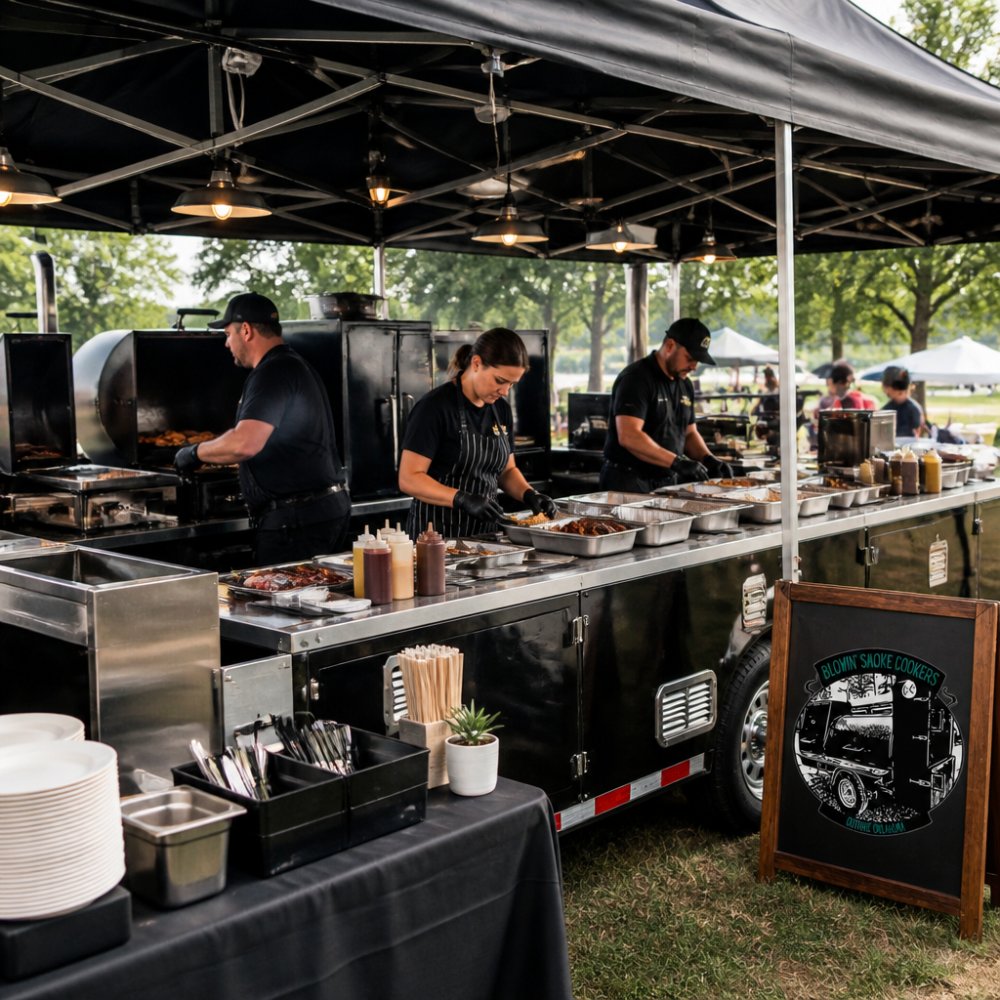
High-Volume Performers: Beast Cabinet and SNS Deluxe 72
For caterers handling 80+ servings or running high-volume restaurant operations, the Beast Cabinet ($18,600) and SNS Deluxe 72 ($13,100) are built to push volume without compromise.
The Beast Cabinet measures 84" x 36" with six slide-out cooking racks, nearly double the capacity of mid-range systems. It holds 90 Boston butts, 90 whole chickens, or 40-50 spare ribs.
The Beast is your choice if you need pure smoking capacity, corporate events, large family reunions, festival catering. The SNS Deluxe 72 is better if you need menu diversity: smoked proteins, grilled items, fried sides, and griddle-cooked items all happening simultaneously.
Premium All-in-One Solutions: Ultimate Smokehouse 72 Series
The Ultimate Smokehouse 72 ($26,800) and Ultimate Smokehouse 72 with Sandwich Prep ($32,999) are fully equipped mobile restaurants. They're not just smokers, they're complete catering platforms.
The base Ultimate Smokehouse includes a 72" main chamber (75 servings), 72" XL grill, 36" propane griddle, 4-bay sink, BBQ 42 chicken pit, and generator storage. The sandwich-prep version adds steam table and sandwich prep refrigeration.
These systems cost more upfront, but they eliminate the need for auxiliary equipment. Everything is integrated, so full-time operations save setup time, reduce equipment failures, and improve operational control.
Event-Focused Hospitality Trailer: SNS Hospitality BBQ Trailer
The SNS Hospitality Trailer ($16,499) is purpose-built for corporate events, fundraisers, and festival catering where speed and presentation matter as much as volume.
It features a 72" propane grill with optional second-tier grate (handles 50-60 whole chickens or 160-175 hamburgers), 36" refrigerator or freezer, 3-bay sink, and generous storage. The propane grill roasts whole pigs up to 325 lbs. without charring, and you can add wood chips or charcoal inserts for smoke flavor.
This trailer prioritizes versatility and hands-off operation. You set temperature, focus on service, and deliver consistent results without constant firebox management, ideal for caterers booking multiple events per week.
Trailer |
Cooking Capacity |
Best For |
Starting Price |
|---|---|---|---|
SNS Barrel 60 |
30 Boston butts or equivalent |
Small events, startups |
$9,399 |
SNS Cabinet 60 |
60 Boston butts or equivalent |
Mid-sized catering |
$10,499 |
SNS Deluxe 72 |
75 Boston butts or equivalent |
High-volume with menu variety |
$13,100 |
Beast Cabinet |
90 Boston butts or equivalent |
Large-scale catering |
$18,600 |
SNS Hospitality Trailer |
50-60 chickens or 160+ burgers |
Event catering, propane convenience |
$16,499 |
Ultimate Smokehouse 72 |
75 Boston butts plus griddle/fryer |
Full-service mobile restaurant |
$26,800 |
Operating Costs and Total Cost of Ownership
Equipment price is just the starting point. Fuel, maintenance, repairs, and labor add up fast over a trailer's lifespan.
Fuel costs vary by system type. Hybrid systems split the difference.
Maintenance on commercial equipment is real. Grease buildup requires regular cleaning, rust prevention means occasional touch-ups, and thermometers, hinges, and grates wear out.
Labor efficiency directly impacts profitability. A poorly designed trailer or unreliable equipment forces your team to work slower or longer.
The most profitable catering operations use trailers that match their event volume exactly.
Choosing the right custom catering trailer comes down to honest assessment: How many events will you actually book? Our reverse-flow design and heavy-duty steel construction ensure your equipment performs consistently under pressure.
Frequently Asked Questions
What capacity should I choose for my custom catering trailer?
Capacity depends on your target event size. Small operations handling 50-100 guests work well with 30-60 meat capacity systems. High-volume caterers serving 200+ guests need trailers holding 75+ butts and 40+ briskets. Match your typical event volume plus 20% buffer to avoid bottlenecks. The SNS Cabinet 60 handles 60 butts and 20-30 briskets, while the Beast Cabinet reaches 90 butts and 40+ briskets for large-scale operations.
How do I know which commercial smoker buying guide applies to my business?
Your choice depends on fuel type, consistency needs, and labor. Charcoal and wood systems offer traditional smoke flavor but require more hands-on temperature management. Propane systems provide easier control and faster startup, ideal for high-volume catering. Reverse flow smokers maintain consistent heat with less adjustment. Consider your team's experience level and how much active monitoring you can provide during events. Most commercial operations prefer reverse flow cabinets for reliability.
What's the total cost of ownership for a catering trailer beyond the purchase price?
Initial investment ranges from $9,399 for the SNS Barrel 60 to $32,999 for the Ultimate Smokehouse 72 with sandwich prep. Beyond purchase, budget for fuel (wood or propane), maintenance, repairs, insurance, and trailer licensing. Trailers last 10-15 years with proper care.
Should I prioritize a roof system on my catering trailer?
A roof system protects your equipment and crew from weather, extending trailer life and improving comfort during long events. Models like the SNS Barrel 60 with Roof Package ($12,300) or Beast Cabinet with collapsible roof ($18,600) offer weather protection with collapsible designs for towing. Roofs add $3,000 or more to the base price but reduce weather-related downtime and equipment deterioration. For year-round operation or wet climates, a roof is a worthwhile investment.