
Table of Contents
- Why Thick Steel Matters in BBQ Pit Construction
- How Steel Thickness Affects Heat Retention in Smokers
- Comparing Steel Thicknesses: 10-Gauge, 3/16-Inch, and 1/4-Inch Steel
- Steel Thickness for a Smoker Pit: Practical Selection Guide
- Reverse Flow Smoker Construction and Steel Durability
- Heat-Up Time, Temperature Recovery, and Fuel Efficiency
- Long-Term Durability: Rust Prevention and Maintenance
- Trade-Offs of Thick Steel and Real-World Performance
- Frequently Asked Questions
Last Updated: October 14, 2026
Why Thick Steel Matters in BBQ Pit Construction
Thick steel BBQ pits deliver heat retention, durability, and performance that lighter-gauge alternatives cannot match. At Blowin' Smoke Cookers, steel thickness separates equipment that lasts decades from smokers that deteriorate in a few seasons.
A thin-steel pit loses heat rapidly to outdoor temperature swings, forcing constant fuel and airflow adjustments.
Thick steel also resists warping, cracking, and structural failure under heat and weather, while thinner materials expand and contract unpredictably, creating gaps at seams.
How Steel Thickness Affects Heat Retention in Smokers
Steel thickness controls your smoker's thermal mass, the difference between holding temperature and chasing it.
Thermal Mass and Temperature Stability
Thermal mass is the smoker's ability to absorb and store heat.
A thin-walled smoker responds immediately to every gust of wind; a thick-steel pit absorbs those fluctuations and releases heat gradually, doing the stabilizing for you.
A 3/16-inch or 1/4-inch chamber takes longer to heat than 10-gauge, but once at temperature it holds with less fuel, worth it for long cooks or multiple events.
Resistance to Outdoor Temperature Fluctuations
Outdoor temperature swings hit thin-walled smokers hard. When outside air is 35°F and your chamber is 250°F, a thin steel wall conducts that difference straight into your pit, forcing the fire to work harder.
Thicker steel acts as insulation: the outer surface may be cold, but the inner chamber stays isolated. A 1/4-inch pit holds temperature more reliably than 10-gauge in a 20°F wind.
The benefit extends to fuel efficiency: when your pit isn't fighting outdoor temperature swings, you burn less fuel over a full season.
Comparing Steel Thicknesses: 10-Gauge, 3/16-Inch, and 1/4-Inch Steel
Steel gauge confuses buyers because the system runs backward: a higher gauge number means thinner steel. ASTM standardizes these tolerances, so 10-gauge from one mill matches another.
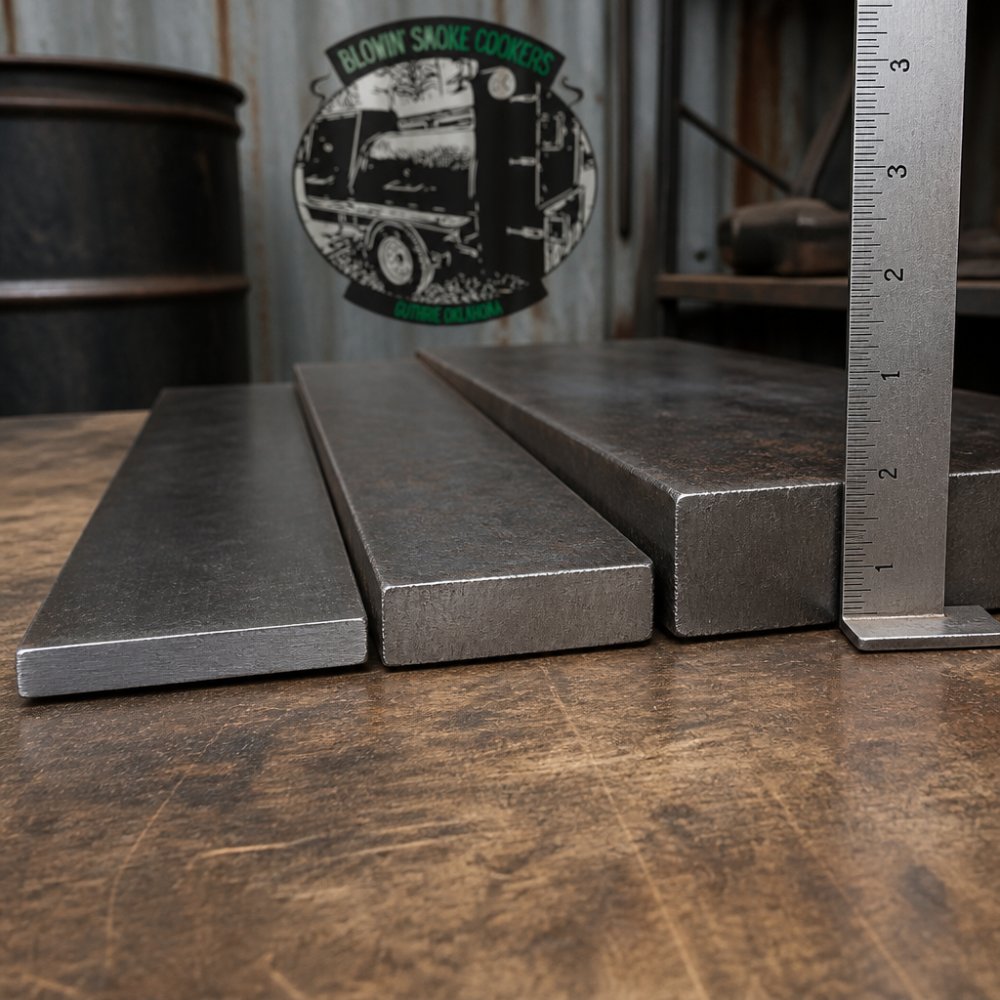
| Nominal Thickness | Approximate Inch Equivalent | Relative Weight per Square Foot | Typical Use |
|---|---|---|---|
| 10-gauge | ~0.135 in | Baseline | Casual backyard pits |
| 3/16-inch | ~0.1875 in | ~39% heavier than 10-gauge | Competition and catering |
| 1/4-inch | 0.25 in | ~85% heavier than 10-gauge | High-volume and year-round use |
Those weight figures matter: a 1/4-inch chamber weighs roughly 85% more than the same chamber in 10-gauge, changing trailer requirements, hitch ratings, and how many people it takes to move the pit.
What the Thickness Difference Actually Does
The performance gap comes down to thermal mass, which scales with the volume of steel, not just wall thickness. Doubling wall thickness roughly doubles chamber wall mass, which is why the jump from 10-gauge to 1/4-inch feels larger than the numbers suggest.
Here is the practical pattern most pit builders describe:
- 10-gauge: Reaches 225°F in roughly 20-30 minutes. Loses heat quickly in wind or cold. Temperature can swing 25-40°F during a cook without active management.
- 3/16-inch: Reaches 225°F in roughly 45-60 minutes. Holds temperature within about 10-15°F during steady conditions. Recovers from a door opening in roughly 5-8 minutes.
- 1/4-inch: Reaches 225°F in roughly 60-90 minutes. Holds temperature within about 5-10°F. Recovers from a door opening in roughly 3-5 minutes.
These ranges come from common pit-building practice and pitmaster reports, not a controlled lab test, treat them as planning estimates. Firebox size, airflow design, fuel type, and climate will shift them.
The Fuel Math Nobody Shows You
Fuel consumption is where thickness pays for itself. A thin-gauge pit fighting a 30°F wind may burn a full chimney of charcoal or several splits per hour just to hold temperature; a 1/4-inch pit in the same conditions uses noticeably less because the chamber stores and radiates heat instead of leaking it.
Over a 12-hour brisket cook, that compounds: a thin pit needing an extra split every 45 minutes in cold weather burns roughly 16 extra splits. Across a season, the fuel savings start to offset the higher upfront cost of thick steel, run the math against your own usage.
Gauge Conventions Buyers Get Wrong
A few traps catch first-time buyers:
- Gauge is not universal. Steel gauge differs from wire or sheet metal gauges in other standards. Always ask for the inch measurement.
- Firebox thickness is separate from chamber thickness. Many quality pits use 1/4-inch steel in the firebox even when the chamber is 3/16-inch, because the firebox sees the most intense heat cycles.
- "1/4-inch" sometimes means nominal. Verify with a caliper or ask the builder for the measured thickness. A few thousandths is normal mill tolerance; a large gap is a red flag.
Matching Thickness to Your Cook
The right thickness depends on your actual use:
- A few backyard cooks per year in mild weather: 10-gauge is functional and lighter to move.
- Regular weekend cooking, some cold-weather use: 3/16-inch is the practical middle ground.
- Competition, catering, or year-round cooking in variable weather: 1/4-inch in the chamber and firebox is the standard serious cooks gravitate toward.
The gap between 10-gauge and 1/4-inch is the difference between a pit that needs babysitting and one that holds a line while you focus on the meat.
Steel Thickness for a Smoker Pit: Practical Selection Guide
Choosing the right steel thickness comes down to cooking volume, climate, and performance expectations.
Start with your use case. Backyard gatherings a few times a year: 10-gauge is sufficient. Competing or catering: 3/16-inch is the practical minimum.
Climate matters too.
Low-and-slow smoking benefits most from thick steel's thermal stability, letting you focus on wood selection and meat prep rather than managing airflow.
Reverse Flow Smoker Construction and Steel Durability
Reverse flow design, where smoke and heat travel across the cooking chamber before exiting, stresses metal more than traditional offset designs.
Meadow Creek SQ36 Offset Barbecue Smoker →
A 3/16-inch or 1/4-inch reverse flow chamber resists warping and keeps its heat baffles true year after year, preserving the performance advantage.
The Meadow Creek TS70P, for example, uses 3/16-inch steel in the cooking chamber and 1/4-inch steel in the firebox, delivering the temperature control reverse flow is designed for without the warping issues that plague lighter-gauge pits.

Weld quality matters equally: thick steel forgives minor weld imperfections and its thermal mass distributes stress more evenly across joints, so a thick-steel reverse flow pit maintains its advantage indefinitely.
Heat-Up Time, Temperature Recovery, and Fuel Efficiency
Thicker steel trades heat-up speed for recovery and efficiency, a trade most serious cooks prefer.
A 10-gauge pit reaches 225°F in 20-30 minutes, a 3/16-inch pit in 45-60 minutes, and a 1/4-inch pit in 60-90 minutes. For a 12-hour cook that difference is negligible; for multiple events in one day, it's worth considering.
Where thick steel shines is recovery.
Fuel efficiency improves too, because the pit loses less heat.
Long-Term Durability: Rust Prevention and Maintenance
Steel durability depends on thickness and material grade. Carbon steel is standard in most BBQ pits and requires seasoning and maintenance to prevent rust.
Maintenance is straightforward: season the interior with a light oil layer after each cook and protect the exterior from standing water.
Weld joints are the most vulnerable points, and thicker steel's extra material around welds provides more corrosion resistance.
Trade-Offs of Thick Steel and Real-World Performance
Thick steel is not the right answer for every buyer. Here is the honest trade-off picture, plus the safety and verification steps most articles skip.
Weight and Transport
Weight is the trade-off buyers underestimate most. A 1/4-inch chamber weighs roughly 85% more than the same chamber in 10-gauge, which shows up in three places:
- Trailer and hitch capacity. A heavy pit may push a light trailer past its rated load, a safety issue, not just a convenience one.
- Setup and teardown. A pit that takes two people to move is fine on a permanent patio but painful at a competition.
- Maneuvering on soft ground. Heavy pits sink into wet grass or gravel.
If your pit lives on a patio or dedicated trailer, weight is a non-issue. If you move it often, weigh the benefit against the logistics.
Heat-Up Time and Cooking Style
A 1/4-inch pit takes roughly 60-90 minutes to reach temperature versus 20-30 minutes for 10-gauge. That delay only matters if you cook spontaneously or need fast turnaround between events; for planned long cooks you preheat anyway.
Cooking style matters too. Low-and-slow smoking benefits most from thick steel's thermal stability, while hot-and-fast cooking favors thinner steel because it responds faster to airflow adjustments. Match the thickness to the style.
Cost and Break-Even
Thick steel costs more upfront. Whether that premium pays back depends on how often you cook and local fuel costs. The break-even math has three inputs:
- Upfront price difference between the thick-steel pit and the thin-gauge alternative.
- Fuel savings per cook from better heat retention, which grows in cold or windy conditions.
- Years of service before replacement or major repair.
A pit used a few times a year in a mild climate may never recoup the premium; one used weekly in cold weather or on a catering calendar often does. Run the numbers against your own usage.
Material Verification and Safety
Before buying any pit, verify what you are actually getting. A few checks protect your investment and your food safety:
- Ask for measured thickness. Request the actual inch measurement of the cooking chamber and firebox, not just the nominal gauge. A caliper check on delivery confirms it.
- Confirm food-safe materials. The chamber and any food-contact surfaces should be bare carbon steel or a food-safe coating. Avoid unknown paints or platings inside the cook chamber.
- Inspect welds. Look for full penetration welds at high-stress joints, especially around the firebox and baffles. Poor welds are the most common failure point on any pit.
Real-World Performance Over Time
Pitmasters consistently report the same pattern: thick-steel pits require less active management, hold temperature through weather changes, and maintain performance year after year.
None of that means thin steel is useless. The trade-offs are real, and the right choice depends on your cooking volume, climate, transport needs, and budget. Buy for the way you actually cook, not for the biggest number on a spec sheet.
Frequently Asked Questions
How does thick steel affect heat retention in a BBQ smoker?
Thick steel acts as a thermal buffer, absorbing and slowly releasing heat throughout the cook. A 3/16-inch or 1/4-inch steel tank maintains steadier temperatures than thinner gauge materials because it has greater thermal mass. This means less temperature swing when you open the door, during weather changes, or when adding fuel. For competition cooking where ±5°F consistency matters, thick steel construction is the difference between winning temperatures and struggling to hold your target range.
What is the difference between 10-gauge and 3/16-inch steel for a BBQ pit?
10-gauge steel measures 0.135 inches thick, while 3/16-inch steel is 0.1875 inches thick. The 3/16-inch option provides roughly 40% more material, which translates to better heat retention, slower temperature recovery after opening the door, and improved durability against warping. For backyard use, 10-gauge works adequately. For catering, competition, or year-round operation, 3/16-inch or thicker steel prevents the structural flex and heat loss that thinner pits experience over time.
Does a thicker BBQ pit use less fuel?
Yes. Thick steel smokers require more time to heat up initially but hold temperature longer once stabilized, reducing the need for frequent fuel additions during long cooks. A 1/4-inch steel tank cools more slowly than a 10-gauge pit, so you burn less charcoal or wood overall during an 8-12 hour cook. The upfront heat-up time is longer, but the fuel savings over a season add up, especially for caterers or competition teams running multiple cooks weekly.
What type of steel is best for a smoker pit?
Carbon steel in the 3/16-inch to 1/4-inch thickness range is the industry standard for high-performance BBQ pits. Carbon steel welds cleanly, resists corrosion better than thinner gauges when properly seasoned and maintained, and provides the thermal mass needed for temperature stability. Stainless steel grates and components resist rust, but the main cooking chamber benefits most from heavy carbon steel construction. Models like the Meadow Creek TS70P use 3/16-inch tank steel and 1/4-inch firebox steel specifically for this balance of performance and durability.
At Blowin' Smoke Cookers, we carry Meadow Creek and Sling n Steel smokers built with the steel thickness and construction quality that serious pitmasters demand. Whether you're upgrading your backyard setup or expanding a catering operation, our heavy-duty reverse flow designs deliver the thermal stability and durability you need. Explore our collection of thick-steel smokers and find the pit built to match your ambition.