
Table of Contents
- What to Look for in the Best Offset Smoker for Backyard Parties
- Reverse Flow Smoker Benefits: Why the Design Matters
- Top Offset Smokers for Backyard Parties: Comparison Table
- 1. SNS 24 Patio Smoker, Best Entry-Level Pick ($1,399)
- 2. SNS 36 Patio Grill, Best Mid-Range Charcoal Grill ($1,999)
- 3. Meadow Creek SQ36 Offset Barbecue Smoker, Best All-Purpose Backyard Pit ($2,725)
- 4. SNS Barrel 40 Patio Smoker, Best for Large Gatherings ($3,199)
- 5. Meadow Creek TS70P Offset BBQ Smoker, Best Backyard-to-Competition Upgrade ($4,255)
- How to Maintain Temperature in an Offset Smoker
- Essential BBQ Accessories for Backyard Parties
- Frequently Asked Questions
Last Updated: August 31, 2026
Choosing the best offset smoker for backyard parties is one of the most consequential purchases a serious home cook will make. At Blowin' Smoke Cookers, we've helped backyard enthusiasts find the right pit. The single biggest mistake we see is buying on price alone without understanding what separates a smoker that holds temperature effortlessly from one that requires constant firebox management.
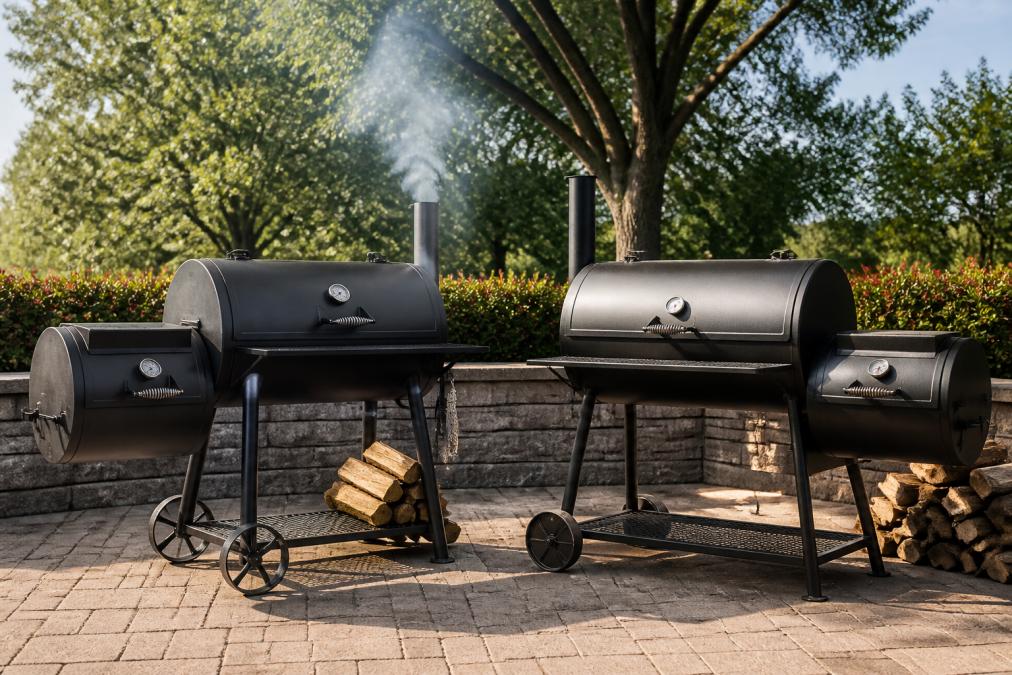
The five offset smokers in this guide span $1,399 to $4,255. Every one is American-made, built from heavy-gauge steel, and available through Blowin' Smoke Cookers as an authorized distributor of Sling n Steel Custom Smokers and Meadow Creek BBQ Products. Below, we'll break down what to look for, why reverse flow design changes the game, and which pit is right for your situation.
Quick Picks:
- Best Entry-Level: SNS 24 Patio Smoker ($1,399), compact, lifetime-built, versatile fuel options
- Best Mid-Range: SNS 36 Patio Grill ($1,999), heavy-duty charcoal grill with serious capacity
- Best All-Purpose: Meadow Creek SQ36 ($2,725), the backyard workhorse that does everything
- Best for Large Gatherings: SNS Barrel 40 ($3,199), dual cooking racks, traditional or reverse flow
- Best Backyard-to-Competition: Meadow Creek TS70P ($4,255), competition-grade precision at home
What to Look for in the Best Offset Smoker for Backyard Parties
Two smokers can look identical in photos and cook completely differently based on three engineering decisions.
Steel Thickness and Welded Construction
Steel gauge is the single most important spec on any offset smoker. Thin-walled smokers use 16-gauge or thinner steel that warps under heat cycles, leaks smoke through poorly fitted seams, and rusts within a few seasons.
The pits in this guide use 3/16" plate on cooking chambers and 1/4" plate on fireboxes. Thicker steel holds heat longer between fuel additions, smoothing temperature swings. Welded construction eliminates the gap-sealing problem that plagues cheaper smokers. A quality pit, properly seasoned and maintained, should last decades.
Cooking Surface Area and Capacity
For backyard parties, grate space determines whether you're cooking in one round or three. Figure roughly 200 square inches of grate space per rack of ribs, or one full pork butt per 80-100 square inches.
The SNS 24 handles 4-6 pork butts or 2 briskets on its 14.5" x 20" slide-out racks. The Meadow Creek SQ36 fits 5-6 pork butts or 2 whole briskets on a single welded stainless steel grate, with an optional second tier that doubles capacity.

Airflow, Dampers, and Heat Management
An offset smoker is an airflow management system. The firebox draws combustion air through an intake damper, heat and smoke travel through the cooking chamber, and exhaust exits through the stack. Control the dampers and you control the temperature.
The critical detail most buyers overlook is the relationship between intake and exhaust dampers. The exhaust stack should stay fully open on most cooks; temperature is managed primarily at the intake. Closing the stack traps creosote in the cooking chamber and produces acrid, bitter smoke rather than clean, thin blue smoke. Quality smokers include well-fitted dampers that hold position without drifting.
AmazingRibs.com guide to offset smoker airflow and fire management
Reverse Flow Smoker Benefits: Why the Design Matters
A reverse flow smoker is an offset smoker design where heat and smoke travel under a steel baffle plate from the firebox end to the far end of the cooking chamber, then reverse direction and travel back over the food before exiting through a stack positioned near the firebox.
The practical benefit is significant: reverse flow designs produce more even temperatures across the entire cooking surface. In a standard offset, the area closest to the firebox runs hotter, forcing you to rotate meat during long cooks. The baffle plate in a reverse flow smoker acts as a heat sink, absorbing and redistributing thermal energy before it reaches the food, creating consistent temperature from one end of the grate to the other.
Reverse flow design also improves smoke flavor. Because smoke travels further before reaching the food, it mixes more thoroughly and arrives at a lower, more stable temperature, producing cleaner smoke contact and a better smoke ring without bitter overtones.
The Meadow Creek TS70P and SNS 24 both run reverse flow draft as standard. The SNS Barrel 40 is available in both traditional and reverse flow configurations.

Top Offset Smokers for Backyard Parties: Comparison Table
Five pits, five different use cases.
Smoker |
Price |
Cooking Surface |
Steel Thickness |
Reverse Flow |
Best For |
|---|---|---|---|---|---|
SNS 24 Patio Smoker |
$1,399 |
14.5" x 20" (x2 racks) |
Heavy-gauge solid steel |
Yes |
Entry-level, patio/outdoor kitchen |
$1,999 |
28" x 35" + 23" x 35" |
Heavy-gauge solid steel |
No |
Mid-range charcoal grilling |
|
Meadow Creek SQ36 |
$2,725 |
Fits 5-6 butts or 2 briskets |
3/16" tank, 1/4" firebox |
No |
All-purpose backyard pit |
SNS Barrel 40 |
$3,199 |
24" x 32" + 28" x 32" |
Heavy solid steel |
Optional |
Large gatherings, versatile |
Meadow Creek TS70P |
$4,255 |
25" x 20" + 25" x 22" |
3/16" tank, 1/4" firebox |
Yes |
Backyard-to-competition |
1. SNS 24 Patio Smoker, Best Entry-Level Pick ($1,399)
The SNS 24 is the right answer for anyone tired of replacing budget smokers every two or three years. This tabletop-style cabinet smoker is built from heavy solid steel with a shipping weight of 200 pounds, reflecting serious construction.
What sets it apart at this price point is the reverse flow draft design combined with genuine fuel flexibility. The SNS 24 runs on wood, charcoal, or a combination of both. Two slide-out cooking racks measuring 14.5" x 20" each give you room for 4-6 Boston butts, 6-8 whole chickens, 4-6 spare ribs, or 2 briskets. Overall dimensions are 37" H x 28" W x 20" D, making it genuinely patio-friendly. Shipping is $299 to your front door with liftgate service.
What works: Reverse flow heat management at an entry-level price, true lifetime construction, and flexibility to run hardwood, charcoal, or both.
What to know: The tabletop form factor requires a sturdy surface or cart. If you regularly feed 20+ people, the capacity math pushes you toward the next tier.
2. SNS 36 Patio Grill, Best Mid-Range Charcoal Grill ($1,999)
The SNS 36 is built for the cook who wants serious charcoal grilling capacity alongside smoking capability.
The main chamber footprint is 36" x 30" x 72" with two pull-out cooking racks measuring 28" x 35" and 23" x 35". That's substantial grate space for large family gatherings. Like everything in the Sling n Steel lineup, the construction is heavy-gauge solid steel built to last. Shipping is $299 to your front door with liftgate service.
What works: The cooking surface area is genuinely large for the price point. Heavy construction means consistent thermal retention across long cooks, and the pull-out rack design makes loading and rotating food straightforward.
What to know: This is primarily a charcoal grill rather than a dedicated offset smoker. If low-and-slow smoking with wood is your primary goal, the Meadow Creek SQ36 at the next price tier is the more purpose-built choice.

3. Meadow Creek SQ36 Offset Barbecue Smoker, Best All-Purpose Backyard Pit ($2,725)
The SQ36 earns the "all-purpose" label without compromise. Meadow Creek has built a reputation for producing pits that outperform their price point.
The cooking chamber uses a welded T304 stainless steel grate that holds 5-6 pork butts or 2 whole briskets. Add the optional second-tier grate and that capacity doubles. The optional grill pan converts the smoker into a direct-heat grill for burgers and steaks. The firebox design is practical: indirect heat comes from slowly burning wood or charcoal, and a removable ash pan makes stoking and cleanup straightforward. The 3/16" tank plate and 1/4" firebox plate are the same specs found on Meadow Creek's competition-grade pits.
According to Meadow Creek BBQ Products' official specifications, the SQ36 is designed specifically for backyard enthusiasts who want offset smoker quality without trailer-mounted complexity.
What works: Versatility. Smoke ribs in the morning, grill steaks for dinner. The stainless steel grate won't rust, won't need replacing, and cleans easily after heavy use.
What to know: This is an indirect heat offset smoker, not a reverse flow design. Temperature management requires more active fire tending than a reverse flow pit.
4. SNS Barrel 40 Patio Smoker, Best for Large Gatherings ($3,199)
If your backyard parties regularly run 20-40 people, the SNS Barrel 40 makes sense. Two main chamber cooking racks measuring 24" x 32" and 28" x 32" inside a 30" x 40" barrel main chamber handles serious volume without running multiple cooks.
The SNS Barrel 40 is available in both traditional and reverse flow configurations. Traditional flow gives you more direct heat control near the firebox end. Reverse flow gives you even temperature distribution that makes long, unattended cooks more forgiving. The 20" x 30" firebox is sized appropriately for the chamber volume. Overall dimensions run 75" tall and 65" long. Shipping is $299 to your front door with liftgate service.
What works: Genuine large-capacity cooking in a patio-friendly format. The choice between traditional and reverse flow at order time means you get the design that matches your cooking style.
What to know: At 65" long and 75" tall, this is substantial equipment. Measure your patio space before ordering and confirm the delivery path from the street to your setup location.
5. Meadow Creek TS70P Offset BBQ Smoker, Best Backyard-to-Competition Upgrade ($4,255)
The TS70P is where backyard cooking and competition-grade engineering meet. This is the pit for someone who takes the craft seriously.
The foundation is a heavy steel tank with 3/16" plate on the cooking chamber and 1/4" plate on the firebox. Two slide-out stainless steel grates measuring 25" x 20" (top) and 25" x 22" (bottom) with 1/2" wire grid spacing give you precise control over heat contact. Reverse flow draft is standard. The combination of reverse flow design, heat baffles on the firebox, and a built-in water pan creates stable, even cooking that produces consistent results across long cooks. Built-in thermometer, all-stainless handles, ash slide-out pan, and charcoal grate in the firebox are standard inclusions.
Specifications: 64" L x 44" W x 76" H, net weight 535 lbs., 13" turf tires and 8" heavy-duty locking casters.
What works: This is a serious competition-capable smoker that works exceptionally well as a backyard pit. The reverse flow draft and heat baffle combination produces temperature consistency that separates this tier from everything below it. Positive-lock latches maintain a tight seal.
What to know: At 535 lbs. net weight, this pit stays where you put it. Plan placement carefully. The price reflects genuine engineering and American manufacturing quality.
USDA Food Safety and Inspection Service guidelines on safe barbecue temperatures
How to Maintain Temperature in an Offset Smoker
Maintaining steady temperature comes down to fire management, not equipment limitations. Even the best pit requires understanding how fuel, airflow, and thermal mass interact.
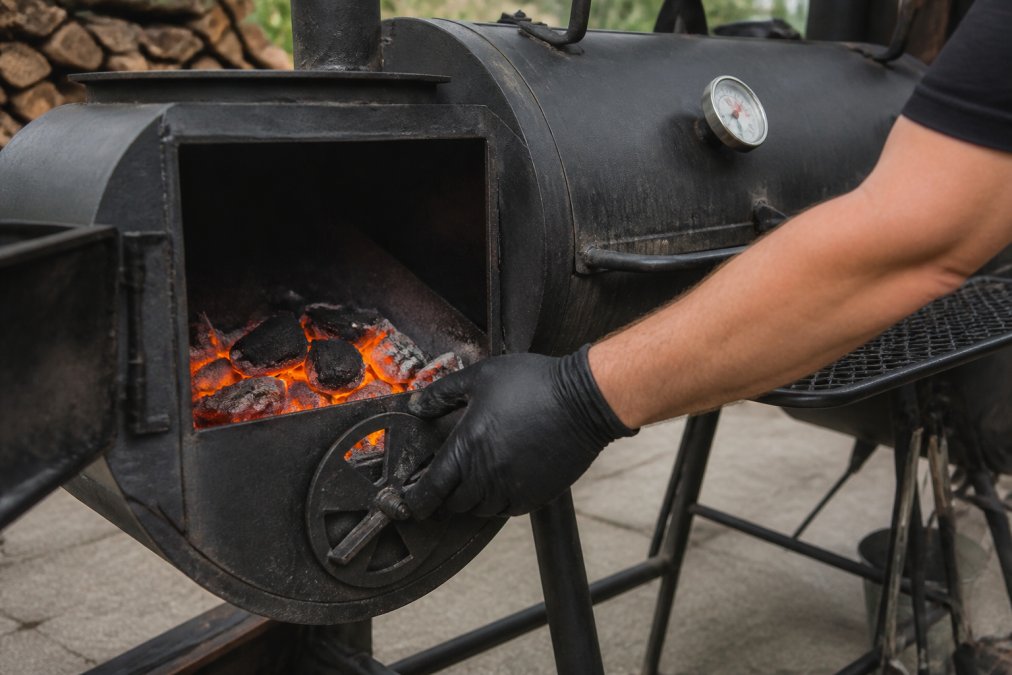
The most common mistake is building too large an initial fire and then cooling the smoker by closing dampers. This fills the cooking chamber with thick, dirty smoke and makes temperature control reactive. A better approach:
- Start with a small, clean fire and bring the smoker up to temperature gradually
- Keep the exhaust stack fully open throughout the cook
- Manage temperature exclusively through the intake damper
- Add fuel in small amounts before the fire drops rather than after
- Use split hardwood rather than large logs for consistent heat output and better smoke flavor
Tuning plates and baffles, present on reverse flow designs like the Meadow Creek TS70P and SNS 24, absorb and redistribute heat before it reaches the food. Temperature swings at the grate level are smaller than at the firebox, giving you more margin for error.
Fuel choice affects both heat output and smoke flavor. Hardwoods like oak, hickory, and pecan burn longer and produce consistent BTU output. Charcoal provides a stable heat base, and adding wood chunks on top produces smoke flavor without temperature volatility. The SNS 24's ability to run wood, charcoal, or a combination is particularly useful for beginners developing fire management skills.
Situation |
Fix |
Impact |
|---|---|---|
Temperature running too high |
Partially close intake damper |
Reduces oxygen, lowers combustion rate |
Temperature dropping |
Add small split of hardwood |
Restores heat without overshooting |
Thick white smoke |
Open intake, check for smothered fire |
Clears to thin blue smoke within minutes |
Uneven temps across grate |
Rotate meat, check baffle plate position |
Evens out hot and cold zones |
Temperature won't stabilize |
Check lid seal and firebox door fit |
Air leaks bypass damper control entirely |
National Barbecue & Grilling Association resources on fire management and fuel selection
Essential BBQ Accessories for Backyard Parties
A quality instant-read thermometer is non-negotiable. The built-in thermometer on most pits reads air temperature near the lid, not the temperature at the grate surface where the food sits. A probe thermometer that monitors internal meat temperature alongside a separate grate-level probe gives you the full picture.
Heat-resistant gloves rated for high temperatures are essential for managing the firebox. A charcoal chimney starter eliminates lighter fluid, which produces off-flavors that persist into the food. A chimney gets a full load of charcoal ready in 15-20 minutes using nothing but newspaper.
Keep a drip pan under the cooking chamber drain for grease drainage and cleanup. A fitted cover protects the steel between uses and significantly extends finish life. For year-round outdoor storage, look for covers with ventilation to prevent moisture buildup, which accelerates rust. Seasoning the cooking chamber with cooking oil after each use builds a protective layer that improves both rust resistance and smoke flavor.
Hosting a serious backyard party requires equipment that won't let you down halfway through a 12-hour brisket cook. Blowin' Smoke Cookers carries the full lineup of Sling n Steel and Meadow Creek offset smokers reviewed here, each backed by American manufacturing quality and heavy-gauge welded construction that lasts a lifetime. Whether you're starting with the SNS 24 or moving up to the competition-capable TS70P, add your choice to your cart and start cooking with equipment that matches your ambition.
Frequently Asked Questions
Q: What are the best backyard offset smokers?
A: The best offset smoker for backyard parties depends on your crowd size and budget. The SNS 24 ($1,399) suits smaller gatherings, while the Meadow Creek SQ36 ($2,725) handles 5-6 pork butts or 2 whole briskets for mid-sized parties. For large events, the SNS Barrel 40 ($3,199) delivers serious cooking surface. All models use heavy-gauge steel and reverse flow or indirect heat design for consistent results.
Q: Is a reverse flow smoker better for beginners?
A: Yes. A reverse flow smoker routes heat and smoke under a baffle plate before it reaches the cooking chamber, which evens out hot spots and makes temperature control significantly easier. Beginners spend less time chasing temperature swings and more time focused on the cook. Models like the Meadow Creek TS70P use reverse flow draft specifically to keep the cooking chamber within a tight, consistent range, which is exactly what new offset smoker users struggle with most.
Q: What are the disadvantages of using an offset smoker?
A: Offset smokers require active fire management. You need to add hardwood or charcoal every 45-60 minutes to maintain steady temperatures, and the learning curve for reading airflow and damper positions takes several cooks to master. Budget offset smokers with thin steel lose heat quickly and burn through fuel faster. Investing in a heavy-gauge welded unit like those from Meadow Creek or Sling n Steel dramatically reduces these issues by improving thermal retention and lid seal quality.
Q: Where should you put a smoker in the backyard?
A: Place your offset smoker on a flat, non-combustible surface at least 10 feet from your home, fence, or any overhead structure. Position it so the firebox is upwind to draw smoke away from your seating area. A concrete pad or paver surface protects your lawn and makes ash management and grease drainage cleanup easier. If you plan to leave the smoker outside year-round, weatherproofing with a fitted cover and storing it away from standing water will extend its lifespan significantly.
Q: How much wood does an offset smoker use per cook?
A: A typical low-and-slow cook at 225-250°F on a mid-sized offset smoker burns through roughly 2-4 splits of hardwood per hour, depending on steel thickness and ambient temperature. Thicker-gauge smokers like the Meadow Creek TS70P (3/16" tank, 1/4" firebox) retain heat better and require fewer fuel additions than thin-walled units. Using seasoned hardwood like oak or hickory and pre-warming splits near the firebox reduces temperature spikes and keeps fuel consumption lower throughout a long backyard BBQ session.
This article was written using GrandRanker