
9 Bulk Meat Prep Steps for Weekend Catering Events
Editorial Team
Nov 19
Quick Summary
Bulk meat prep for a weekend catering event starts with your guest count, then works back to the meat you need to buy. Divide your target cooked weight per guest by the yield percentage for each cut to get raw purchase weight. Plan purchases with a 10 percent buffer, since guest counts often rise.
- Plan for 10 percent more people than your confirmed guest count.
- Large cuts like pork butt and brisket are the most forgiving for bulk prep.
- Pork butt yields about 50 to 60 percent after trimming, cooking, and pulling.
- Cool cooked meat from 135°F to 70°F within 2 hours, then to 41°F within 4 more.
- Hold hot meat at 135°F or above and check each pan at least every 2 hours.
Need capacity for a big weekend?Blowin' Smoke Cookers builds heavy-duty smokers and catering trailers for large-volume cooking.
Plan Your Event Smoker
Table of Contents
- Start With Guest Count and Meat Per Person for Catering
- Choose Cuts That Scale: Boneless, Bone-In and Easy Meat Dishes for a Crowd
- Calculate Yield and Purchasing Quantities by Cut
- Build a Weekend Catering Meat Prep Timeline
- Large-Scale Meat Preparation for Events: Equipment and Capacity Planning
- Food Safety Limits: Cooling, Reheating and Hot Holding
- Plan for Delays and Equipment Failure Before Your Next Event
- Frequently Asked Questions
9 Bulk Meat Prep Steps for Weekend Catering Events
Last Updated: November 18, 2026
Start With Guest Count and Meat Per Person for Catering
Bulk meat prep starts with one number: how many people you will feed. Count your guests first, then work out the meat from there.
A common planning starting point is a set amount of cooked meat per guest, adjusted for how many other dishes will be on the table. Guests eat less protein when the menu is heavy on sides, and more when meat is the main attraction. Write down your guest count, your menu, and whether the event is a buffet or a plated meal.
Watch out: guest counts almost always rise after the invitations go out. Plan for 10 percent more people than you have confirmed, or ask for a final head count a few days before the event.
Choose Cuts That Scale: Boneless, Bone-In and Easy Meat Dishes for a Crowd
Not every cut works well for a crowd. Large cuts that cook low and slow, such as pork butt and beef brisket, are the most forgiving for bulk prep. They hold well, slice or pull easily, and stretch across many plates.
Boneless cuts are faster to portion and simpler to serve on a buffet line. Bone-in cuts, like spare ribs and whole chickens, look impressive but produce more waste and take more time to portion. Choose based on your service style and how many hands you have on the line.
- Pork butt: pulls well, holds for hours, low cost per serving
- Brisket: slices cleanly, needs a skilled trimmer, premium look
- Chicken thighs: boneless, fast to cook, forgiving on temperature
- Spare ribs: crowd favorite, but count bones as waste
Calculate Yield and Purchasing Quantities by Cut
Raw weight is not the weight you serve. Every cut loses weight to trimming, rendering, and moisture loss during cooking, and bone-in cuts lose more once the bone is removed. If you buy to your serving count instead of your cooked count, you will run short on the line.
The working formula is simple: target cooked weight per guest, multiplied by guest count, divided by the yield percentage for that cut. Yield percentage is cooked-and-portioned weight divided by raw purchase weight. The following ranges are typical yield estimates across common barbecue and catering methods:
- Pork butt (bone-in): about 50 to 60 percent yield after trimming, cooking, and pulling
- Pork butt (boneless): about 55 to 65 percent yield
- Beef brisket (packer, untrimmed): about 50 to 60 percent yield after a heavy trim and long cook
- Bone-in chicken pieces: about 60 to 70 percent edible yield once bones and skin loss are counted
- Boneless chicken thighs: about 75 to 85 percent yield
- Spare ribs: about 40 to 50 percent edible meat yield once bones are counted as waste
Worked example: you are serving 100 guests, planning 6 ounces of cooked pulled pork per guest, and using bone-in pork butt at a 55 percent yield. Target cooked weight is 600 ounces (100 × 6). Divide 600 by 0.55 to get about 1,091 ounces of raw purchase weight, or roughly 68 pounds. Round up to 70 pounds to cover trim variation and a small buffer.
Two adjustments change the math. First, serving style: buffet lines with tongs and buns typically move more meat per guest than plated service, because guests serve themselves generously. Second, side-heavy menus reduce per-guest meat consumption, so a menu with three starches and two vegetables may justify the low end of your per-guest range.
Build a simple purchasing sheet with these columns: cut, raw weight purchased, expected yield percentage, cooked weight, servings at your per-guest target, and a notes column for actual results. After each event, replace the expected yield with the measured yield from that cook.
Watch out: yield percentages shift with how aggressively you trim and how long you hold cooked meat in a hot cabinet, so recheck your numbers whenever you change suppliers or switch between bone-in and boneless product.
Typical yield estimates for common cuts, so you can work backward from cooked weight to what to buy.
| Cut | Typical yield | Note |
|---|---|---|
| Pork butt (bone-in) | 50 to 60 percent | After trimming, cooking, and pulling |
| Pork butt (boneless) | 55 to 65 percent | Higher than bone-in |
| Beef brisket (packer, untrimmed) | 50 to 60 percent | After heavy trim and long cook |
| Bone-in chicken pieces | 60 to 70 percent | Bones and skin loss counted |
| Boneless chicken thighs | 75 to 85 percent | Highest yield listed |
| Spare ribs | 40 to 50 percent | Edible meat once bones counted as waste |
Typical yield
Pork butt (bone-in) 50 to 60 percent
Pork butt (boneless) 55 to 65 percent
Beef brisket (packer, untrimmed) 50 to 60 percent
Bone-in chicken pieces 60 to 70 percent
Boneless chicken thighs 75 to 85 percent
Spare ribs 40 to 50 percent
Build a Weekend Catering Meat Prep Timeline
A weekend event leaves little room for mistakes. A written timeline keeps the work spread out so nothing piles up on Saturday morning.
Thursday and Friday: Buy, Trim and Season
Buy your meat by Thursday so you have time to inspect it and store it safely. Trim fat and silver skin on Thursday or Friday, and apply rubs at least several hours before cooking when the recipe calls for it. Keep raw meat refrigerated at all times and label each batch with the cut and date.
Saturday Morning: Cook, Rest and Pack
Start the largest cuts first, since they take the longest. Rest cooked meat before slicing or pulling so the juices stay in the meat. Pack portions into hotel pans or cambros while the meat is still hot, then move them into your holding setup without delay.
Large-Scale Meat Preparation for Events: Equipment and Capacity Planning
Your equipment sets your real limit. Count the cooking racks, the holding space, and the number of hours a smoker can run without refilling fuel or adjusting temperature. Large cabinet smokers and reverse flow units can cook a big volume at once, while smaller smokers need staggered batches.
Think about how the meat gets to the event site too. Insulated holding cabinets, transport coolers, and a clear plan for keeping meat above safe temperatures during the drive matter as much as the cooking. Some caterers rent extra smokers for a single weekend rather than buying, which can make sense for an occasional large job.
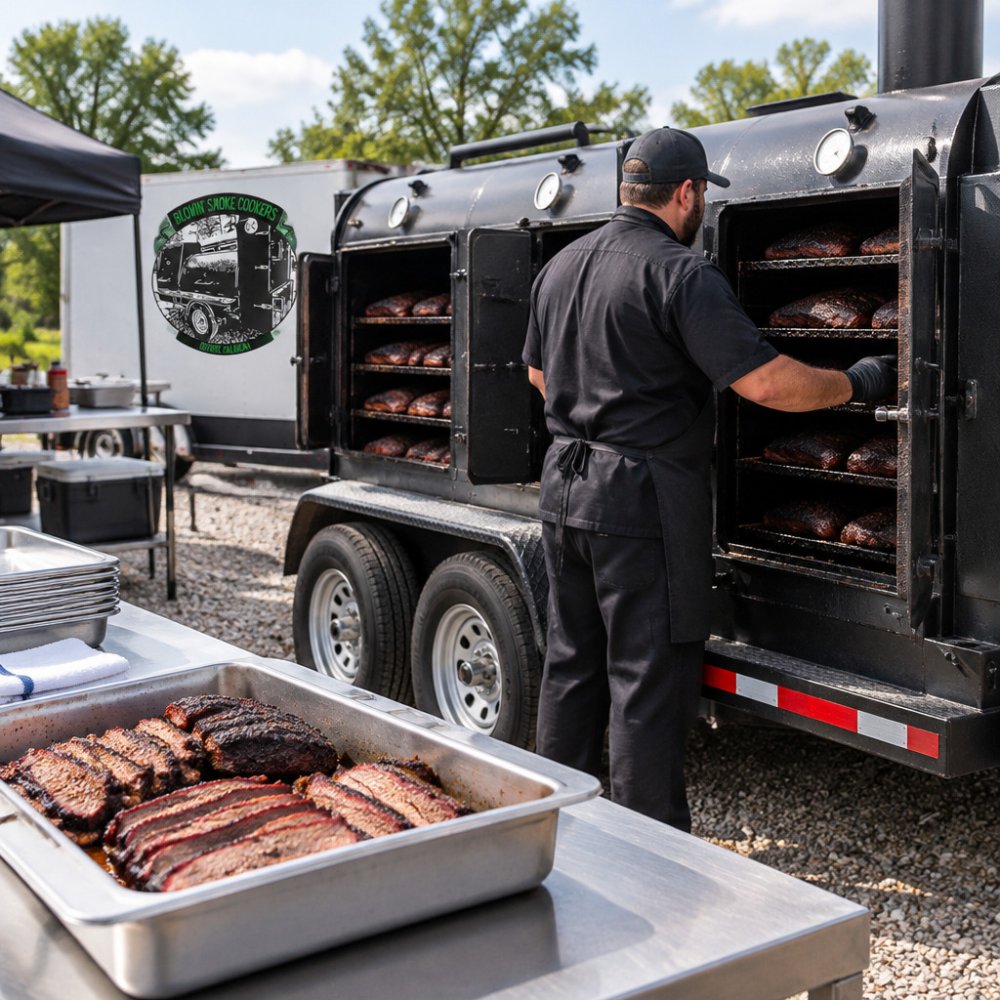
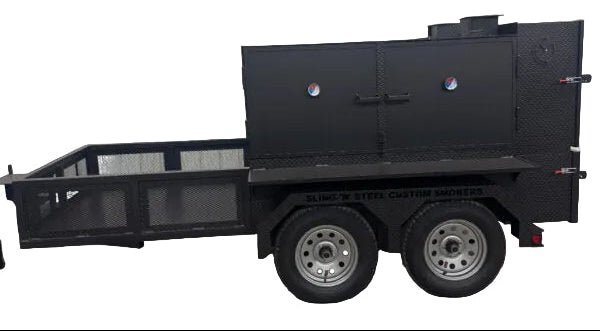
If you are planning capacity for a large pork job, Avery Cabinet Smoker 150 Pork Butt Capacity shows the kind of volume a single trailer unit can handle. Renting is another option: Smoker Grill Rentals can cover a busy weekend without a permanent purchase. Our guide How to Choose BBQ Catering Equipment for Your Events walks through matching gear to your operation, and How To Choose A Reverse Flow Smoker For Catering compares the cooking style in more detail.
Food Safety Limits: Cooling, Reheating and Hot Holding
Food safety at a catered event comes down to time and temperature, and vague reminders will not protect you. The U.S.
The temperature danger zone. Bacteria grow fastest between 41°F and 135°F. Keep cooked meat out of that range as much as possible, and never let it sit there long enough to accumulate time.
Cooling cooked meat. The Food Code's two-stage cooling rule is the standard to plan around: cool cooked food from 135°F to 70°F within 2 hours, then from 70°F to 41°F within the next 4 hours, for a total of 6 hours. In practice, that means portioning meat into shallow pans no more than 2 inches deep, leaving them uncovered in a walk-in or blast chiller until they cross 70°F, then covering and finishing the chill. A large sealed container of hot pulled pork in a refrigerator will not cool fast enough and can push the whole batch out of compliance.
Reheating. Reheat cooked meat to 165°F before hot holding, confirming the requirement against your local code. Reheat in batches small enough that the entire portion reaches temperature, and stir or probe in several spots rather than trusting a single reading.
Hot holding. Hold hot meat at 135°F or above. Use a calibrated probe thermometer and check each pan at least every 2 hours, logging the temperature, the time, and who checked it.
Cold holding and transport. Hold cold meat at 41°F or below.
The time-as-control option. Some jurisdictions allow time instead of temperature for holding, with limits set by local code. For the full picture on time limits, read 4 Hour Rule for Catering: How Time Limits Work.
Keep one log sheet per event with columns for item, batch, time out of the cooker, cooling checkpoints at 2 and 6 hours, reheat temperature, hot-holding checks every 2 hours, and initials. That record is what an inspector will ask for, and it is what tells you whether your process actually held up.
Plan for Delays and Equipment Failure Before Your Next Event
Something will go wrong at some point. A trailer axle fails, a generator quits, or the event starts two hours late. Plan for it before the day arrives.
- Keep a backup heat source or spare fuel on hand
- Bring extra cooler space and ice for emergency holding
- Pre-cook a small reserve batch that can be finished quickly
- Confirm your vehicle and electrical systems before every trip
- Have a contact who can help with a rental smoker on short notice
A short written contingency plan, kept in your truck, makes a real difference when the unexpected happens.
Blowin' Smoke Cookers builds smokers and catering trailers for caterers who need consistent results at volume. Start planning your next event with equipment sized for the crowd you expect to feed.
Frequently Asked Questions
How much meat do I need for 100 guests?
A common planning range for catering is about 1/3 to 1/2 pound of cooked meat per guest when meat is the main protein and there are several sides. For 100 guests that means roughly 35 to 50 pounds of cooked meat. Raw yield matters too: bone-in cuts like brisket and pork butt lose a meaningful share of their weight during cooking, so buy more raw weight than the cooked target. Confirm the guest count and menu mix before you place a meat order, and add a small buffer for guests who come back for seconds.
How many pounds of meat do I need to feed 40 guests?
For 40 guests with meat as the main course, plan roughly 13 to 20 pounds of cooked meat. Because cooking shrinks bone-in cuts, buy closer to 18 to 28 pounds raw, depending on the cut. A buffet with several sides can stretch the lower end, while a meat-heavy menu needs the higher end. Track what you actually serve at your first few events and adjust your per-guest number to match your crowd.
How far ahead can I prepare meat for a catering event?
Cook proteins no more than a day ahead if you plan to chill and reheat them, and keep them below 41 degrees Fahrenheit until service. Cool cooked food promptly and confirm the required cooling windows against your local code. Shred or slice after chilling when possible, because cold meat holds its moisture better. Label every container with the cook date and discard leftovers that exceed safe holding times.
What is the 4-hour rule for catering?
Local food safety rules set time limits for holding food between 41 and 135 degrees Fahrenheit, so confirm the requirement with your local health department. Many caterers track time out of temperature control from the moment a pan leaves the smoker. Keep hot meat at 135 degrees Fahrenheit or above in holding cabinets, and log temperatures at set intervals during service. If a pan falls out of the safe range, follow your local rules for reheating or discarding it.
