
Benefits of Heavy Duty Steel Smokers for Serious Cooks
Editorial Team
Nov 20
Last Updated: November 18, 2026
Quick Summary
Heavy duty steel smokers are built from thick, well-welded steel that holds heat, resists warping and stands up to years of daily use. Thicker steel keeps cooking temperatures steadier, lowers fuel use on long cooks and lasts longer under constant heating and cooling.
- A lower gauge number means thicker steel, so check the exact gauge of the chamber and firebox.
- Thick steel stores heat, so the temperature recovers faster after the door is opened.
- A well-insulated, thick-walled chamber burns less fuel, with the largest savings on long, cool or windy cooks.
- Track fuel use across cooks at the same target temperature to compare cost per cook.
- Bare steel can rust where grease collects, so season the chamber and inspect seams twice a year.
Table of Contents
- What Makes a Steel Smoker Heavy Duty
- Heat Retention and Temperature Stability in Steel Smokers
- Why Steel Offset Smoker Design Holds Up Under Heavy Use
- Reverse-Flow Smoker Benefits for Even Cooking
- Durability, Lifespan and Operating Cost Over Time
- BBQ Smoker Maintenance to Protect Your Steel Investment
- Choosing a Heavy Duty Smoker for Your Next Cook
- Frequently Asked Questions
What Makes a Steel Smoker Heavy Duty
A heavy duty steel smoker is built from thick, well-welded steel that holds heat, resists warping and stands up to years of daily use. At Blowin' Smoke Cookers, we build our smokers and grills around that idea, using heavy-gauge steel and reverse flow designs for consistent, professional-grade results.
The real difference shows up in the details.
Steel Thickness and Gauge Explained
Steel thickness is measured in gauge, and the rule is counterintuitive: a lower gauge number means thicker steel. Thicker steel absorbs and releases heat more slowly, which helps the cooking chamber hold its temperature when the wind picks up or the lid opens.
Thin steel warps under repeated heating and cooling, and its seams are more likely to crack. Thicker steel holds its shape and keeps the seals tight, which matters most for long, low-and-slow cooks on brisket or pork butts. When comparing heavy duty steel smokers, ask the builder for the exact gauge of the cooking chamber and firebox, not just the word "heavy duty."
Heat Retention and Temperature Stability in Steel Smokers
Heat retention is where heavy steel earns its place, but the benefit is mechanical, not mystical. Steel stores thermal energy in proportion to its mass, so a thicker chamber and firebox absorb more heat during a fire adjustment and release it more slowly afterward. That buffer is what flattens the temperature curve between wood additions and keeps the cook chamber from crashing when the door opens.
The gauge number is the starting point. A lower gauge means thicker steel, and the difference in behavior between, say, 1/8" and 1/4" walls is noticeable in recovery time. When you open the door to spritz or rotate meat, a thick chamber loses less stored heat and climbs back to target faster. Thin walls shed heat quickly, so the fire has to work harder to recover, which shows up as wider swings and more frequent fire management.
Insulation compounds the effect. A double-walled, insulated firebox and chamber slow heat loss through the walls, which matters most in cold, wind, and rain. The mechanism is straightforward: insulation reduces the temperature gradient across the wall, so less heat escapes per hour.
Fuel use follows the same logic. A chamber that holds temperature needs fewer wood splits or charcoal loads to stay in the target range, so a long brisket or pork butt cook consumes less fuel overall. The savings are largest on long cooks in cool or breezy conditions, where thin steel loses the most heat. Track your fuel use across a few cooks at the same target temperature to see the pattern for your own smoker.
Watch out: heat retention is not the same as temperature control. A heavy chamber holds heat well but still needs a properly sized firebox, clean airflow, and a calibrated intake and exhaust to run steady. Buying thick steel without matching the fire management to the chamber size can still produce swings.
Why Steel Offset Smoker Design Holds Up Under Heavy Use
An offset smoker separates the firebox from the cooking chamber, so the food is cooked by indirect heat and smoke. Steel offset designs suit heavy use because the firebox and chamber are built to handle constant heating and cooling without losing their shape.
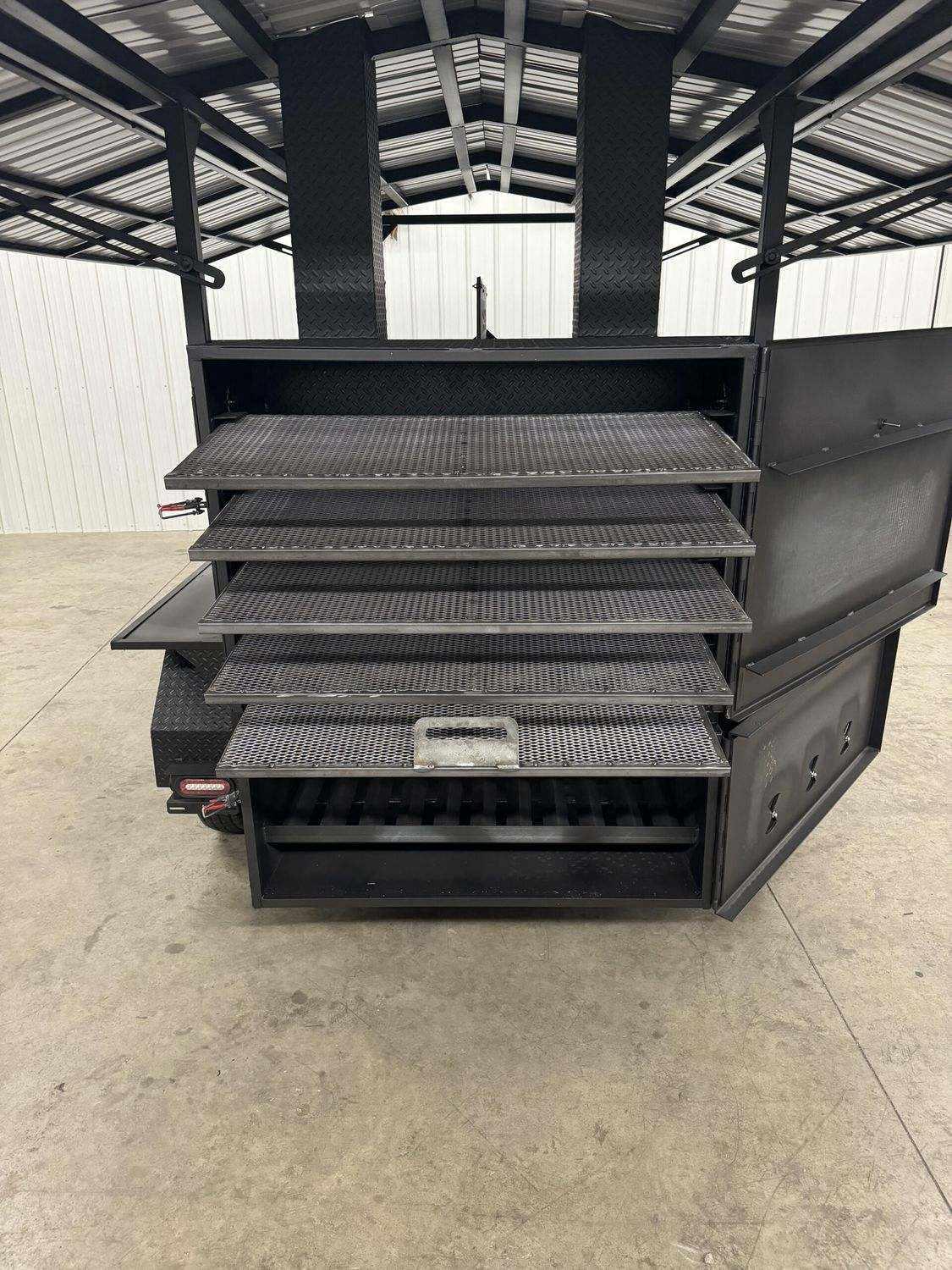
The Avery Commercial Smoker shows what that design looks like at scale. Its main chamber measures 60" x 72" with six cooking racks, and its firebox is double-walled 1/4" steel with insulation.
Commercial Smoker The Avery is priced at $15,599.00 and is available on our site: [commercial smoker the Avery | blowinsmokecookers.com].
Reverse-Flow Smoker Benefits for Even Cooking
A reverse-flow smoker routes heat and smoke under the cooking chamber and back up the far side before it exits the stack. That path tends to produce more even temperatures from one end of the grate to the other, which reduces the need to rotate meat during a cook.
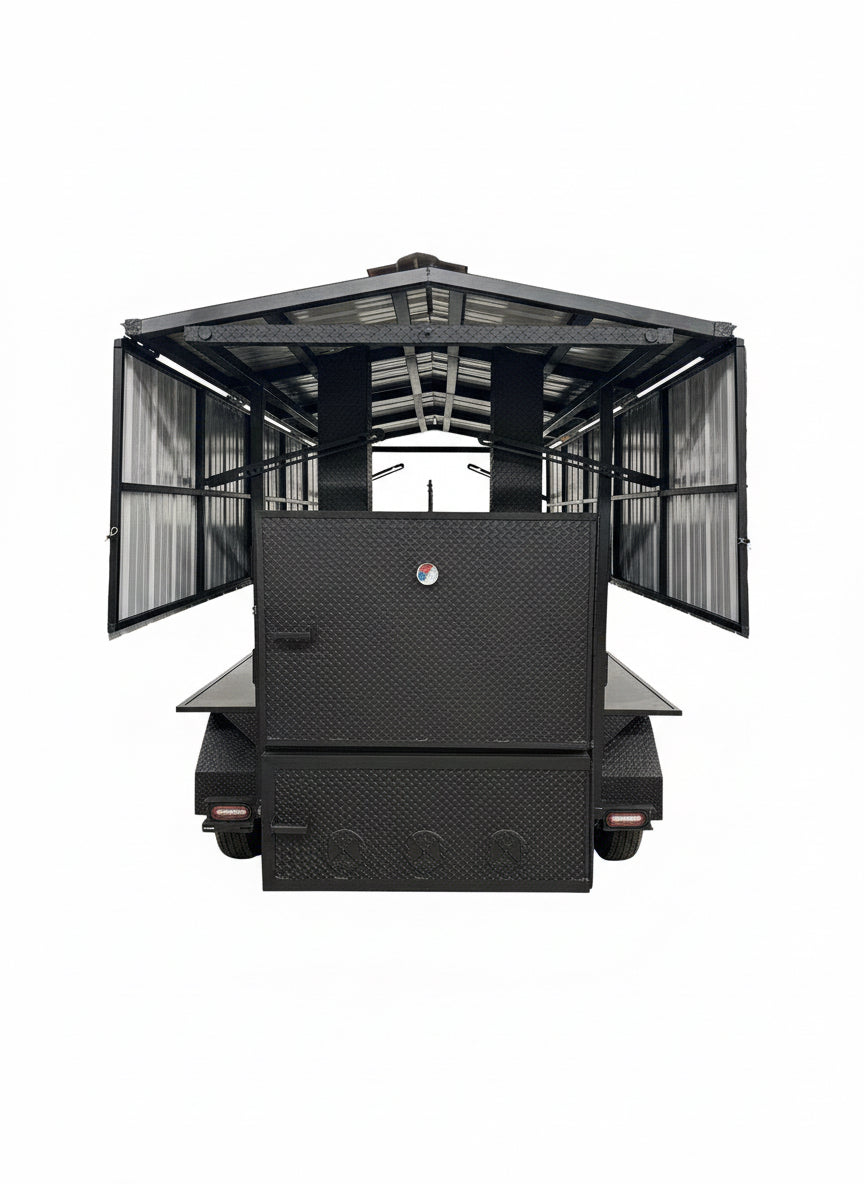
Reverse flow also helps when you are cooking a full load. Even heat across multiple racks means the food at the back of the chamber finishes at roughly the same time as the food near the door. The SNS 72 Smoker Cabinet, priced at $5,699.00, uses a reverse flow design with three slide-out racks and an insulated 30" x 20" x 20" firebox, which is a practical size for a serious backyard or small catering setup.
Durability, Lifespan and Operating Cost Over Time
Durability is the main reason heavy steel costs more up front, but the value shows up in how the unit ages. Heavy-gauge steel is built to withstand repeated heating and cooling, which is why it is the foundation of the durability our smokers are designed for.
Lifespan depends on steel thickness, weld quality, and care. The trade-off is weight and price: heavy steel costs more to buy and is harder to move, so it suits cooks who plan to keep the smoker in place and use it often.
Operating cost is where the fuel-economics gap sits. A well-insulated, thick-walled chamber burns less fuel to hold temperature, which lowers your per-cook cost for wood or charcoal. The savings are largest on long cooks in cool or windy weather, where thin steel loses the most heat. To see your own numbers, track fuel use across a few cooks at the same target temperature and compare the cost per cook rather than the sticker price alone.
Weather and cooking temperature change the math. Cold, wind, and rain increase heat loss, so fuel use rises for any smoker; heavy, insulated steel reduces that penalty. Higher cooking temperatures also burn more fuel per hour, so a smoker that holds heat well is most valuable on long, low-and-slow cooks.
Who benefits most: frequent backyard cooks, competition teams, and catering operators who run long cooks and value repeatable results. Who may not: occasional cooks who smoke a few times a year may find the weight and up-front cost hard to justify, and thin steel can be adequate for light, fair-weather use.
Watch out: heavy steel is not maintenance-free. Bare steel is vulnerable to rust where grease collects, so season the chamber and firebox, keep ash and drippings cleaned out, and inspect seams and welds at least twice a year if the smoker sits outdoors.
The SNS 40 Vertical Smoker Cabinet, priced at $5,499.00, pairs a 30" x 40" main chamber with a double-walled, fully insulated firebox.
The article's main points on durability and running costs are summarised below.
| Factor | What the article says | Note |
|---|---|---|
| Steel thickness | Heavy-gauge steel built to withstand repeated heating and cooling | Main driver of durability |
| Weight and price | Heavy steel costs more to buy and is harder to move | Suits cooks who keep it in place |
| Fuel use | Well-insulated, thick-walled chamber burns less fuel | Savings largest on long, cool or windy cooks |
| Cost per cook | Track fuel use across cooks at the same target temperature | Compare cost per cook, not sticker price |
| Maintenance | Bare steel is vulnerable to rust where grease collects | Season, clean and inspect seams twice a year |
Price of Blowin' Smoke Cookers smokers mentioned in the article
Avery Commercial Smoker $15,599.00
SNS 72 Smoker Cabinet $5,699.00
SNS 40 Vertical Smoker Cabinet $5,499.00
BBQ Smoker Maintenance to Protect Your Steel Investment
Heavy steel lasts longest when you care for it. Bare steel is vulnerable to rust, especially where grease collects, so season the cooking chamber and firebox regularly with a thin coat of high-smoke-point oil. Keep the interior clean of old ash and drippings, and check seals and latches after each season.
Store the smoker under cover when you can, or use a fitted cover to keep rain off the steel. If your smoker sits outdoors year-round, inspect the seams and welds at least twice a year and touch up any bare spots before rust can spread.
Choosing a Heavy Duty Smoker for Your Next Cook
Start with the cooking volume you actually need. A backyard cook feeding family and friends has different requirements than a catering operation or competition team. Match the capacity, the steel gauge and the design to the way you cook, then compare the total cost of ownership rather than the sticker price alone.
Our range covers that spectrum, from the SNS 72 and SNS 40 to the Avery and SNS Beast for high-volume catering and events. If you want help matching a smoker to your cooking style and capacity, contact the Blowin' Smoke Cookers team and we will walk you through the options.
Frequently Asked Questions
What are the benefits of a heavy-duty steel smoker?
Heavy-duty steel is built to withstand repeated heating and cooling, and Blowin' Smoke Cookers builds its smokers from heavy steel with reverse-flow designs for consistent results.
Do heavy-duty steel smokers hold temperature more consistently?
Results depend on fuel quality, airflow management and weather, so operator control of the fire plays a large role in temperature consistency.
What is the difference between an offset smoker and a reverse-flow smoker?
An offset smoker has a firebox on one side and sends heat and smoke across the cooking chamber to a stack on the far end. A reverse-flow design routes that heat under a baffle and back across the food before it exits, which evens out the temperature from one end of the chamber to the other. Both styles can be built from heavy steel. Reverse-flow is often preferred when consistent heat across many racks matters, such as competition or catering cooks.
How do you maintain a steel BBQ smoker?
Clean grease and ash out of the cooking chamber and firebox after each cook, and inspect welds, hinges and gaskets at least a few times a year. Season the interior with a thin coat of cooking oil and keep it dry between uses to prevent surface rust. Cover the smoker or store it under shelter when it is not in use, especially in wet or salty air. Steady maintenance protects the steel and keeps the smoker performing as designed.
