
Table of Contents
- What Makes the Best Food Trailers for BBQ Catering
- Food Trailer Health Department Compliance and Regulatory Standards
- Best BBQ Catering Trailer Features to Prioritize
- Mobile Catering Equipment Requirements You Cannot Skip
- Top Food Trailers: Build Quality, Capacity, and Versatility
- Custom Fabrication vs. Pre-Built: Which Delivers Better Results
- Total Cost of Ownership: Beyond the Purchase Price
- Red Flags and Build Pitfalls to Avoid
- Frequently Asked Questions
Last Updated: September 25, 2026
What Makes the Best Food Trailers for BBQ Catering
When you're running a professional BBQ catering operation, your mobile kitchen isn't just equipment, it's your business on wheels. The best food trailers combine cooking capacity, durability, and regulatory compliance into a single turnkey solution that lets you show up anywhere and deliver competition-grade results.
The difference between reliable trailers and liabilities comes down to three core factors: temperature control during long cooks, construction durability through years of road travel and weather, and full health department compliance.
Food Trailer Health Department Compliance and Regulatory Standards
Your food trailer must pass health department inspection before operating. Fundamentals include proper plumbing, food-safe materials, temperature monitoring, and waste management systems.
Critical elements: a three-compartment sink with hot water, separate fresh and grey water tanks, and proper drain grading. Most jurisdictions require 10+ gallons fresh water capacity. Food contact surfaces must be stainless steel or food-grade materials, never painted steel or aluminum.
Fire suppression systems are required for charcoal or propane cooking. Most states mandate a hood system venting smoke and heat safely. Thermometers must be visible and calibrated. Proper ventilation prevents carbon monoxide accumulation.
Contact your state and local health departments for specific requirements in writing before purchasing. Some jurisdictions have unique rules about trailer size, electrical systems, or propane storage. Building to code prevents expensive retrofits.
Best BBQ Catering Trailer Features to Prioritize
Cooking Capacity and Layout Design
A 60-inch cabinet smoker handles 60 Boston butts, 60 whole chickens, or 20-30 briskets. A 72-inch cabinet adds capacity for 75 butts or 30-35 briskets.
Position the smoker for easy rack access and grill for simultaneous work without stepping over equipment. Integrate charcoal storage rather than bolting it on. A warming box with separate temperature control keeps finished meat at serving temperature.
Dual-cooking setups with smoker and grill expand menu options and event capacity.
Reverse Flow Technology and Temperature Control
Reverse flow design distributes heat and smoke evenly across the cooking chamber, maintaining steady temperatures across all racks for consistent catering output.
Reverse flow design helps maintain steady temperatures, allowing you to focus on prep work and service.
Choose smokers with adjustable air intake and exhaust vents, a built-in water pan, and calibrated thermometers on cooking chamber and warming box.
Stainless Steel Construction and Durability
Use 1/4-inch rolled diamond tread steel for the cooking chamber and 13-gauge welded steel for grills. This construction resists warping and provides durability.
Use T304 stainless steel rod grates, they're easy to clean and won't corrode. Avoid painted steel grates; paint can flake into food and steel may rust quickly.
Insulate the firebox with proper heat shielding to protect the frame and wheels. A slide-out ash pan speeds cleanup and improves fire efficiency.
Mobile Catering Equipment Requirements You Cannot Skip
Plumbing, Electrical, and Fire Suppression Systems
Three-bay sink systems with hot water are essential for code compliance. A 5-gallon fresh water tank with pump keeps water flowing without external hookups. Instant hot water heaters enable sanitizing between service periods.
Include a battery-backed pump for the sink and LED lighting. Some trailers integrate generator storage for refrigeration or additional lighting at events.
Fire suppression systems above cooking equipment are required in most states. A hood and vent system safely exhausts smoke and heat. Propane storage must be separate from food prep, with proper shut-off valves and safety chains.
Chassis Durability and Axle Configuration
A heavy-duty single-axle or dual-axle chassis with rubber torsion suspension absorbs road shock. Sealed bearing hubs reduce maintenance and prevent water intrusion.
SNS Deluxe 72 Catering Trailer Smoker →
Larger wheels (13-inch+) handle road debris. Proper tire pressure and regular bearing maintenance help prevent issues. Wheel jacks and safety chains are mandatory.
Verify your vehicle's towing capacity. A 60-inch smoker trailer weighs ~1,275 lbs; larger models exceed 2,000 lbs.
Top Food Trailers: Build Quality, Capacity, and Versatility
The Blowin' Smoke Cookers lineup includes both SNS custom-built trailers and Meadow Creek models designed for professional catering. Each addresses different business sizes and cooking styles.
High-Capacity Smoker Trailers for Volume Operations
The SNS Deluxe 72 Catering Trailer Smoker is built for caterers handling 150+ guests regularly. The 72-inch main cabinet delivers 75 Boston butts, 75 whole chickens, or 30-35 briskets capacity. It features a 5-tray warming box, an integrated BBQ 42 chicken cooker with rotating double-sided grates, a 4-bay sink system with hot water, a 4-gallon two-basket fryer, and 14x27 dual bottle LP storage. This complete mobile kitchen is available at $13,100.

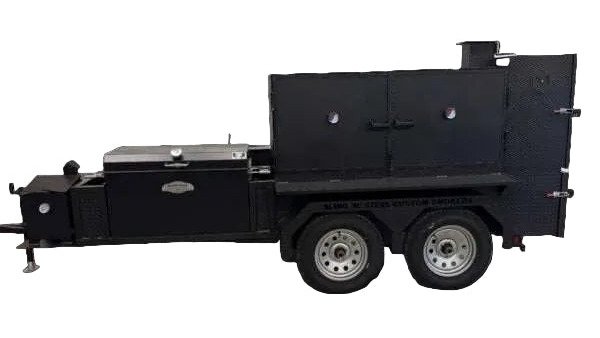
For teams that need serious volume without the premium price, the BBQ Pit SNS Cabinet 60 Catering Trailer With Sink Package And Standard Grill handles 60 butts, 60 chickens, or 20-30 briskets. The 1/4-inch diamond tread steel cabinet with three slide-out cooking racks gives you flexibility in how you arrange proteins. A standard charcoal grill and 3-bay sink round out the package at $10,499.

Dual-Purpose Grill and Smoker Combos
The SNS Cabinet 60 Grill Smoker Combo With XL Grill And Sink Package pairs a 60-inch smoker with an oversized charcoal grill measuring 30x48 inches. This setup lets you smoke briskets and butts while grilling chicken, burgers, and vegetables simultaneously. At $10,799, it's ideal for caterers who want menu versatility without carrying two separate trailers.
The Offset Smoker SNS Barrel 60 Catering Trailer With Sink Package delivers a reverse flow design in a traditional barrel-style footprint. It handles 30 butts, 30 chickens, or 15 briskets with a charcoal grill and fish fryer mounted on the backside. The 3-bay sink and full plumbing system meet code requirements. At $9,399, it's a solid entry point for new catering operations.

Specialized Trailers for Specific Menus
The SNS Hospitality BBQ Trailer focuses on high-volume grilling with a 72-inch propane pig cooker that handles whole hogs up to 325 lbs. A second-tier grate lets you cook 40-44 pork butts or 50-60 whole chickens simultaneously. Built-in refrigeration, generator storage, and a 3-bay sink system with tankless hot water make this a complete event solution at $16,499. This trailer is purpose-built for caterers doing whole hog roasts and large corporate events.
For caterers who want simplicity and portability, the SNS Mega Grill Grilling Trailer features dual grills with pull-out charcoal trays.
| Trailer Model | Capacity (Butts) | Best For | Starting Price | Key Feature |
|---|---|---|---|---|
| SNS Deluxe 72 | 75 | High-volume catering 150+ guests | $13,100 | 5-tray warming box, BBQ 42 chicken pit |
| SNS Cabinet 60 | 60 | Mid-size catering 100-150 guests | $10,499 | Diamond tread steel, 3-bay sink |
| SNS Cabinet 60 XL Grill | 60 | Versatile menus, grilling + smoking | $10,799 | XL grill 30x48", dual cooking |
| SNS Barrel 60 | 30 | Entry-level catering, reverse flow | $9,399 | Reverse flow design, fish fryer |
| Meadow Creek TS120 | 20-25 | Mobile chefs, smaller events | $8,705 | T304 stainless steel, warming box |
| SNS Hospitality | 40-44 | Whole hog roasts, corporate events | $16,499 | 72" propane pig cooker, refrigeration |
| Meadow Creek CD108 | 18-20 | Whole hog + chicken operations | $6,830 | Dual cooker setup, portability |
| SNS Mega Grill | N/A | Tailgates, ball fields, grilling | $5,999 | Dual grills, affordable entry |
Custom Fabrication vs. Pre-Built: Which Delivers Better Results
Pre-built trailers from established manufacturers offer known build quality and support. You get warranty and assistance if something fails mid-event.
Total Cost of Ownership: Beyond the Purchase Price
A charcoal-fired trailer burns 20-40 lbs per cook. Propane trailers cost less per cook but require refills. Budget $100-200 monthly for fuel at twice-weekly catering.
Liability insurance is non-negotiable if serving food at events.
Red Flags and Build Pitfalls to Avoid
Watch for trailers with painted steel grates instead of stainless steel. They rust quickly and flake into food.
Frequently Asked Questions
What should I look for when choosing a food trailer manufacturer?
Prioritize manufacturers with proven welding expertise, heavy-duty steel construction, and reverse flow technology for consistent temperature control. Verify they meet health department compliance requirements, offer stainless steel components, and provide warranty support. Check that their trailers feature insulated fireboxes, proper plumbing and electrical systems, and commercial-grade appliances. Request references from established catering businesses and inspect build quality firsthand before committing.
How do I verify the build quality of a food trailer manufacturer?
Ask for detailed specifications on metal thickness, welding techniques, and material sourcing. Request photos of completed trailers and speak directly with owners currently using the manufacturer's equipment. Inspect the trailer's frame, axle configuration, and joint welds. Verify that all components are food-grade stainless steel where applicable, and confirm the manufacturer is licensed and carries liability insurance. Quality builders provide transparent documentation and customer references without hesitation.
What are the most important features for a BBQ catering trailer?
Essential features include adequate cooking capacity for your target events, reverse flow design for steady temperature maintenance, insulated firebox construction, and commercial-grade stainless steel grates. Add plumbing and electrical systems that meet health codes, proper ventilation hoods, and accessible ash pans for efficient operation. Storage capacity for fuel and supplies, slide-out cooking racks, and a warming box extend functionality. A service window and weather protection ensure year-round usability and professional presentation.
How long does it take to have a custom food trailer built?
Custom food trailer build times depend on design complexity and the manufacturer's current workload. Contact manufacturers directly for current timelines, as lead times fluctuate seasonally. Plan ahead if you need your trailer ready for peak catering season, and discuss expedited options when placing your order if timing is critical.
Are custom-built food trailers better than pre-fabricated models?
Custom-built trailers offer layout flexibility, allowing you to design cooking stations and storage around your specific menu and workflow. Pre-fabricated models provide faster delivery and lower initial costs but limit customization. Custom builds let you choose exact equipment, materials, and configurations, while pre-built options come with fixed specifications. For catering operations, custom fabrication can offer versatility and operational efficiency, which may justify a longer build time and higher investment.