
Table of Contents
- Why Heavy Duty Smoker Durability Expectations Matter
- Smoker Metal Thickness Gauge: The Foundation of Longevity
- Construction Quality: Welding Standards and Component Reliability
- Professional Smoker Maintenance Tips for Long-Term Performance
- How Long Should a Heavy Duty Smoker Last?
- Backyard vs. Competition Grade: Matching Durability to Your Needs
- Repairability vs. Replaceability: What Owners Should Know
- Frequently Asked Questions
Last Updated: September 21, 2026
Why Heavy Duty Smoker Durability Expectations Matter
Ask ten pitmasters how long a heavy duty smoker should last and you'll get ten different answers. The truth is that heavy duty smoker durability expectations depend on measurable factors: steel thickness, weld quality, and how you maintain the unit. At Blowin' Smoke Cookers, we've seen backyard rigs outlast their owners and competition smokers fail in three seasons, and the difference almost always comes down to construction and care.
This guide breaks down what actually determines smoker durability, from metal gauge to repairability, so you can set realistic expectations before you buy.
Smoker Metal Thickness Gauge: The Foundation of Longevity
Smoker metal thickness gauge is the single strongest predictor of how long a pit will hold up. Thicker steel resists warping, holds heat, and survives decades of thermal cycling.
Most heavy-duty cabinet smokers use 1/4-inch steel for the main chamber. That's the benchmark for professional-grade equipment. The SNS 60 Smoker Cabinet Trailer, for example, builds its main cabinet from 1/4-inch diamond tread steel, and the SNS Beast Cabinet Smoker uses the same material across an 84" x 36" chamber. Thin-gauge imports might use 14- or 16-gauge steel, which dents, warps, and rusts through far sooner.

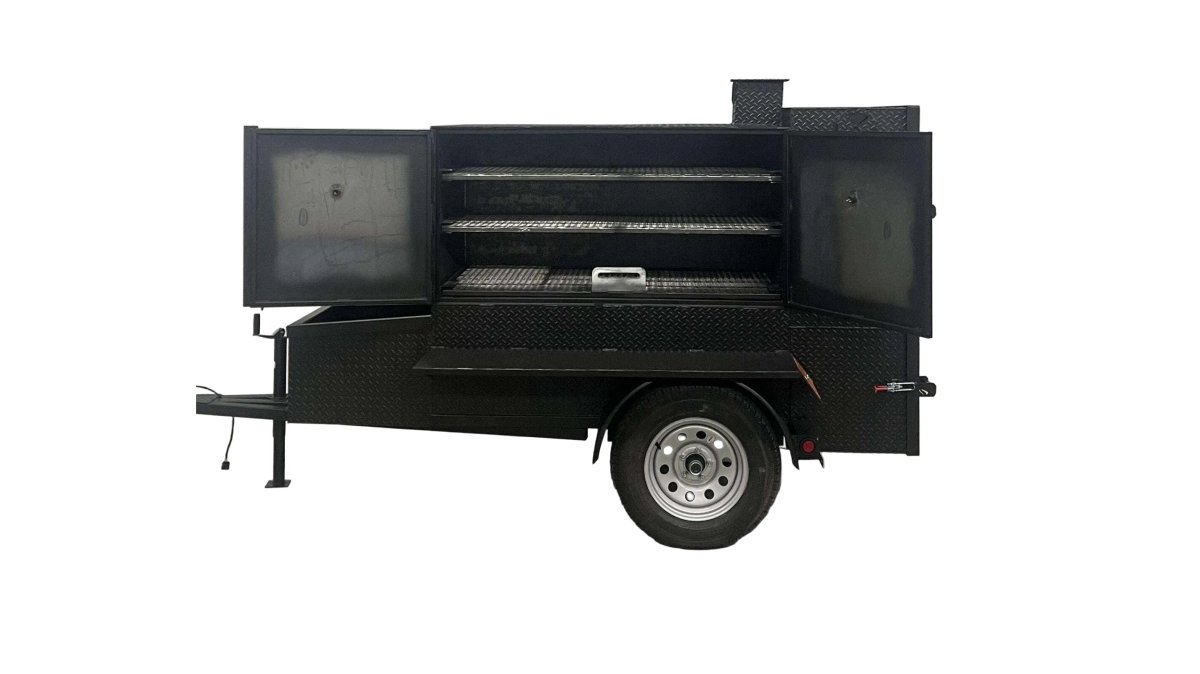
SNS 60 Smoker Cabinet Trailer →
How Gauge Thickness Affects Heat Retention and Structural Integrity
Thicker steel acts as thermal mass, absorbing heat and releasing it slowly. That's why a 1/4-inch cabinet holds temperature through a cold snap or a sudden wind gust while thin steel swings wildly. Structural integrity works the same way: heavy plate resists the expansion and contraction that eventually cracks thinner metal at the seams. A common mistake is judging a smoker by exterior paint instead of steel thickness. The paint is cosmetic; the gauge is the investment.
Construction Quality: Welding Standards and Component Reliability
Welding quality decides whether a smoker lasts five years or twenty-five. Look for full-penetration welds on the firebox and chamber seams, not tack welds that trap moisture and fail under heat stress.
Component reliability matters just as much.
Professional Smoker Maintenance Tips for Long-Term Performance
Professional smoker maintenance tips are less about a chore list and more about interrupting the three corrosion mechanisms that actually kill heavy-duty pits: moisture trapped in ash, thermal-cycling fatigue at welds, and galvanic attack where dissimilar metals meet. Address those and the routine almost runs itself.
The Three Failure Mechanisms to Interrupt
1. Ash-pan and firebox floor corrosion. Wood ash is hygroscopic, it pulls moisture out of the air and holds it against bare steel. Left in place, a half-inch ash bed can keep the firebox floor damp for weeks between cooks. Empty the ash after every cook, and once a month scrape the firebox floor down to bare metal and re-oil it.
Seasonal Maintenance Schedule
- After every cook: Empty ash; wipe down the exterior while the steel is still warm so oil penetrates; leave the door cracked until the chamber is at ambient temperature to avoid trapping condensation.
- Monthly during cooking season: Scrape and re-oil the firebox floor; check door gaskets for compression set; lubricate hinges and latch pivots with a high-temp food-safe grease.
- Start of season: Wire-brush welds and seams; sand any rust bloom to bare metal; spot-prime and repaint with high-heat paint rated to at least 1,200°F; re-season the cooking chamber.
- End of season: Coat the exterior with a food-safe oil; pull the ash pan and store it indoors.
Rust Prevention and Seasonal Care Routines
Rust starts at seams, welds, scratched paint, and any place two pieces of steel meet without a full weld. A powder coat or high-heat paint finish slows corrosion but is not a permanent barrier, it is a wear item. Each spring, sand rust spots to bare metal, apply a high-heat primer, and repaint. Before winter, coat the exterior with a food-safe oil.
Environmental Exposure: The Variable Most Owners Ignore
The same smoker, built to the same spec, will age at very different rates depending on where it lives. Humid climates keep the steel above the dew point for more hours per day. Coastal air carries chloride, which attacks carbon steel even through a thin paint film. A pit stored in a garage in a dry climate may see a fraction of the corrosion load of an identical pit kept on an uncovered patio near salt water.
How Long Should a Heavy Duty Smoker Last?
A well-built heavy duty smoker with 1/4-inch steel and proper maintenance should last 15 to 25 years or more. Budget units with thin steel often show serious rust and warping within 3 to 5 years. But a single number hides the real question: what actually determines where a given pit lands on that range, and how do you know which side of it you are on?
What Drives the Lifespan Range
Four variables move a smoker up or down the range more than any other:
- Steel thickness. 1/4-inch plate has enough sacrificial material to lose a little to surface rust each decade and still hold structural integrity. 14- or 16-gauge steel does not, once it rusts through, there is no thickness left to grind back to.
- Weld type. Full-penetration welds at the firebox and chamber seams tolerate thermal cycling for decades. Tack welds and partial-penetration welds trap moisture and crack first.
- Insulation. A double-walled, insulated firebox runs a cooler exterior surface, which means less condensation on the outside and less thermal shock on the steel. Uninsulated fireboxes run hot and corrode faster.
- Environment and storage. A covered pit in a dry climate can outlast an identical uncovered pit in a humid or coastal climate by a decade or more.
How to Inspect a Used Smoker for Remaining Life
If you are evaluating a used heavy-duty smoker, or trying to estimate how much life is left in your own, inspect in this order:
- Firebox floor. Look for pitting, flaking, or soft spots. This is the first place to go.
- Firebox-to-chamber seam. Wire-brush it and look for hairline cracks or rust bleeding out of the joint.
- Door frame and hinges. Check for sag, wallowed hinge pins, and gasket compression set.
- Cooking chamber floor. Look for rust bloom under the racks, especially at the drain.
- Exterior paint. Bubbling paint usually means rust underneath, not on top.
Repairability vs. Replaceability
The durability conversation usually stops at lifespan, and that is a mistake. A smoker you can repair outlasts one you have to replace, even if both start with the same steel.
Three factors decide repairability:
- Bolt-on hardware. Hinges, latches, handles, and controllers that bolt on can be swapped in an afternoon. Welded-on hardware means a fabrication job.
- Accessible welds. A seam you can reach with a grinder and a welder is repairable. A seam buried behind an insulated jacket is not.
- Available replacement parts. Gaskets, thermometers, and fire grates are consumables and should be treated as such. If the manufacturer does not stock them, the pit has a shorter practical life than its steel suggests.
Backyard vs. Competition Grade: Matching Durability to Your Needs
Not everyone needs competition-grade durability, and that's fine. The question is how hard you'll push the equipment.
Use Case |
Steel Thickness |
Expected Lifespan |
Best For |
|---|---|---|---|
Weekend backyard |
10-14 gauge |
5-10 years |
Casual cooks |
Serious backyard |
1/4 inch |
15-20 years |
Frequent hosting |
Competition/catering |
1/4 inch, insulated |
20+ years |
Daily commercial use |
Repairability vs. Replaceability: What Owners Should Know
The durability conversation usually stops at lifespan, and that's a mistake. A smoker you can repair outlasts one you have to replace, even if both start with the same steel.
Frequently Asked Questions
How long should a heavy duty smoker last with regular use?
A well-built heavy duty smoker with quarter-inch steel construction and proper maintenance can last 15 to 25 years or more. The key factors are metal thickness, welding quality, and how consistently you protect it from moisture. Smokers stored outdoors without covers or seasonal rust prevention typically see structural issues much sooner. Regular cleaning, seasoning, and touch-up painting extend service life significantly.
What smoker metal thickness gauge indicates superior durability?
Quarter-inch steel, equivalent to 3 gauge, is the benchmark for heavy duty smokers. This thickness provides thermal mass that stabilizes temperatures, resists warping under high heat, and holds up to years of expansion and contraction. Thinner materials like 10 to 14 gauge common in budget smokers tend to warp, rust through, and lose heat retention within a few seasons of regular use.
Are American-made smokers more durable than mass-produced alternatives?
American-made smokers from reputable fabricators typically use heavier gauge steel and hand-welded seams that hold up better than imported mass-produced units. The difference shows in structural integrity over time. Hand-welded joints resist cracking from thermal cycling, while thinner steel and spot welds common in budget imports fail sooner. The initial cost is higher, but the lifespan often justifies it.
What professional smoker maintenance tips extend the life of my equipment?
Clean ash from the firebox after every cook, season the cooking chamber regularly, and touch up any paint chips before rust spreads. Store your smoker under a cover or in a sheltered area. Check door gaskets and hinges for wear each season. Applying a thin coat of cooking oil to exterior surfaces before winter storage prevents moisture damage and keeps the finish intact.