
Table of Contents
- What Separates a Professional Smoker From a Backyard Model
- Professional BBQ Smoker Price Ranges 2026
- Benefits of Heavy-Duty Steel Smokers
- Reverse Flow Smoker vs Offset Smoker: Which Fits Your Backyard
- How to Know If a Professional Smoker Is Overkill for You
- Maintenance and Longevity: What Professional Smokers Actually Require
- Frequently Asked Questions
Last Updated: September 17, 2026
What Separates a Professional Smoker From a Backyard Model
A professional smoker is a heavy-gauge, purpose-built cooker designed to hold steady temperatures for long cooks, while a backyard model is a lighter, mass-produced unit built to a price point. The gap shows up in steel thickness, airflow control, and how long the cooker lasts.
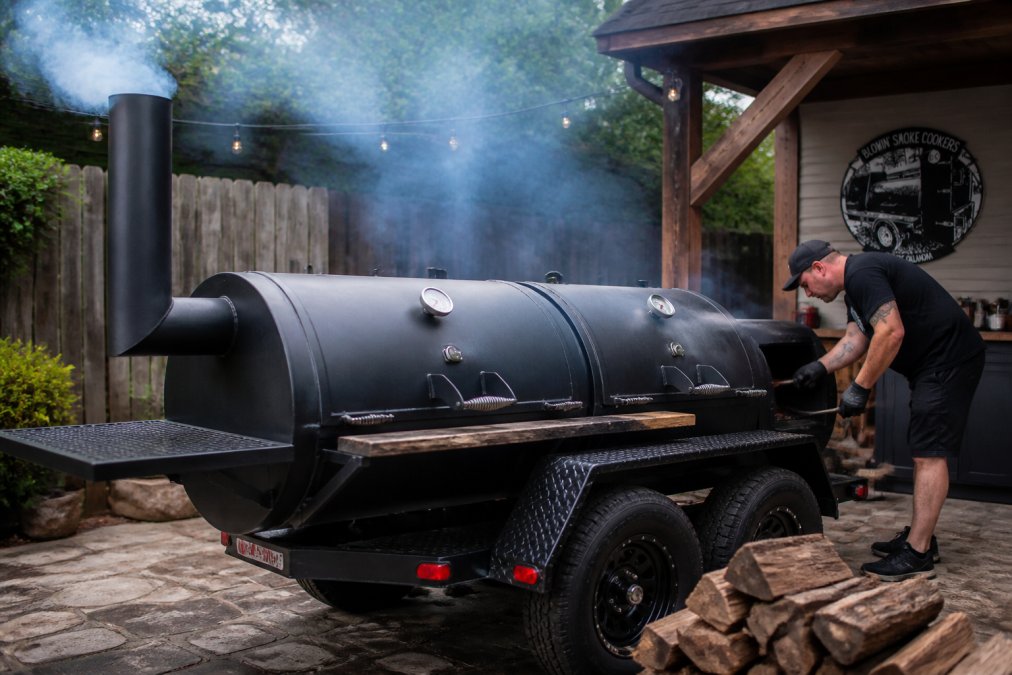
Professional BBQ Smoker Price Ranges 2026
Professional BBQ smoker price ranges in 2026 start around $1,399 for a compact patio unit and climb past $5,830 for high-capacity models. The tier you choose should match your cooking volume, not your ego.
Here's how the market breaks down across our lineup:
Tier |
Price Range |
Best For |
|---|---|---|
Entry-Level Professional |
$1,399 to $2,725 |
Small gatherings, patio cooking |
Mid-Range Competition Grade |
$3,199 to $4,255 |
Competition use, larger cooks |
High-Capacity Patio |
$5,830 and up |
Catering, 11+ sq ft cooking area |
Entry-Level Professional: $1,399 to $2,725
The SNS 24 Patio Smoker ($1,399) is a tabletop-style reverse flow cabinet smoker with two slide-out racks measuring 14.5" x 20". It holds 4-6 Boston butts, 6-8 whole chickens, 4-6 spare ribs, or 2 briskets. Shipping weight is 200 pounds.

Mid-Range Competition Grade: $3,199 to $4,255
The SNS Barrel 40 Patio Smoker ($3,199) offers a 30"x40" barrel main chamber and a 20"x30" firebox, with two cooking racks measuring 24"x32" and 28"x32". It's available in traditional or reverse flow.
High-Capacity Patio Models: $5,830 and Up
The Meadow Creek TS120P ($5,830) delivers 11+ square feet of cooking area without a trailer. It uses 3/16" plate on the tank and ¼" plate on the firebox, with food-grade stainless steel grates and a slide-out ash pan. At 830 pounds net, it's a permanent-patio cooker.
The Real Cost Question: Replacement Cycles, Not Sticker Price
Sticker price is the wrong number to compare. The number that matters is cost per year of service. A big-box offset that costs a few hundred dollars and lasts three seasons before the firebox rusts through is a recurring expense. A heavy-gauge cooker that runs for fifteen to twenty years with basic care spreads its cost across a much longer window, and it holds temperature better the entire time.
What Actually Drives the Price Up
Four things separate a $1,399 patio cabinet from a $5,830 high-capacity unit:
- Plate thickness. 3/16" tank steel and ¼" firebox plate cost more per square foot than stamped sheet metal, and they weigh far more to ship.
- Cooking area. The TS120P delivers 11+ square feet; the SNS 24 delivers roughly 4 square feet across two racks. More steel, more grates, more cost.
- Draft design. Reverse-flow baffling and positive-lock latches add fabrication steps that mass-produced cookers skip.
- Stainless components. T304 grates and food-grade stainless racks resist rust and outlast painted steel, but the material costs more.
Benefits of Heavy-Duty Steel Smokers
The benefits of heavy-duty steel smokers come down to thermal mass and heat retention. Thick plate steel absorbs heat and releases it slowly, which smooths out temperature swings that plague thin-walled cookers.
Reverse Flow Smoker vs Offset Smoker: Which Fits Your Backyard
A reverse flow smoker routes heat under a baffle plate and back across the chamber, while a traditional offset sends heat straight across from the firebox. Reverse flow gives more even temperatures; traditional offset gives a hotter hot side and a milder cool side.
How to Know If a Professional Smoker Is Overkill for You
A professional smoker is overkill if you cook a few times a season for a small group and don't mind tending a fire. It's worth the money if you cook year-round, host large gatherings, or compete.
Meadow Creek SQ36 Offset Barbecue →
Run through this checklist before you decide:
- You cook at least twice a month, year-round
- You regularly feed 10 or more people
- You've replaced a cheap smoker within the last three years
- You want set-and-forget temperature control on long cooks
- You're considering competition or catering work
Maintenance and Longevity: What Professional Smokers Actually Require
Professional smokers require less maintenance than cheap ones, not more. Thick steel, stainless grates, and slide-out ash pans cut the cleaning and repair work that wears out lighter cookers. But "less" is not "none," and the owners who get twenty years out of a cooker are the ones who follow a repeatable routine.
A Step-by-Step Cleaning Protocol
Work through this after every cook, while the cooker is still warm but not hot:
- Brush the grates. Use a stiff wire brush on warm grates to lift residue before it carbonizes. On T304 stainless grates like those on the SQ36, brush with the grain to avoid scratching the finish.
- Empty the ash pan. Do this every session, even if you plan to cook again tomorrow. Ash absorbs moisture from the air and holds it against the steel.
- Wipe the interior walls. A dry cloth or a light scrape with a putty knife removes flaking creosote. You want a thin, seasoned layer, not a thick, gummy coat.
- Check the baffle and stack. Reverse-flow cookers route smoke under a baffle plate; grease and ash collect there. Clear the passages so draft stays even.
- Inspect the exterior. Touch up any bare spots on painted steel before rust sets in. On stainless panels, wipe with a damp cloth and dry immediately.
Cleaning Stainless Without Damaging It
Stainless steel is not stain-proof, and the wrong cleaner can dull or pit the surface. Avoid steel wool and abrasive powders on stainless grates and panels, they leave scratches that trap residue and give corrosion a place to start. Use a soft cloth or non-abrasive pad with warm water and a mild dish soap, then rinse and dry.
Why Ash Is the Real Enemy
Ash is alkaline, and when it sits against steel it pulls moisture out of the air and holds it there. That's how rust starts from the inside of a firebox that looks fine on the outside. The slide-out ash pan on the TS120P and the positive-lock firebox on the TS70P make this easy, pull the pan, dump it, done.
Climate and Corrosion: What Changes by Region
Where you live changes how much maintenance your cooker needs:
- Coastal salt air. Salt accelerates corrosion on any steel, including stainless. Rinse exterior surfaces with fresh water periodically, dry them, and keep the cooker covered between uses. Stainless grates handle salt far better than painted steel, but they still benefit from a wipe-down.
- High humidity. Moisture in the air plus ash residue is the fastest route to surface rust. Empty the ash pan after every cook and store the cooker under cover with the vents cracked slightly to let air move.
- Cold and freeze-thaw cycles. Condensation forms inside a cold firebox and freezes against the steel. A cover and a dry interior before storage prevent the pitting that shows up in spring.
- Dry, dusty climates. Fine dust settles into grease and forms a paste that traps moisture. A quick wipe-down after each cook keeps the surface clean.
What Longevity Actually Looks Like
A well-maintained heavy-gauge cooker doesn't fail suddenly, it ages slowly. The firebox plate thins over years of high-heat burns, welds stay tight because the steel doesn't flex, and the grates outlast several sets of painted replacements. Owners who keep up with the routine above typically see the cooker hold steady temperatures for a decade or more before any real service is needed.
Frequently Asked Questions
Are stainless steel smokers good for backyard cooking?
Stainless steel cooking grates resist rust and hold up to years of high-heat use, which is why professional-grade smokers like the Meadow Creek SQ36 use T304 stainless steel grates. The body of a heavy-duty smoker is typically steel plate, while stainless is used where food contacts the surface. This combination gives you durability without the full cost of an all-stainless build, making it practical for backyard cooks who want their smoker to last a decade or more.
What are the main differences between backyard and professional smokers?
Backyard smokers from big-box stores use thin-gauge steel, which loses heat quickly and forces constant fire management. A professional smoker uses 3/16-inch to 1/4-inch steel plate, which holds temperature steady through long cooks and resists warping over time. Professional models also include features like reverse flow draft, slide-out ash pans, and positive-lock latches. The result is less fuel wasted, more consistent results, and a cooker that lasts far longer.
Is reverse flow technology necessary for backyard cooking?
Reverse flow is not strictly necessary, but it makes a noticeable difference for low-and-slow cooks. In a reverse flow design, smoke travels under a baffle plate and across the chamber before exiting, which evens out hot spots and reduces the temperature swings that plague traditional offset smokers. If you cook brisket, pork butt, or ribs regularly, reverse flow helps you hold steady temperatures without babysitting the fire every 20 minutes.
Do professional smokers require more maintenance than standard models?
Professional smokers need less maintenance overall because thick steel resists rust and warping. The routine is straightforward: scrape the grates after each cook, empty the ash pan, and touch up any bare metal with high-heat paint once a year. A cover between cooks keeps moisture off the surface. Because the steel is heavier, there are no thin panels to burn through or replace, so the long-term upkeep is simpler than constantly repairing a cheaper unit.