
Table of Contents
- The Honest Answer: What Electric Smokers Can and Cannot Deliver for Brisket
- How Electric Smoker Brisket Temperature Control Compares to Traditional Offset Smoking
- The Smoke Ring Myth: Can You Achieve It in an Electric Smoker?
- Electric Smoker Brisket Tips for Maximum Moisture and Tenderness
- Electric Smoker Brisket Temperature Guide: From Prep to Rest
- When Electric Smokers Make Sense and When They Don't
- Conclusion
- Frequently Asked Questions
Last Updated: September 29, 2026
The Honest Answer: What Electric Smokers Can and Cannot Deliver for Brisket
Electric smoker brisket is viable for backyard cooks prioritizing convenience and temperature stability. Electric units excel at thermal consistency but struggle with authentic smoke flavor and bark formation. The honest truth: electric smokers deliver solid eating brisket, just not the same brisket you'd get from a traditional offset or stick burner.

The core issue is physics. Electric heating elements produce steady, predictable heat, perfect for maintaining 225-275°F with minimal swings. But smoke flavor comes from burning wood, and electric units can only produce smoke indirectly through wood chips or external generators. The result tastes good but lacks the depth of wood combustion in the cooking chamber.
How Electric Smoker Brisket Temperature Control Compares to Traditional Offset Smoking
Electric smokers win on temperature stability, holding 250°F within 5-10 degrees for hours. Offset smokers demand active management of dampers and firebox. For a 12-16 hour brisket cook, that consistency matters.
The tradeoff is flexibility. Offset smokers let you adjust heat instantly; electric units respond slower because the heating element cycles on and off. Competitive cooks often prefer the responsiveness of wood or charcoal.
Use a quality meat thermometer to track internal temperature, aiming for the stall (around 165°F) and final pull (203-207°F). Electric units maintain ambient temperature so consistently that you spend less time troubleshooting heat loss.
Electric smokers produce less temperature variance in windy or cold conditions. Offset smokers are more vulnerable to weather disruption.
The Smoke Ring Myth: Can You Achieve It in an Electric Smoker?
The smoke ring is a chemical reaction between myoglobin and nitrogen dioxide (NO₂) from smoke. You can achieve it in an electric smoker, but understanding why electric units produce inconsistent results separates good cooks from great ones.
The Chemistry Behind the Smoke Ring
Wood combustion produces NO₂, which penetrates the meat's surface and reacts with myoglobin to create a stable pink compound. This surface-level reaction is not a sign of undercooking.
Offset smokers produce NO₂ directly in the cooking chamber. Electric smokers rely on indirect smoke generation through wood chips or external generators, resulting in lower and less consistent NO₂ concentration.
Why Electric Units Struggle With Smoke Ring Consistency
In an offset smoker, smoke fills the chamber continuously. In an electric unit, smoke enters through a single port, creating concentration gradients. If your brisket sits far from the inlet, NO₂ concentration drops, resulting in a patchy smoke ring.
Heating element design amplifies this. Bottom or side elements push smoke toward exhaust vents. Higher-end units with better baffles handle external generators more effectively.
NO₂ is more soluble at lower temperatures. Cook at 250°F for a stable smoke ring; 275°F or higher weakens formation.
How to Achieve a Consistent Smoke Ring in Electric Units
Use an external smoke generator rather than a wood chip tray. Run it for the first 3-4 hours to allow NO₂ to penetrate the meat's surface layer without over-smoking the interior.
Position the brisket closest to the smoke inlet. If single-grate, rotate 180 degrees halfway through the smoke phase for even NO₂ exposure.
Set your electric smoker to 225-250°F during the smoke phase to optimize NO₂ reactivity. Avoid opening the door during the first 4 hours.
If smoke rings remain patchy, your unit's design may limit circulation. Consider drilling a secondary exhaust port opposite the inlet to force smoke circulation. Consult your manual before modifying.
The Bark Versus the Smoke Ring
The smoke ring is a chemical marker of smoke exposure; the bark is the darkened crust from rendering and the Maillard reaction. Both develop in electric smokers but require different conditions: the ring needs NO₂ early, the bark needs sustained heat throughout.
Use an external smoke generator, run it early, position meat strategically, and you'll achieve a smoke ring identical to traditional smokers. Electric units require intentional smoke engineering.
Electric Smoker Brisket Tips for Maximum Moisture and Tenderness
Electric smokers excel at moisture retention through their enclosed, insulated chamber. But passive humidity isn't enough. Strategic water management and injection timing unlock tenderness.
Start With Meat Selection and Preparation
Look for fat marbling throughout and a thick point with intramuscular fat. A well-marbled point stays tender even with imperfect temperature control; a lean flat requires precision. Choose a packer brisket (untrimmed, 12-16 pounds) for the protective fat cap.
Trim conservatively, removing thick fat from sides and bottom but leaving a quarter-inch cap on top for protection and basting.
Apply dry rub the night before. Salt penetrates deep and helps retain moisture. Use kosher salt, black pepper, and brown sugar. Refrigerate overnight so salt creates a brine effect.
Advanced Water Pan Strategy
The water pan moderates temperature and maintains humidity, but the liquid matters.
Meadow Creek SQ36 Offset Barbecue →
Fill the water pan with hot water at the start, positioned below the brisket. Refill every 4-5 hours with hot water to maintain humidity without temperature disruption.
In the second half (after hour 6), add apple juice or beef broth to the water pan. The sugars and gelatin create denser steam that reduces evaporative loss. Don't use juice from the start, introduce it only after the bark sets.
Alternatively, use water and apple cider vinegar (1:1 ratio) to accelerate collagen breakdown, especially useful for lean flats.
Injection Timing and Technique
Many skip injection, assuming the enclosed chamber keeps meat moist. But injection delivers moisture directly into muscle, especially critical for lean flats.
Inject 12 hours before the cook to allow even distribution. Use beef broth with Worcestershire sauce and salt. Aim for 1 ounce per pound, distributed in a grid pattern.
Inject again at the stall (165°F) just before wrapping. Use 0.5 ounces per pound; the meat absorbs liquid faster when partially cooked.
Avoid over-injecting; too much liquid dilutes flavor and creates mushiness.
The Texas Crutch and Wrapping Strategy
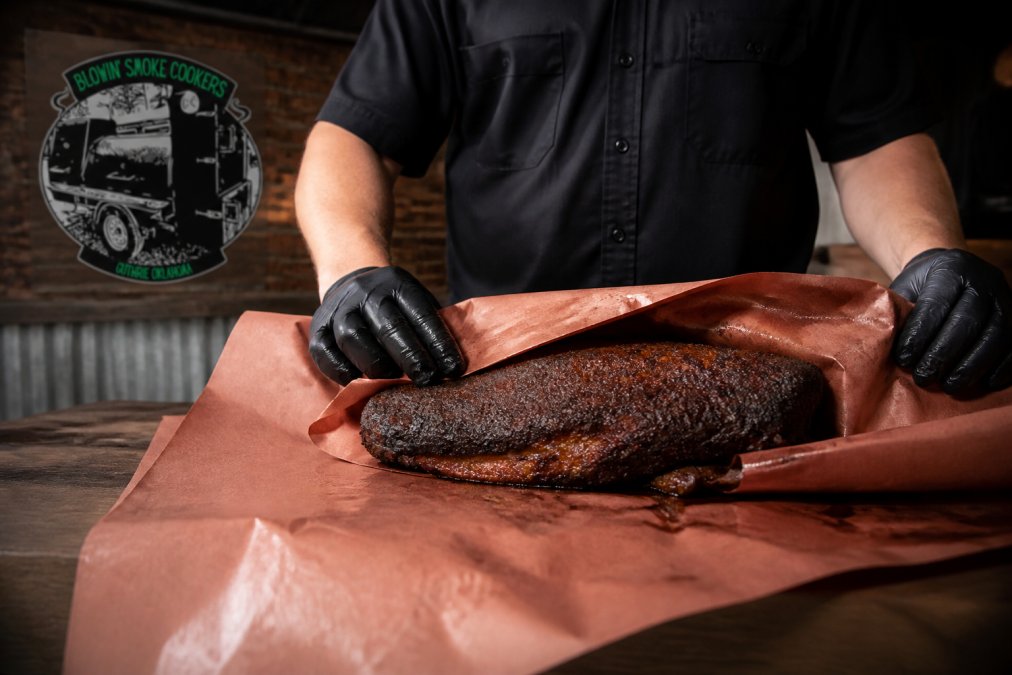
Wrap in butcher paper at the 165°F stall. The paper traps moisture and heat, pushing through the stall faster. Wrap tight enough to hold shape but loose enough for steam circulation.
Add beef broth or apple juice inside the paper before wrapping to accelerate collagen breakdown. Room temperature liquid works fine.
Unwrap in the final hour for a darker bark. This gives a tender interior from wrapping and a dark crust from the final push.
Temperature Management for Moisture Retention
Set your electric smoker to 250°F and leave it alone. Each door opening drops temperature 10-15 degrees and disrupts the humid microclimate.
If your unit overshoots temperature, dial back to 240°F. The slower cook gives collagen more time to break down, resulting in more tender texture.
The Rest: Non-Negotiable for Tenderness
Rest for at least 30 minutes; 45-60 minutes produces even more tender results. Pull at 203°F if resting longer, as temperature will coast up.
Wrap in clean butcher paper and place in an insulated cooler with towels. Residual heat keeps meat warm while muscle fibers relax and reabsorb juices.
Practical Takeaway
Electric smokers' humidity advantage is passive. Active moisture management, strategic water pans, injection timing, and wrapping, transforms good brisket into competition-level results.
Electric Smoker Brisket Temperature Guide: From Prep to Rest
Start with a 12-14 pound brisket. Leave a quarter-inch fat cap on top but remove thick fat from the sides.
Prep Phase (30 minutes before cook): Remove brisket from refrigerator to reach room temperature.
Phase |
Temperature |
Duration |
Key Action |
|---|---|---|---|
Prep |
Room temp |
30 min |
Apply dry rub, let meat warm |
Low & Slow |
250°F chamber |
5 hours |
Run smoke, build bark |
Stall |
165°F internal |
2-3 hours |
Wrap in butcher paper |
Final Push |
250°F chamber |
3-4 hours |
Cook to 203-207°F |
Rest |
Cooler |
30-60 min |
Reabsorb juices |
When Electric Smokers Make Sense and When They Don't
Electric smokers excel for backyard cooks prioritizing consistency and convenience. If you're hosting family gatherings and want reliable, delicious brisket without managing a firebox for 12 hours, an electric unit delivers. Setup is simple, plug in, set temperature, and monitor. No charcoal or wood management. No learning curve with damper control.
Conclusion
Electric smoker brisket is absolutely good enough for backyard cooks, family gatherings, and anyone prioritizing temperature stability and ease of use. You'll produce tender, flavorful results that satisfy most palates. The smoke ring is achievable, the bark forms properly, and the meat stays juicy through proper wrapping and resting. No doubt, the flavor will not compete with the flavor gained from a wood fire.
Frequently Asked Questions
Can you get a smoke ring on brisket in an electric smoker?
A true smoke ring requires nitrogen dioxide from wood smoke and cool-side temperatures that electric smokers struggle to maintain. Electric units produce heat primarily through heating elements rather than combustion, limiting nitric oxide formation. You can approximate a pink layer through longer cook times and wood chip additions, but it won't match the depth of a traditional offset smoker. Focus on bark formation and flavor instead of chasing the ring.
What is the best electric smoker brisket temperature for tender results?
Cook the brisket at 225-250°F throughout the cook. The flat reaches probe-tender around 203°F internal temperature, while the point benefits from 205-210°F. Electric smokers excel at holding these temperatures steady. Use a reliable meat probe to track collagen breakdown rather than relying on time estimates. The thermal consistency of electric units means more predictable cooking, which helps prevent the dried-out results many cooks experience.
Why is my brisket dry after using an electric smoker?
Electric smokers tend to produce drier results because they generate less ambient moisture than wood-fired offset smokers. Combat this by using a water pan throughout the cook, wrapping the brisket in butcher paper once it hits 165°F internal temperature, and resting it tightly wrapped for 30-45 minutes after cooking. The wrapping traps rendered fat and juices, reabsorbing them into the meat. Many pitmasters also inject briskets before smoking to add moisture directly.
How does electric smoker brisket compare to offset smoker results?
Offset smokers deliver superior smoke flavor and bark development due to direct wood combustion and convection heat patterns. Electric smokers offer better temperature consistency and easier management, making them ideal for beginners and those prioritizing tenderness. Offset smokers require more skill but produce the complex smoke profile serious competitors demand. For backyard gatherings, electric smokers are absolutely sufficient. For competition circuits, offset smokers remain the standard.
Smoking great brisket doesn't require choosing between ease and flavor. Blowin' Smoke Cookers' Meadow Creek offset smokers combine the thermal consistency you need with the authentic smoke character that makes brisket memorable. Reverse flow design keeps temperature stable, stainless steel grates eliminate rust, and the heavy-duty construction handles both backyard cooks and competition use. Explore the TS70P or TS120P to see how traditional offset design delivers what electric cannot.